Corfu
Κέρκυρα
Ionian Islands
Corfu is a green Ionian island with a UNESCO-listed old town, Venetian fortresses, a British past and 4.5 million olive trees. Code Athena has one holiday home here, Villa Romantica in Perama.
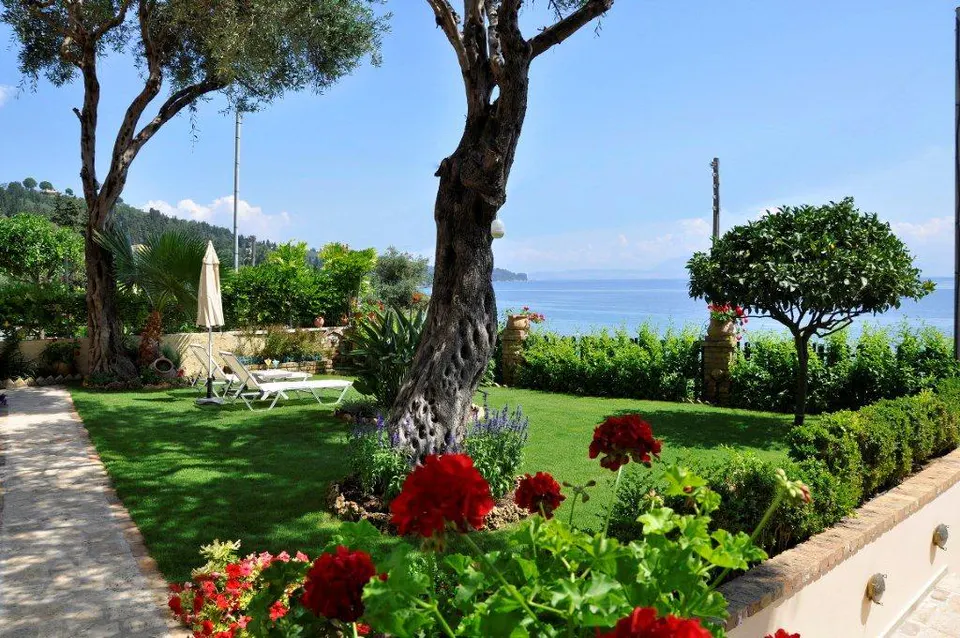
Our homes in Corfu
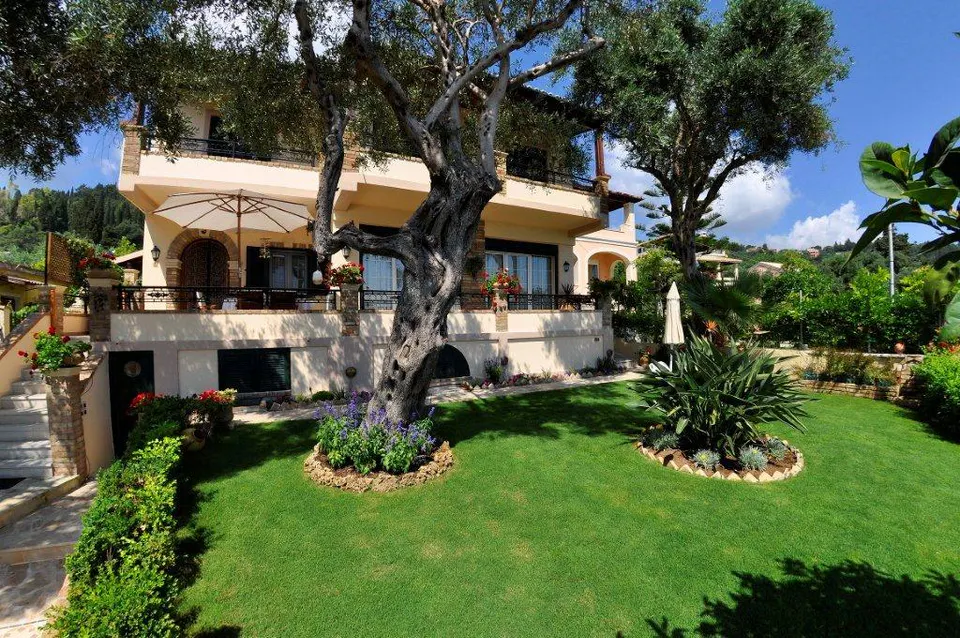
The old town
Corfu Town lies between two Venetian fortresses (the Old Fortress, on a rocky peninsula east of the town, and the New Fortress, which followed in the late 16th century), and its old town was added to the UNESCO World Heritage List in 2007. Venice held the island from 1386 until 1797, and the British ran the Ionian Islands as a protectorate from 1815 until 1864, when they joined Greece.
Most of the old town is neoclassical, with clear Venetian influence, and between the old town and the Old Fortress lies the Spianada, with the Liston beside it. Cricket (a British import) is still played on the Spianada now and then, and Corfu is the only place in Greece where it has a following. The Archaeological Museum holds the Gorgon pediment from the temple of Artemis, and the Museum of Asian Art occupies the Palace of St Michael and St George, begun in 1819 for the British Lord High Commissioner.
South of town: Perama and Benitses
Beyond the airport the coast road reaches Perama, a seaside village that looks across to the monastery of Vlacherna and the islet of Pontikonisi, while Kanoni (the headland to the north) is joined to Perama by a footbridge over the Halikiopoulos lagoon, where planes from the nearby airport fly low overhead. Villa Romantica, our three-bedroom villa, stands in Perama, 20 m from the nearest beach, in a flowering garden with a furnished terrace that looks over the Ionian Sea.
Further south, Benitses is a former fishing village between the sea and green hills crossed by footpaths, and the Visit Corfu tourism site lists a small sandy beach by the marina as well as a larger fine-pebble beach a short way north of the village. The Achilleion, which Empress Elisabeth of Austria began building in 1889 and Kaiser Wilhelm II bought in 1907, is 3 km away at Gastouri. A local news report in August 2026 said its restoration was still unfinished, so it may be wise to check what is open before planning a visit.
The north-east
North of town the coast road passes Dassia (12 km away by Visit Corfu's reckoning), with a long beach of sand and fine pebbles. Further up, Kalami was a tiny fishing village when Lawrence Durrell and his wife Nancy moved into the White House there in 1936, and his book about the island, Prospero's Cell, was published in 1945. Kassiopi, a fishing village on the same coast, has the ruins of a castle above it (mainly Byzantine, and strengthened by the Venetians).
Mount Pantokrator rises over this coast to 906 m (the highest point on the island), and winding roads climb it from the coast, while the view takes in Albania and, on very clear days, Italy.
The west
Paleokastritsa (23 km west of the town) is called the island's most famous resort on the Visit Corfu tourism site. Six coves and beaches line its shore, and the monastery of the Virgin, with roots in the 13th century, stands on the northern promontory. Above the village the road climbs through Lakones, known for its sunsets, and on towards Krini, where the ruins of Angelokastro (a Byzantine castle that helped to repel Ottoman attacks in 1537, 1571 and 1716) stand about 305 m above the sea.
On the north coast, Sidari has the Canal d'Amour (a sea channel running through an opening in the rock).
Getting there and when to go
Ioannis Kapodistrias airport is a few kilometres south of the old town and is run by Fraport Greece. Ferries link the port with Igoumenitsa on the mainland, with Saranda in Albania and with Patras, and booking sites also list sailings to Italian ports, although timetables change with the season, so you may want to check them with the operators.
The climate is Mediterranean, with hot dry summers and mild, very wet winters. On records covering 1955 to 2010, daily highs average just over 31 °C in July and August and the average January night is about 5 °C, while the island gets just over a metre of rain a year (November and December are the wettest months and July the driest). On Holy Saturday at 11 in the morning people throw clay pots (botides) from their balconies and the pots smash in the street, especially around the Liston. A litany of Saint Spyridon (the island's patron saint) is held on 11 August.
Food and everyday life
On the Ionian Islands, long Venetian rule left more Italian influence in the kitchen than in most of Greece, and the Greek National Tourism Organisation's page on Corfiot food lists, among others:
- Pastitsada: rooster or beef in a well-seasoned red sauce, with thick spaghetti.
- Sofrito: thin slices of veal in a white garlic sauce.
- Bourdeto: scorpionfish or tope in a spicy red sauce finished with lemon.
- Kumquat, which carries a protected geographical indication, as a liqueur, candied fruit or marmalade.
- Tsitsibira: a fizzy drink with ginger and lemon that ferments and matures in the bottle.
The island's olive groves hold 4.5 million trees, and just under a hundred thousand people live on Corfu (2021 census). The Philharmonic Society of Corfu was founded in 1840, and the island has more than fifteen marching wind bands.
For sale in Corfu
On 15 October 2026 Greca House, a real-estate agency in Athens since 2008, had these villas in its listings for sale.
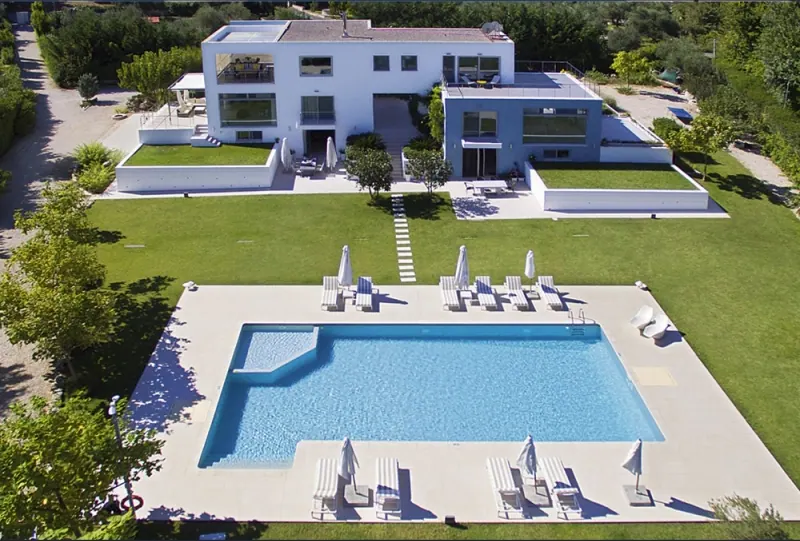 Villa
Dassia
460 m² Plot 4,100 m² 7 bedrooms 7 bathrooms
€6,900,000
Asking price on 15 October 2026
Villa
Dassia
460 m² Plot 4,100 m² 7 bedrooms 7 bathrooms
€6,900,000
Asking price on 15 October 2026
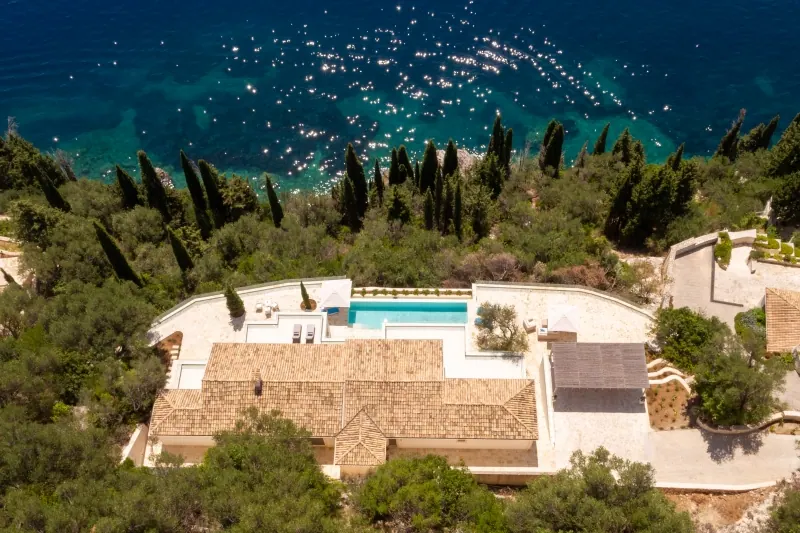 Villa
Corfu
600 m² Plot 1,200 m² 7 bedrooms 8 bathrooms
€12,000,000
Asking price on 15 October 2026
Villa
Corfu
600 m² Plot 1,200 m² 7 bedrooms 8 bathrooms
€12,000,000
Asking price on 15 October 2026
Listed with Greca House. More listings for sale
Sources22
- Hellenic Ministry of Culture, Castle Route: Old Fortress accessed 14 October 2026
- Wikipedia: Corfu accessed 14 October 2026
- Wikipedia: Corfu (city) accessed 14 October 2026
- Wikipedia: Corfu International Airport accessed 14 October 2026
- Wikipedia: Mount Pantokrator accessed 14 October 2026
- Wikipedia: Kassiopi accessed 14 October 2026
- Wikipedia: Lawrence Durrell accessed 14 October 2026
- Wikipedia: Paleokastritsa accessed 14 October 2026
- Wikipedia: Angelokastro (Corfu) accessed 14 October 2026
- Wikipedia: Achilleion (Corfu) accessed 14 October 2026
- Museum of Asian Art of Corfu: The Palace History accessed 14 October 2026
- Wikipedia: Cuisine of the Ionian Islands accessed 14 October 2026
- Visit Corfu: Paleokastritsa accessed 14 October 2026
- Visit Corfu: Benitses Beach accessed 14 October 2026
- Visit Corfu: Dassia Beach accessed 14 October 2026
- Visit Corfu: Corfu town accessed 14 October 2026
- Visit Greece: Flavours from the island of Corfu accessed 14 October 2026
- My Kerkyra: Perama accessed 14 October 2026
- Enimerosi: Achilleion Palace, new contract while the first remains outstanding accessed 14 October 2026
- Netferry: Ferries from Corfu accessed 14 October 2026
- Greca House listing GH-106874 accessed 14 October 2026
- Greca House listing GH-107011 accessed 14 October 2026