Crete
Κρήτη
On the north coast of Crete, Rethymno, an old Venetian harbour town, sits between Chania to the west and Heraklion, the capital, to the east. Our part of the island is the sandy shore east of Rethymno, at Sfakaki (where loggerhead turtles come ashore to nest), and Code Athena has four holiday homes there.
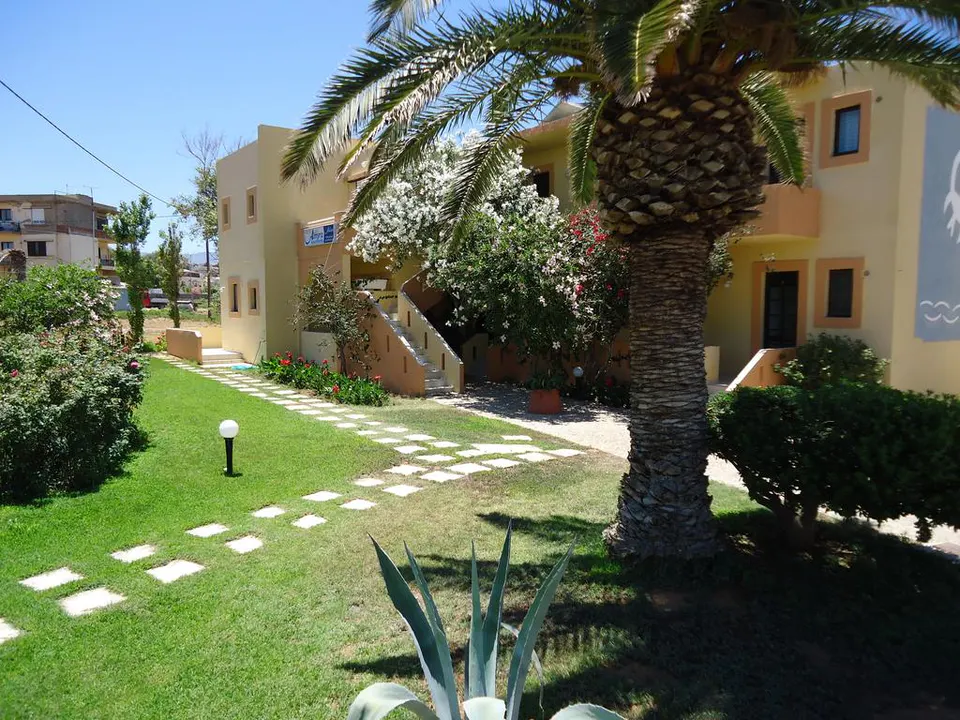
Our homes in Crete
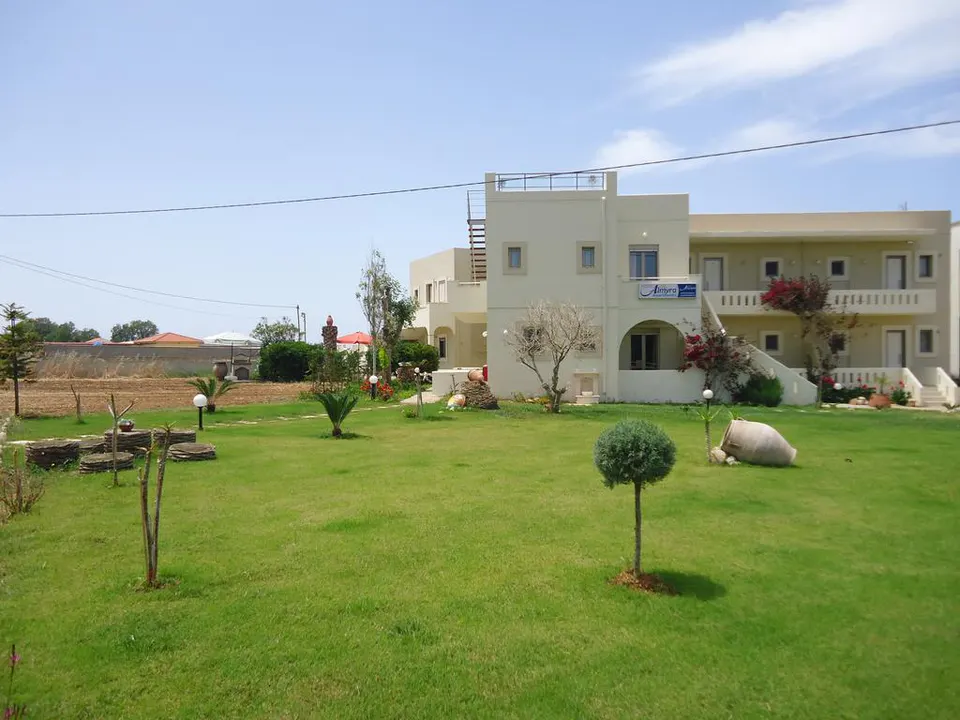 Studio 25 sqm
Apartment · Sfakaki, Crete
1 bedroom 1 bathroom 25 m²
Studio 25 sqm
Apartment · Sfakaki, Crete
1 bedroom 1 bathroom 25 m²
 Three-bed apartment 33 sqm
Apartment · Sfakaki, Crete
2 bedrooms 1 bathroom 33 m²
Three-bed apartment 33 sqm
Apartment · Sfakaki, Crete
2 bedrooms 1 bathroom 33 m²
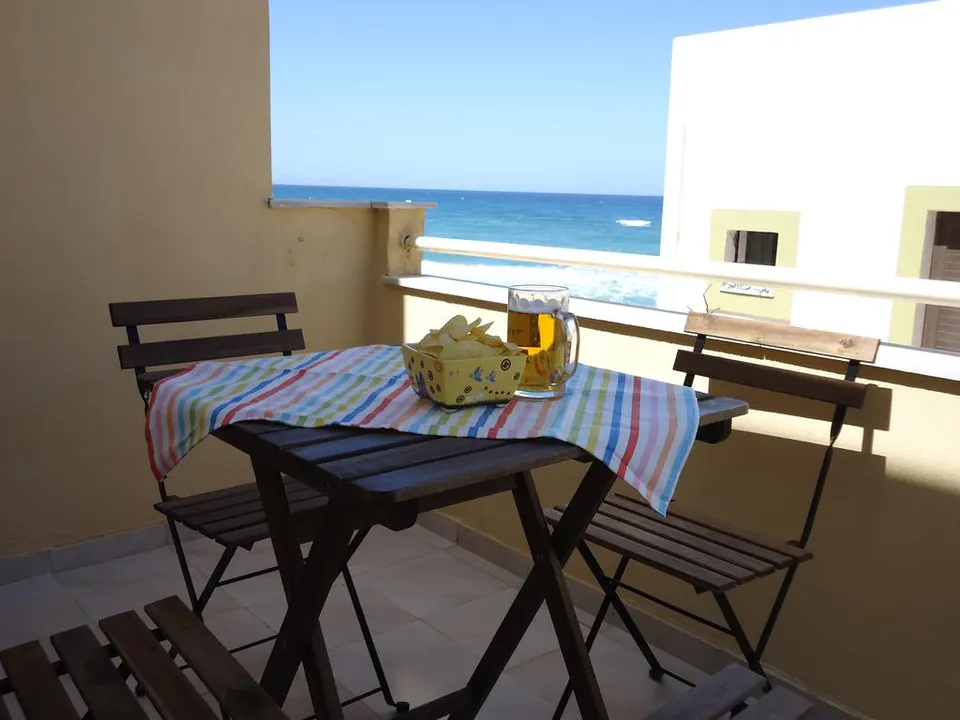 Family apartment 42 sqm
Apartment · Sfakaki, Crete
1 bedroom 1 bathroom 42 m²
Family apartment 42 sqm
Apartment · Sfakaki, Crete
1 bedroom 1 bathroom 42 m²
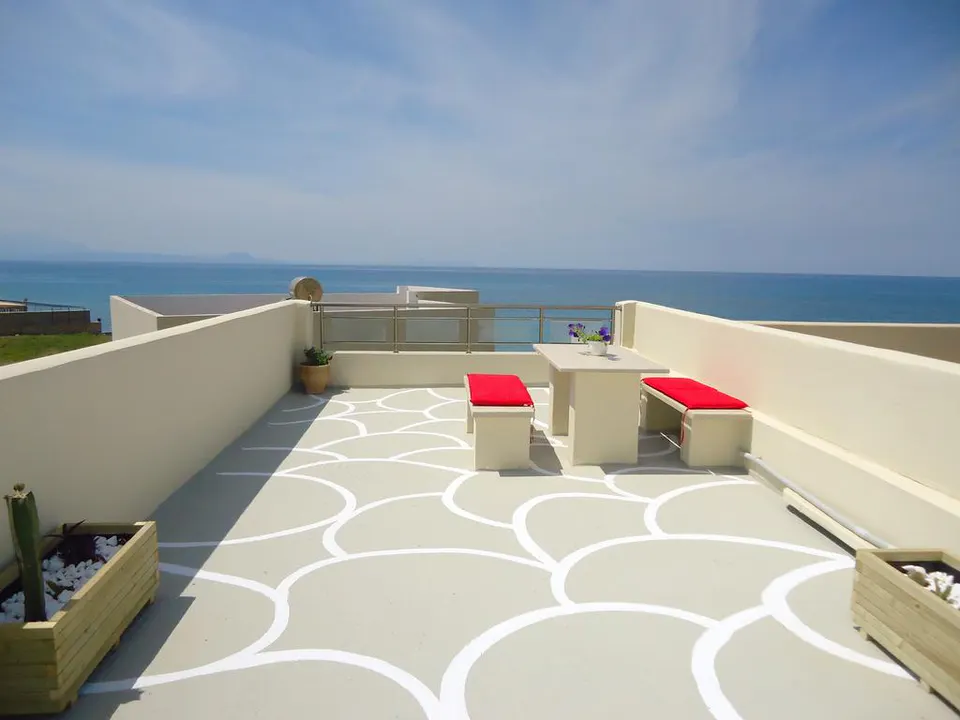 Three bedroom apartment 100 sqm
Apartment · Sfakaki, Crete
3 bedrooms 2 bathrooms 100 m²
Three bedroom apartment 100 sqm
Apartment · Sfakaki, Crete
3 bedrooms 2 bathrooms 100 m²
An island along one coast
Crete is the largest of the Greek islands and, after Sicily, Sardinia, Cyprus and Corsica, the fifth largest in the Mediterranean, with 624 408 residents at the 2021 census and Heraklion as its capital from 1971 (before then it was Chania). The interior is mountainous – Mount Ida, or Psiloritis, rises to 2456 m – while the main ports, the two main airports and the island's principal road keep to the north coast, which the road follows through Chania, Rethymno, Heraklion and Agios Nikolaos as far as Sitia.
Sfakaki and the turtle beach
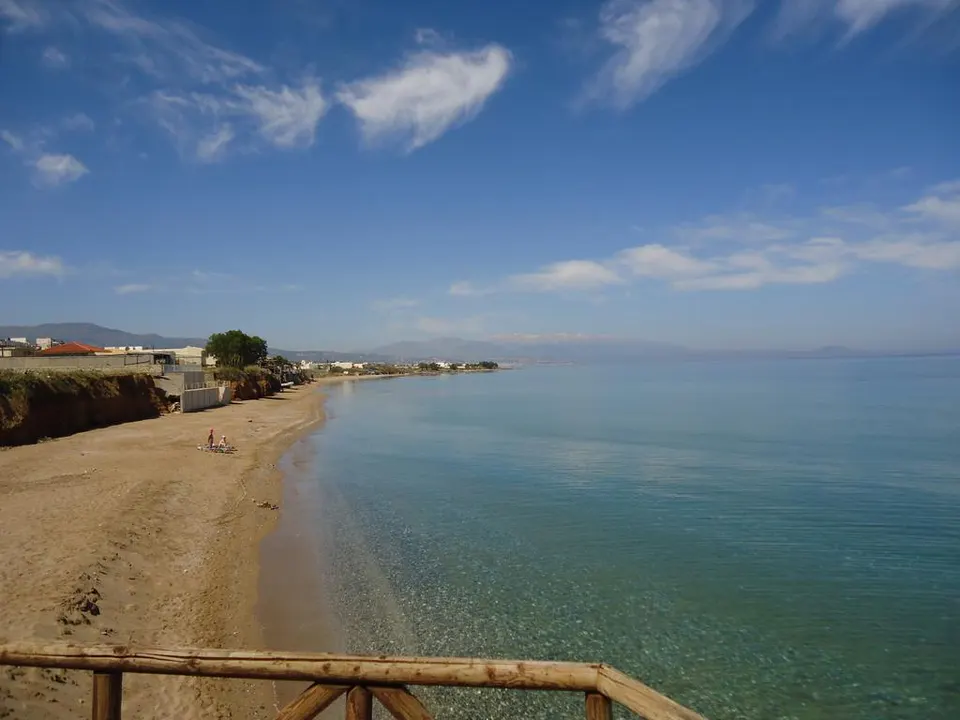
Our stretch of coast begins about 10 km east of Rethymno, where Sfakaki sits on the bay, with Stavromenos a kilometre or so further east (both villages belong to the municipal unit of Arkadi). The beaches have golden sand and clear, shallow water, though the sea is often wavy, since this coast is exposed to the north winds.
The bay is, what is more, loggerhead country, and ARCHELON (the Greek sea-turtle society) says the beach of Rethymno is the largest loggerhead nesting ground on Crete (about 170 nests were protected there in 2022, although the numbers have fallen markedly from 2020 on) and lies within the Natura 2000 network. The first nests usually appear in late May and hatch 50 to 60 days later. Lights and furniture left on the beach at night disturb the females as well as the hatchlings, so the nests marked on the sand are best given a wide berth.
Our four homes are in one complex right on the sandy beach at Sfakaki: Studio 25 sqm, Three-bed apartment 33 sqm, Family apartment 42 sqm and Three bedroom apartment 100 sqm (the largest, with two bathrooms). Supermarkets and bakeries, as well as tavernas, are within easy reach. To stay at Sfakaki, write to us with your dates and the number of guests.
Rethymno and Arkadi
The nearest town is Rethymno, a short drive to the west. It grew under the Venetians as a commercial station between Heraklion and Chania, and its old town seems to have kept much of that aristocratic look, with narrow streets, sixteenth-century houses with arched doorways and stone staircases, the small Venetian harbour with its lighthouse at the end of the mole, and mosques from the Ottoman period that began in 1646 (the Neratze mosque now houses the municipal conservatory, the Odeon). On the hill of Paleokastro stands the Fortezza, built by Venice between 1573 and 1580 after an Ottoman raid had sacked the town, and counted among the best-preserved castles in Crete. Rethymno is also the seat of the University of Crete, and its municipality holds a Renaissance Festival every summer.
Inland, about 23 km south-east of the town and some 500 m up on the slopes of Mount Ida, lies the Arkadi monastery. In November 1866, during the Cretan revolt, 964 people (most of them women and children) sheltered there from an Ottoman assault; the powder room was finally set alight, and 846 of them died in the fighting or in the explosion. The monastery is now a national sanctuary of the Cretan resistance, and Rethymno marks the anniversary on 7 and 8 November.
Heraklion and Chania
Heraklion is possibly the place to start with the Minoan civilisation (Crete's Bronze Age culture). Its archaeological museum is often called the best in the world for Minoan art, and Knossos (about 5 km south of the historic centre) was the largest Minoan centre and is widely considered Europe's oldest city. Arthur Evans, who began large-scale excavations there in 1900, rebuilt parts of the palace in reinforced concrete, which has drawn criticism; nevertheless, in 2025 Knossos and five other Cretan sites were inscribed together on the UNESCO World Heritage List as the Minoan Palatial Centres.
Chania, some 70 km west of Rethymno, is the island's second-largest city, with its old town beside the Venetian harbour. One of those six sites, Kydonia, lies partly beneath it, as the Venetians founded their town in 1252 on the site of the ancient city, long abandoned by then.
Getting here
Crete has two main airports, Heraklion's (Nikos Kazantzakis), about 5 km east of the city and the second busiest in Greece, and Chania's (Daskalogiannis), on the Akrotiri peninsula. Heraklion's airport is about 75 km from Sfakaki, and a replacement is being built at Kastelli, south-east of the city, where, by the builder's estimate of November 2025, test flights may begin in 2027. Ferries leave Piraeus every day for Heraklion and for Souda (the port of Chania), though bad weather may change the timetable.
When to go, and what to eat
The swimming season on this coast may well run from May into October: on long-term averages for Rethymno, the sea is about 19 °C in May and 25 °C in July and September, and in October, with daytime highs of about 23 °C, the sea is as warm as the air. What changes is the rain, which is nil in July and August and some 84 mm in October, while December to February are the wettest months.
Cretan cooking has long leaned on olive oil and wild greens (stamnagathi, a local wild chicory, is one of them), and dakos, a salad from Crete, is a barley rusk topped with chopped tomato, crumbled mizithra or feta, olive oil and oregano. Finally, Graviera of Crete, a cheese ripened for at least five months, is a protected designation of origin, and tsikoudia, the island's grape-marc spirit, is recognised in the EU as a geographical indication.
For sale in Crete
On 15 October 2026 Greca House, a real-estate agency in Athens since 2008, had what is shown here among its listings for sale.
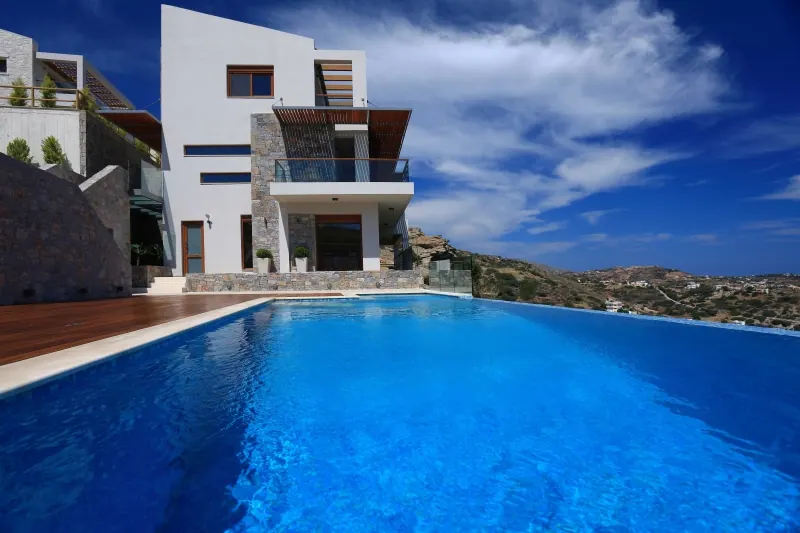
Listed with Greca House. More listings for sale
Sources30
- Wikipedia: Crete accessed 14 October 2026
- Wikipedia: European route E75 accessed 14 October 2026
- Βικιπαίδεια: Δήμος Ρεθύμνης accessed 14 October 2026
- Cretan Beaches: Παραλία Σφακάκι accessed 14 October 2026
- Cretan Beaches: Stavromenos beach accessed 14 October 2026
- ARCHELON: Loggerhead hatchlings found their way to the sea despite the intense light pollution in Rethymnon accessed 14 October 2026
- ARCHELON: Crete, Rethymno (project area) accessed 14 October 2026
- ARCHELON: The loggerhead sea turtles are back to the beaches of Crete to nest accessed 14 October 2026
- Wikipedia: Rethymno accessed 14 October 2026
- Βικιπαίδεια: Ρέθυμνο accessed 14 October 2026
- Explore Crete: Rethymnon, Venetian harbour accessed 14 October 2026
- Wikipedia: Fortezza of Rethymno accessed 14 October 2026
- Municipality of Rethymno: Renaissance Festival accessed 14 October 2026
- University of Crete: About the University accessed 14 October 2026
- Wikipedia: Arkadi Monastery accessed 14 October 2026
- Wikipedia: Heraklion Archaeological Museum accessed 14 October 2026
- Wikipedia: Knossos accessed 14 October 2026
- Wikipedia: Minoan Palatial Centres accessed 14 October 2026
- Greek News Agenda: Crete's Minoan palaces on the UNESCO World Heritage List accessed 14 October 2026
- Wikipedia: Chania accessed 14 October 2026
- Wikipedia: Heraklion International Airport accessed 14 October 2026
- Newmoney: Αεροδρόμιο Καστέλλι, σε έναν χρόνο ολοκλήρωση, μέσα στο 2027 δοκιμαστικές πτήσεις accessed 14 October 2026
- Minoan Lines accessed 14 October 2026
- ANEK Lines: Chania accessed 14 October 2026
- Weather2Travel: Rethymnon climate accessed 14 October 2026
- Wikipedia: Cretan cuisine accessed 14 October 2026
- Wikipedia: Dakos accessed 14 October 2026
- Wikipedia: Graviera accessed 14 October 2026
- Independent Authority for Public Revenue (AADE): Geographical indications for spirit drinks accessed 14 October 2026
- Greca House listing GH-107025 accessed 14 October 2026