Evia
Εύβοια
Central Greece
Evia is the second-largest Greek island, and you can drive onto it: two bridges cross the strait at Chalkida. In the north are Aidipsos, with its thermal springs, and the harbour village of Limni, while Chalkida and Loukisia are in the middle and Karystos and Styra in the south, and Code Athena has one holiday home here (Villa Leon, at Loukisia).
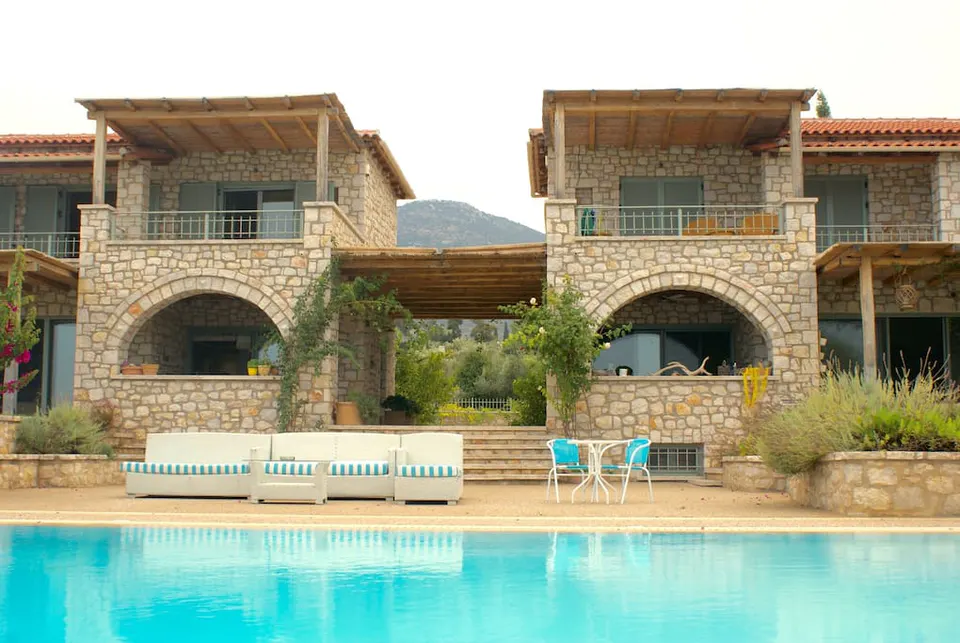
Our homes in Evia
An island with a bridge
Evia is the second-largest Greek island after Crete (about 180 km long and between 6 and 50 km wide, with Mount Dirfys rising to 1743 m). A little over two hundred thousand people live on it. You do not need a ferry to reach it: at Chalkida the Euripus strait narrows to some forty metres and two bridges cross it, an old sliding bridge that dates from 1962 and a cable-stayed one that opened in the early 1990s. The island falls into three parts, of which the north is fertile and forested, the middle is mountainous with farming in the coastal valleys, and the south is barer.
Chalkida and the middle
Chalkida (the island's main town) sits on the strait at its narrowest point, where on most days the current reverses about every six hours and runs fast enough that small boats cannot always sail against it, so people come to the old bridge to watch. The waterfront promenade is lined with cafés and restaurants. The Karababa fortress stands on Kanithos hill on the mainland shore, with views over the town and the strait, and the Athens suburban railway runs out to Chalkida.
Our own Villa Leon, a three-storey villa with five bedrooms, a pool and a garden in the middle of its own estate, is at Loukisia (15 km from Chalkida and 90 km from Athens), in a quiet area of holiday houses, and it takes up to 12 guests.
Eretria faces Attica across the narrow southern gulf (a ferry links it with Skala Oropou on the Attica side). It has the remains of the ancient city, including one of the oldest known theatres and the House of the Mosaics, as well as a museum with finds from Eretria and nearby Lefkandi.
The north: Limni and Aidipsos
Aidipsos (at the north-western end of the island) is a spa town with more than eighty thermal springs, whose baths have been in use since at least the fourth century BC, and, according to the Greek National Tourism Organisation, it was the Roman general Sulla who established the first Roman baths there. The town flourished in the early 1900s, when most of its hotels were built. Its spa centres stay open all year, and a ferry runs daily between Aidipsos and Arkitsa, which lies across the water on the mainland.
Limni is a harbour village on the northern Evian Gulf, and its neoclassical mansions (from the 19th and early 20th centuries) reflect the commercial and maritime prosperity of the area. The coastal road has cafés and ouzo taverns, and the village is known for fresh fish and seafood.
The north also carries the mark of the fire of August 2021, which burned more than fifty thousand hectares of forest and farmland, including the land around Rovies and Limni. If you are thinking of staying or buying there, it may be worth looking at the slopes around a place as well as at the house.
The south: Karystos and Styra
Karystos lies at the southern end of the island, with Mount Ochi behind it, and it has neoclassical architecture, a harbour promenade and, on the eastern beach, the Bourtzi (a reconstructed Venetian fortress). The Dimosari gorge, a walk of about ten kilometres, begins on Ochi and ends at the sea. The best known and best preserved of the Dragon houses is on the mountain, one of some twenty large stone buildings in southern Evia that were put together without mortar from massive blocks, and nobody has agreed who built them or when. Karystos is some 120 to 130 km from Chalkida, two to two and a half hours by road, and from Attica there is also a ferry that leaves Rafina for Marmari, a crossing of about an hour on a seasonal timetable, followed by a drive.
Styra also faces Attica across the southern Evian Gulf, and Nea Styra, the more modern seaside area, has beaches and hotels as well as cafés, while a ferry links it with Agia Marina on the mainland. Ancient Styra is named in the Catalogue of Ships in Homer's Iliad. Marmari (between Chalkida and Karystos) draws windsurfers and kitesurfers, and off the south-eastern tip of the island the Cavo D'Oro passage was once among the most dangerous stretches of the Aegean for shipping.
When to go, and what to eat
Thanks to the bridges, Evia can be reached at any time of year, and climate tables for Chalkida give a mean daily maximum of about 25 °C in May and 29 °C in September, against more than 32 °C in July and August. There is almost no rain in midsummer (rain returns in October), and the meltemi, the strong northerly etesian winds, blows on and off between about mid-May and mid-September. May and September are therefore likely to be the easier months for walking, since July and August are hot by day.
Local dishes include goat and lamb cooked with herbs, local cheeses, honey, figs, seafood and, at Limni, fresh fish and ouzo along the coastal road. Kymi (on the east coast) is known for its dried figs, which have protected designation of origin status and are dried in the sun in August.
For sale in Evia
On 14 October 2026 Greca House, a real-estate agency in Athens since 2008, had 56 properties for sale on Evia in its listings. Some of them, all homes, are shown here with their asking prices.
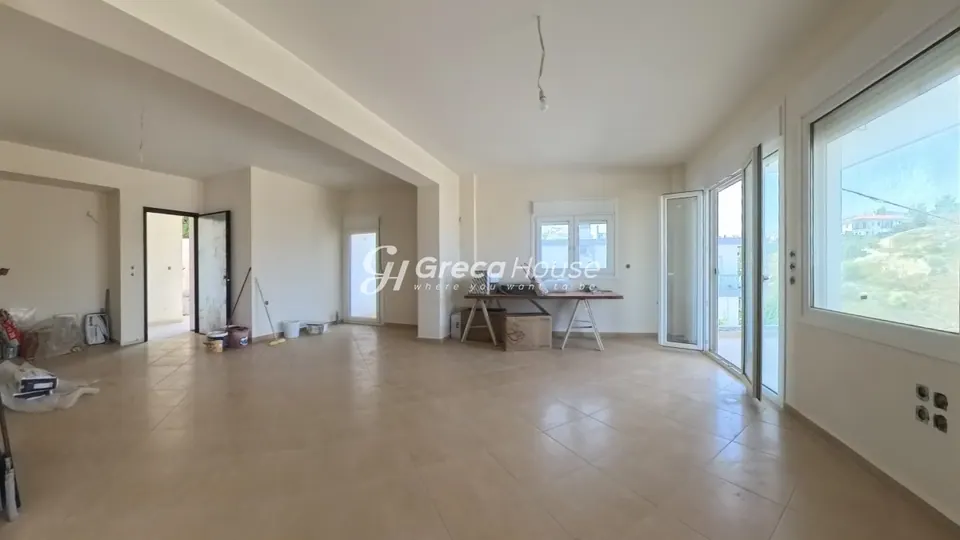 Apartment
Xirovrysi, Chalkida
135 m² 3 bedrooms 2 bathrooms
€270,000
Asking price on 15 October 2026
Apartment
Xirovrysi, Chalkida
135 m² 3 bedrooms 2 bathrooms
€270,000
Asking price on 15 October 2026
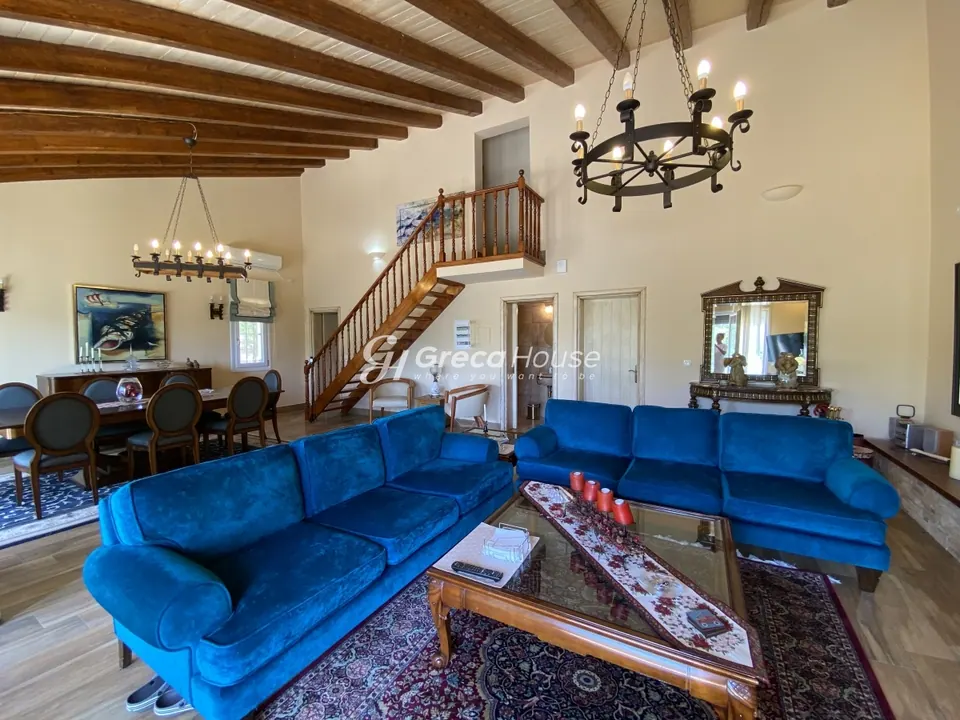 House
Gymno, Amarynthos
170 m² Plot 12,000 m² 4 bedrooms 3 bathrooms
€450,000
Asking price on 15 October 2026
House
Gymno, Amarynthos
170 m² Plot 12,000 m² 4 bedrooms 3 bathrooms
€450,000
Asking price on 15 October 2026
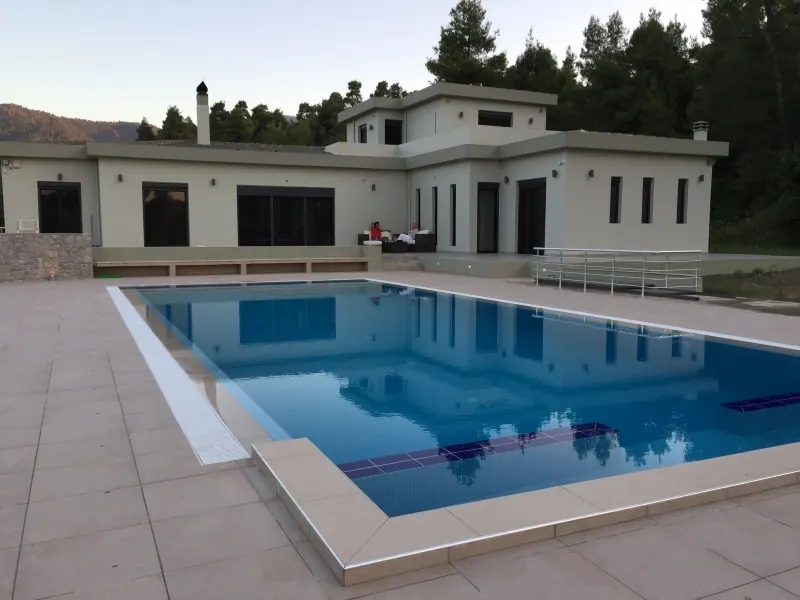 Villa
Prokopi
445 m² Plot 6,200 m² 4 bedrooms 6 bathrooms
€695,000
Asking price on 15 October 2026
Villa
Prokopi
445 m² Plot 6,200 m² 4 bedrooms 6 bathrooms
€695,000
Asking price on 15 October 2026
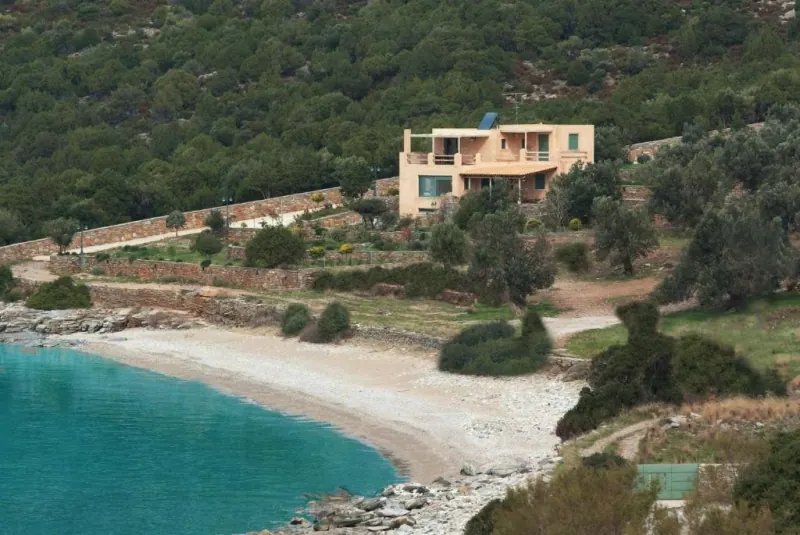 Villa
Marmari
250 m² Plot 5,000 m² 4 bedrooms 3 bathrooms
€1,700,000
Asking price on 15 October 2026
Villa
Marmari
250 m² Plot 5,000 m² 4 bedrooms 3 bathrooms
€1,700,000
Asking price on 15 October 2026
Listed with Greca House. More listings for sale
Sources34
- Wikipedia: Euboea accessed 14 October 2026
- Visit Greece: Evia accessed 14 October 2026
- Wikipedia: Euripus Strait accessed 14 October 2026
- Wikipedia: Euripus Bridge accessed 14 October 2026
- Wikipedia: Chalcis accessed 14 October 2026
- Visit Greece: Chalkida accessed 14 October 2026
- Visit Greece: Karababa Castle accessed 14 October 2026
- Nikana: the tidal currents of Halkida accessed 14 October 2026
- Wikipedia: Eretria accessed 14 October 2026
- Visit Greece: Edipsos (Aidipsos) accessed 14 October 2026
- ferriesedipsos.gr: Edipsos-Arkitsa ferry accessed 14 October 2026
- Visit Greece: Limni accessed 14 October 2026
- Wikipedia: 2021 Greece wildfires accessed 14 October 2026
- in.gr: North Evia fire, 8 August 2021 accessed 14 October 2026
- Visit Greece: Karystos accessed 14 October 2026
- Visit Greece: Dimosari gorge accessed 14 October 2026
- Wikipedia: Karystos accessed 14 October 2026
- Wikipedia: Dragon houses accessed 14 October 2026
- Wikipedia: Styra, Greece accessed 14 October 2026
- To Vima: ferry on the Nea Styra to Agia Marina route accessed 14 October 2026
- Wikipedia: Styra accessed 14 October 2026
- Wikipedia: Marmari accessed 14 October 2026
- Ferryscanner: Rafina to Marmari accessed 14 October 2026
- Wikipedia: Rafina accessed 14 October 2026
- Wikipedia: Cape Kafireas accessed 14 October 2026
- Wikipedia: Meltemi accessed 14 October 2026
- Wikipedia: Aidipsos accessed 14 October 2026
- Wikipedia: Kymi accessed 14 October 2026
- Visit Greece: the dried figs of Kymi accessed 14 October 2026
- Greca House: properties for sale on the islands accessed 14 October 2026
- Greca House listing GH-107812 accessed 14 October 2026
- Greca House listing GH-107815 accessed 14 October 2026
- Greca House listing GH-12837 accessed 14 October 2026
- Greca House listing GH-106500 accessed 14 October 2026