Lefkada
Λευκάδα
Ionian Islands
Lefkada is an Ionian island joined to the mainland by a causeway and a floating bridge, so you arrive by road. The east coast looks across sheltered water to Meganisi and Skorpios. The west, by contrast, faces open sea, with long beaches below steep cliffs, and the capital (Lefkada Town) sits beside a lagoon in the north.
The causeway and the town
Lefkada is an island you can drive onto, since a causeway and a floating bridge carry the road across the canal from the mainland (the canal took its present form by 1903, and in the 1980s the bridge replaced the ferry that crossed it). Near the island's entrance stands the castle of Agia Mavra, begun around 1300 by the Frankish ruler John Orsini and given nine bastions and a moat by the Ottomans after 1479. The restored castle was inaugurated in May 2024, after almost six years of work.
Lefkada Town has about nine thousand residents (the Venetians placed their capital on its present site in 1684), and earthquakes have evidently shaped what was built: the older houses use timber and lighter materials, and the quake of 1825 destroyed much of the town. In the north, beside the lagoon, Gyra is a seven-kilometre strip of white sand, while the lagoon itself belongs to the Natura 2000 network and is a stopping place for migrating birds (the old salt pans outside the town stopped working in 1947).
The east coast
The east coast looks across a channel to the mainland, and its bays and coves are the more sheltered ones, with Skorpios and Meganisi on the horizon and the small wooded island of Madouri off Nidri. Skorpios is private (Aristotle Onassis bought it in 1963), whereas Meganisi has about nine hundred residents in three villages, Katomeri, Vathy and Spartochori, and a ferry runs there from Nidri.
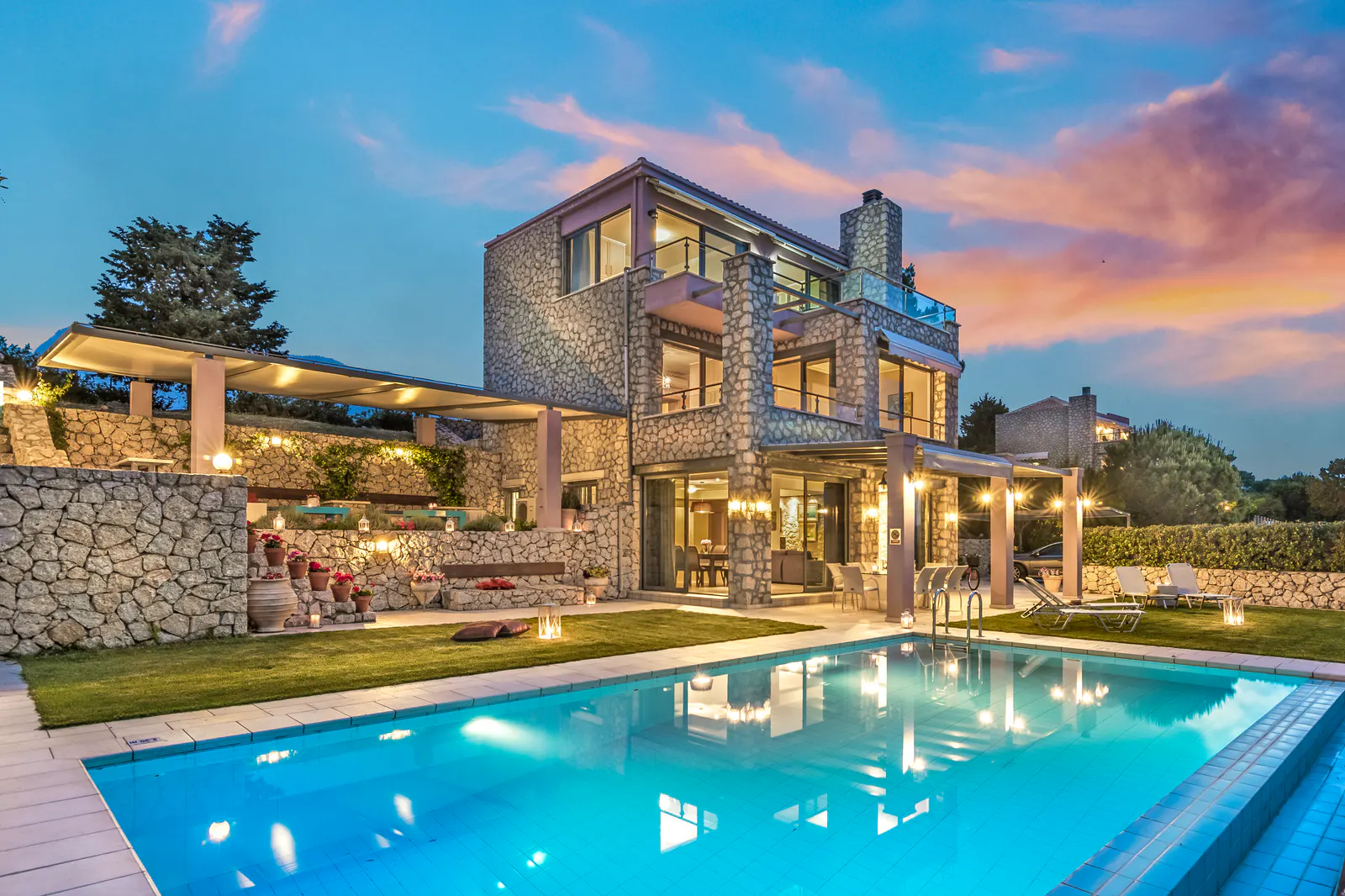
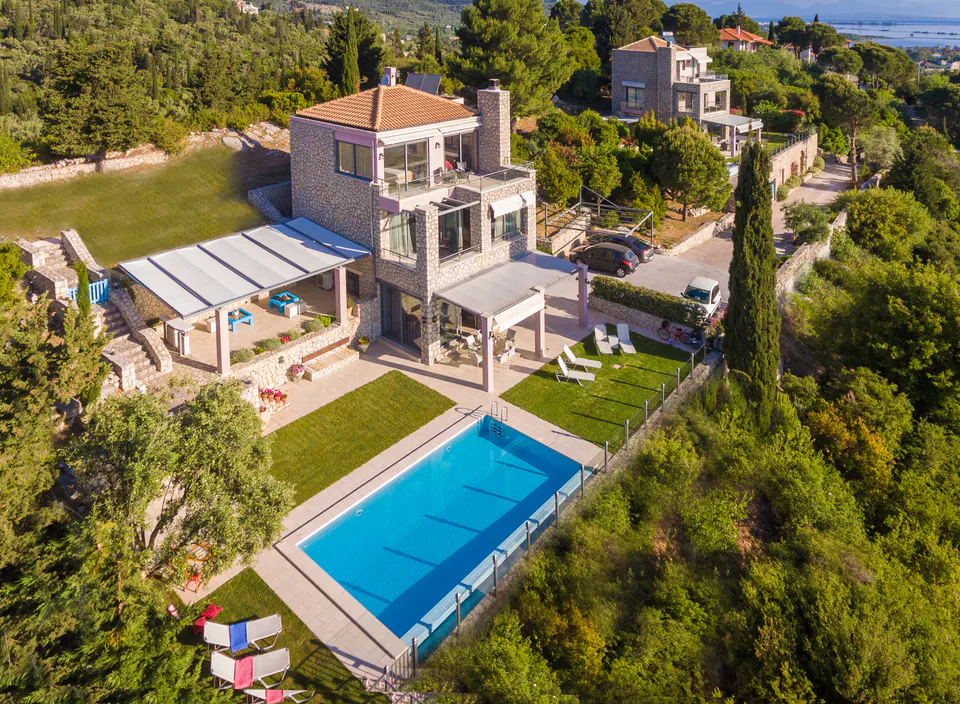
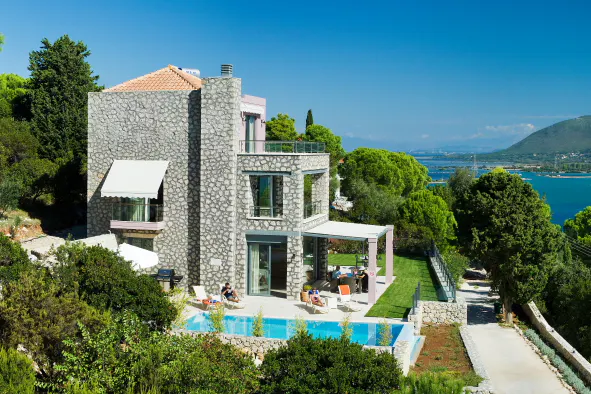
Lygia (950 residents at the 2021 census) is a fishing village about 5 km from Lefkada Town, with a small harbour and fish tavernas, and the municipality calls it the second-largest fishing centre in western Greece. Code Athena's two houses are here: Villa Christy, with five bedrooms, and Villa Tina, with four bedrooms for up to eight guests, both of them stone villas with a pool and a garden, looking over the water to the mainland, Meganisi and Skorpios. The beach is about 200 m away, and tavernas and shops about 500 m.
Nidri (about 16 km south of the town) is the island's largest resort, well supplied with tavernas and bars. At the 2021 census the village itself had a little over a thousand residents. Not far from it, a shaded path through the Dimosari gorge leads to a waterfall more than 10 m high (Visit Greece, the national tourism organisation's site, gives 30 to 40 minutes on foot). The German archaeologist Wilhelm Dörpfeld argued that Lefkada, and the Nidri area in particular, was Homer's Ithaca, a view later archaeologists have generally not accepted. He died on Lefkada in 1940 and is buried at Vlychos, nearby.
The west coast
The west coast faces the open Ionian Sea, and its beaches are long and sandy, below cliffs: Kathisma is easy to reach by car and has restaurants and bars close by, while Pefkoulia (near Agios Nikitas) runs for a couple of kilometres under wooded hills. Further south, Egremni is a long beach of white sand and pebbles, and Porto Katsiki, about 35 km from Lefkada Town, lies below white cliffs and is reached by a stairway from the cliff-top car park (boats also run there from Vasiliki and Nidri). In the earthquake of 17 November 2015 a flank of Egremni collapsed, and the way down to the beach changed afterwards, so it may be wise to ask locally before you go. At the island's southern end, the white cliffs of Cape Lefkada belong to the legend of Sappho's leap.
Getting there, and when to go
Aktion airport (on the mainland near Preveza) is about 18 km from the town, and the municipality says direct flights from Europe operate between April and October. Athens is 378 km away by road (about four and a half hours by coach). From the north-west the road uses the Preveza-Aktio undersea tunnel, which opened in 2002.
In the town, July and August highs average about 31 °C and January lows about 6 °C, and the town gets a little over a metre of rain a year (December is the wettest month and July almost dry). Outside the summer months it may be worth checking what is open. The International Folklore Festival has run in summer since the 1960s, and the Festival of Letters and Arts began in the 1950s.
Local food and wine
The island has products of its own, among them the lentils of Egklouvi, which carry a protected designation of origin from the European Union and have been grown around the village of Egklouvi since at least the 18th century. The wines of the Lefkada protected geographical indication (set up in 2000) include reds from Vertzami and whites from Vardea, and the Greek National Tourism Organisation also lists Lefkadian salami and ladopita, an olive-oil pie.
For sale in Lefkada
On 14 October 2026 Greca House, a real-estate agency in Athens since 2008, listed five properties for sale on and around Lefkada: three plots of land, a hotel and a complex of three villas. Shown here are the complex and the hotel on the island, and the plot of land on Meganisi.
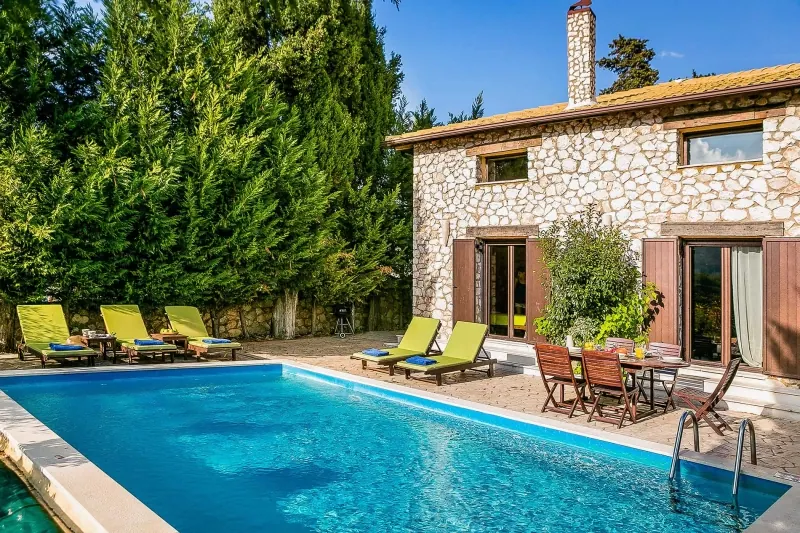 Complex
Lefkada
528 m² Plot 2,500 m² 9 bathrooms
€960,000
Asking price on 15 October 2026
Complex
Lefkada
528 m² Plot 2,500 m² 9 bathrooms
€960,000
Asking price on 15 October 2026
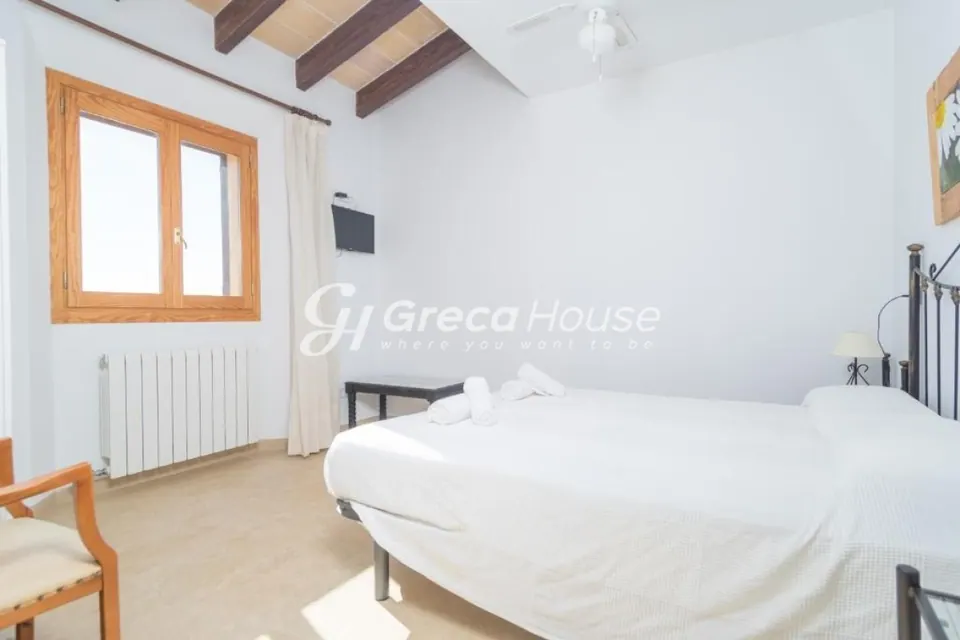 Hotel
Lefkada
380 m² Plot 500 m² 11 bathrooms
€1,200,000
Asking price on 15 October 2026
Hotel
Lefkada
380 m² Plot 500 m² 11 bathrooms
€1,200,000
Asking price on 15 October 2026
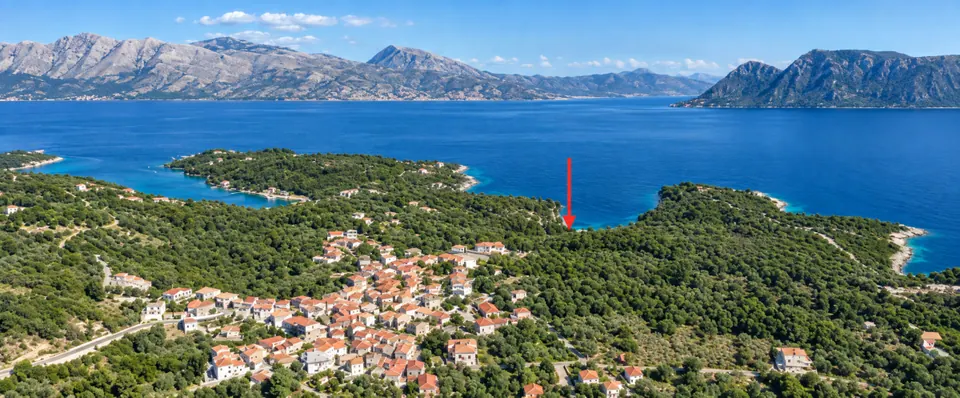 Land
Katomeri, Meganisi
31,000 m²
€2,000,000
Asking price on 15 October 2026
Land
Katomeri, Meganisi
31,000 m²
€2,000,000
Asking price on 15 October 2026
Listed with Greca House. More listings for sale
Sources36
- Wikipedia: Lefkada (island) accessed 14 October 2026
- Wikipedia: Lefkada (city) accessed 14 October 2026
- Wikipedia: Nidri accessed 14 October 2026
- Wikipedia: Meganisi accessed 14 October 2026
- Wikipedia: Skorpios accessed 14 October 2026
- Wikipedia: Madouri accessed 14 October 2026
- Wikipedia: Porto Katsiki accessed 14 October 2026
- Wikipedia: Cape Lefkada accessed 14 October 2026
- Wikipedia: 2015 Lefkada earthquake accessed 14 October 2026
- Wikipedia: Wilhelm Dörpfeld accessed 14 October 2026
- Wikipedia: Aktion National Airport accessed 14 October 2026
- Wikipedia: Aktio-Preveza Undersea Tunnel accessed 14 October 2026
- Βικιπαίδεια: Λευκάδα accessed 14 October 2026
- Βικιπαίδεια: Νυδρί accessed 14 October 2026
- Βικιπαίδεια: Λυγιά Λευκάδας accessed 14 October 2026
- Municipality of Lefkada: Access to the island of Lefkada accessed 14 October 2026
- Municipality of Lefkada: Historical references accessed 14 October 2026
- Municipality of Lefkada: Lygia and Katouna accessed 14 October 2026
- Municipality of Lefkada: lagoons, salt pans and the Gyra strip accessed 14 October 2026
- Lefkada tourism site of the Region of Ionian Islands: Nature accessed 14 October 2026
- Visit Greece: Lefkada accessed 14 October 2026
- Visit Greece: Hiking in the Dimosari gorge accessed 14 October 2026
- General State Archives, Lefkada branch: the Lefkada canal, 1688 to 1987 accessed 14 October 2026
- travel.gr: The castle of Agia Mavra in Lefkada accessed 14 October 2026
- Athens Voice: Mendoni in Lefkada for the inauguration of the castle of Agia Mavra accessed 14 October 2026
- The Thinking Traveller: Beaches on Lefkada accessed 14 October 2026
- Nikana: Pefkoulia beach accessed 14 October 2026
- Wines of Greece: PGI Lefkada accessed 14 October 2026
- To Vima: EU Commission adds Egklouvi lentil to PDO list accessed 14 October 2026
- Protothema: the Egklouvi lentil registered as a PDO accessed 14 October 2026
- Code Athena: Villa Christy
- Code Athena: Villa Tina
- Greca House listing GH-12979 accessed 14 October 2026
- Greca House listing GH-107866 accessed 14 October 2026
- Greca House listing GH-107316 accessed 14 October 2026
- Greca House: properties for sale on the islands accessed 14 October 2026