Mykonos
Μύκονος
Cyclades
Mykonos is a small island in the middle of the Cyclades, about 150 km east of Athens, with Chora and its windmills on the west coast and Delos some 2 km offshore. Away from the town there is the village of Ano Mera inland, a run of long sandy beaches in the south-east and a few open bays on the north coast. Code Athena has five holiday homes here.
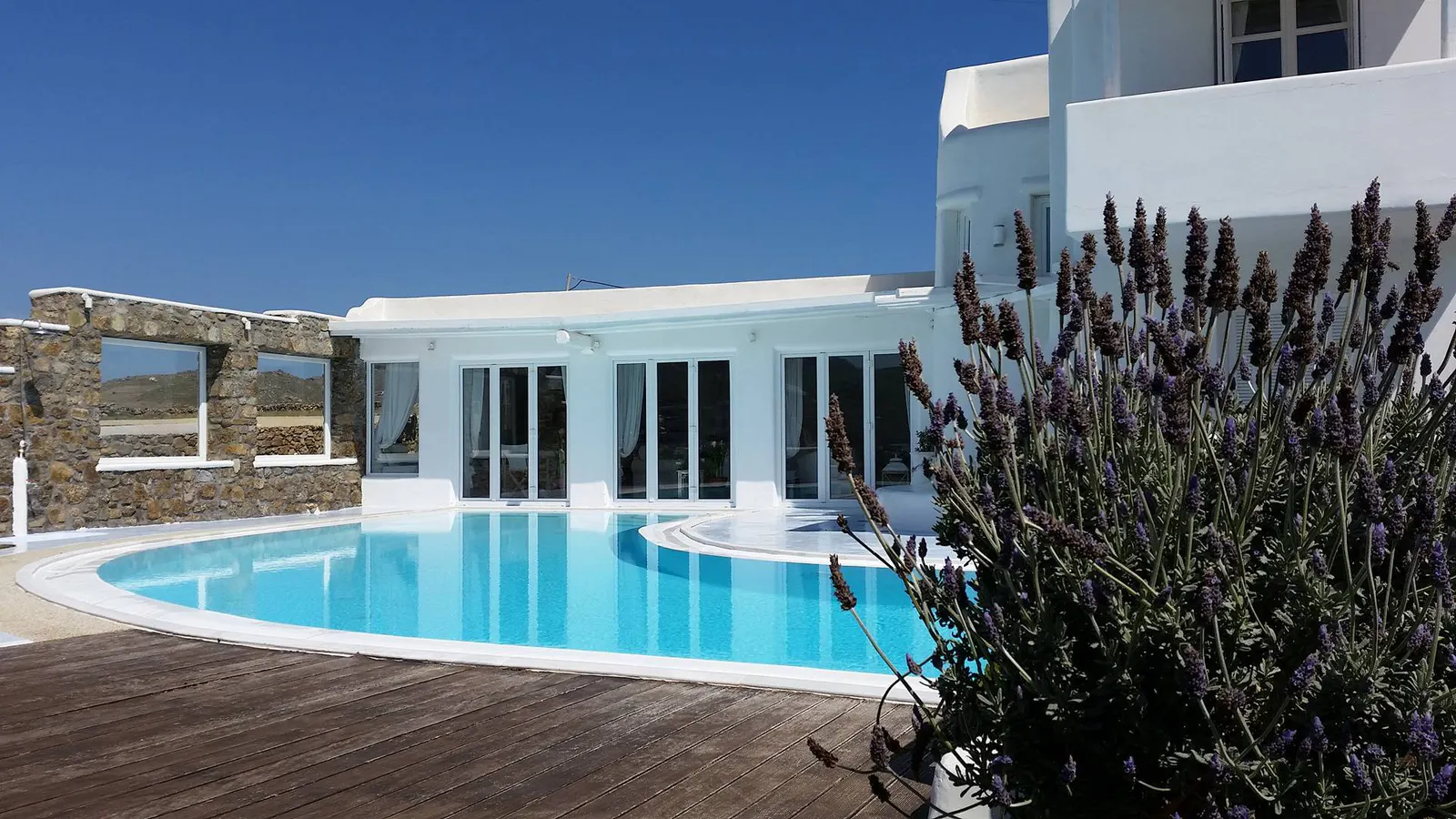
Our homes in Mykonos
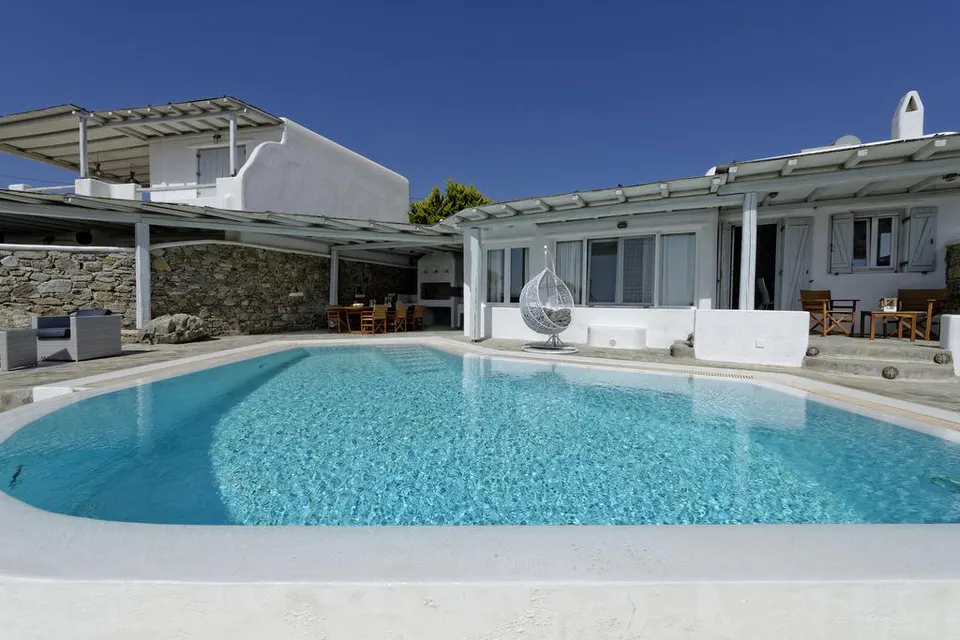 Villa Harmony
Villa · Kalafatis, Mykonos
5 bedrooms 4 bathrooms 190 m²
Villa Harmony
Villa · Kalafatis, Mykonos
5 bedrooms 4 bathrooms 190 m²
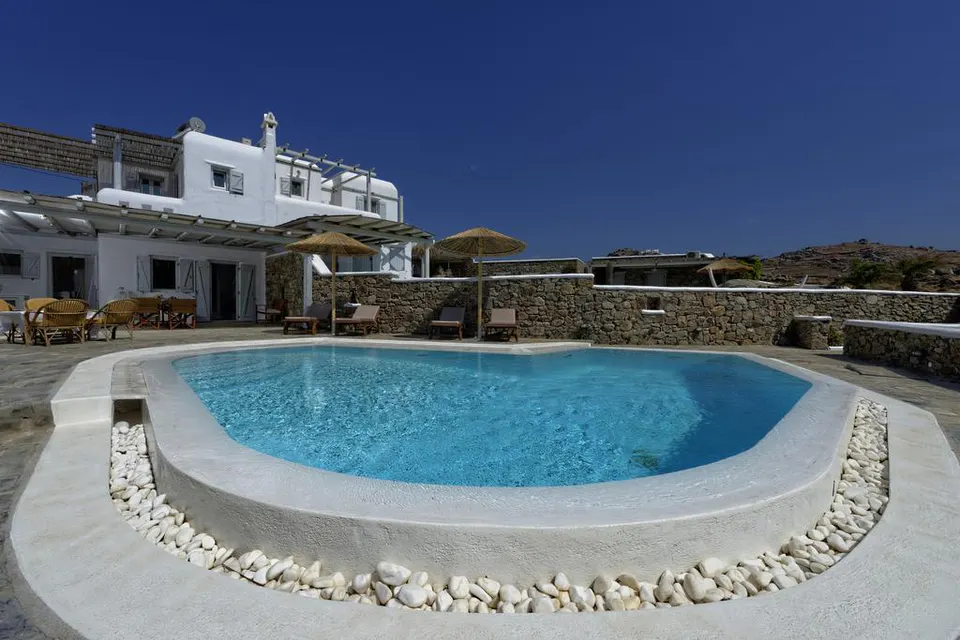 Villa Lucia
Villa · Kalafatis, Mykonos
4 bedrooms 3 bathrooms 160 m²
Villa Lucia
Villa · Kalafatis, Mykonos
4 bedrooms 3 bathrooms 160 m²
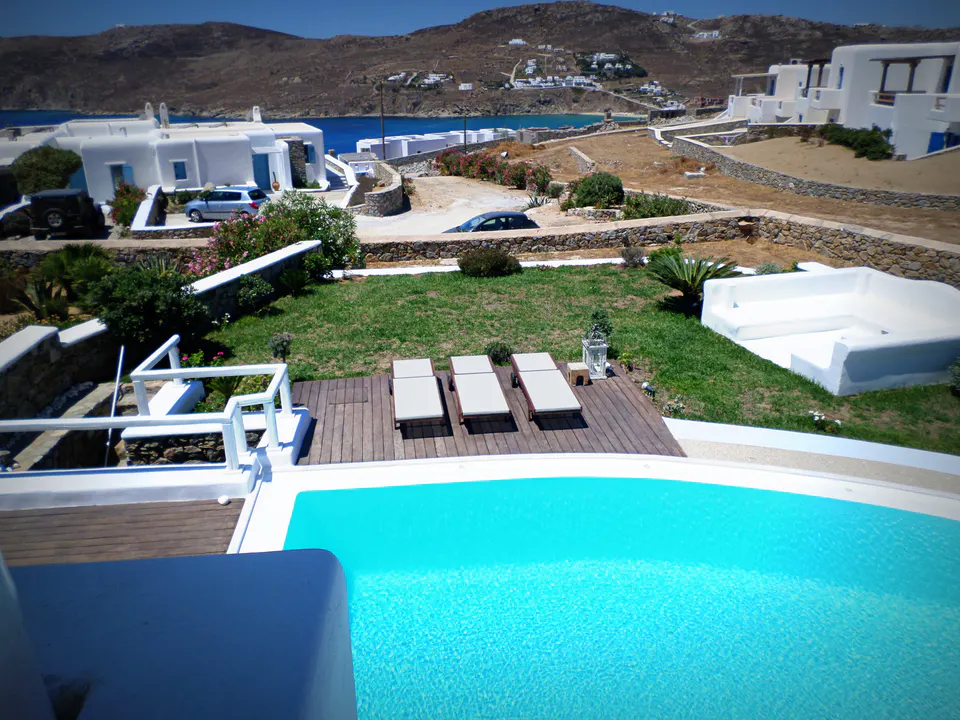 Villa Kalo Livadi
Villa · Kalafatis, Mykonos
4 bedrooms 3 bathrooms 180 m²
Villa Kalo Livadi
Villa · Kalafatis, Mykonos
4 bedrooms 3 bathrooms 180 m²
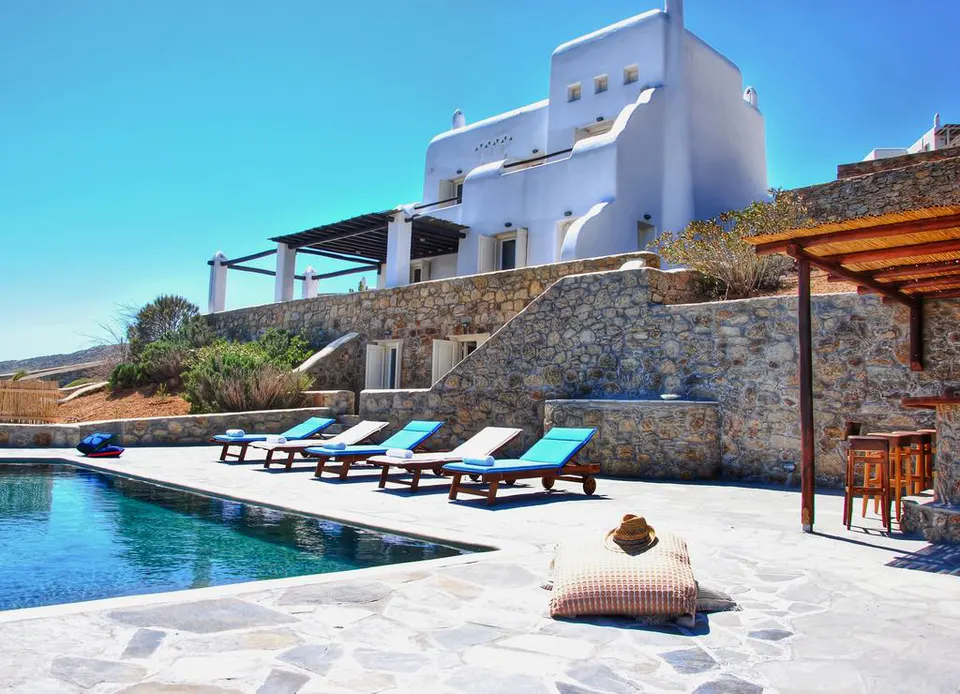 Kappa Villas
Villa · Agios Sostis, Mykonos
5 bedrooms 4 bathrooms 330 m²
Kappa Villas
Villa · Agios Sostis, Mykonos
5 bedrooms 4 bathrooms 330 m²
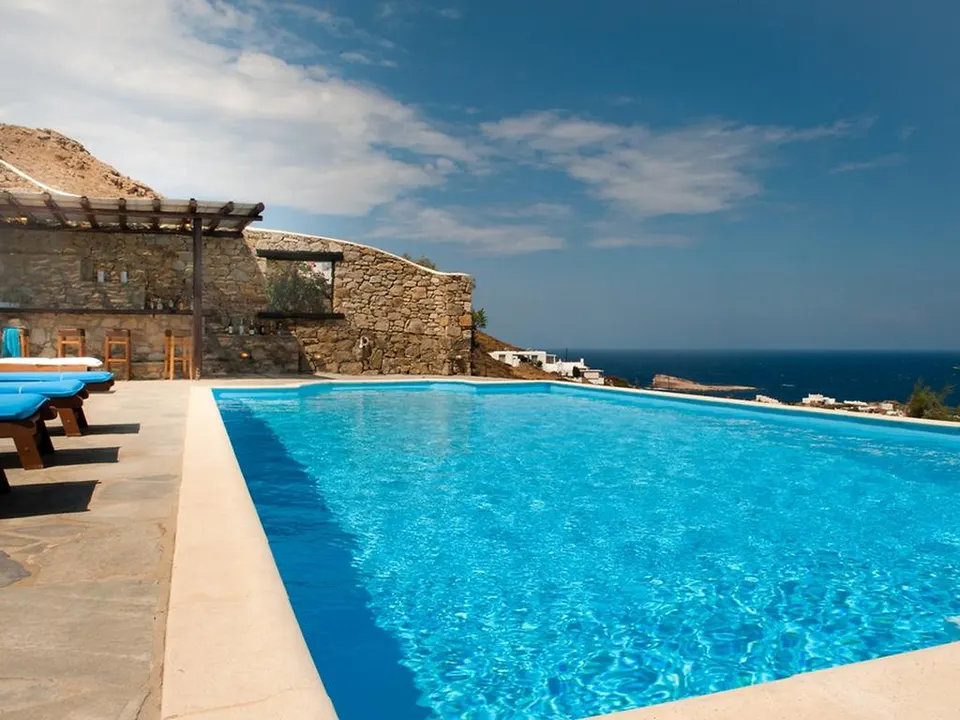 White Villas
Villa · Agios Sostis, Mykonos
5 bedrooms 4 bathrooms 330 m²
White Villas
Villa · Agios Sostis, Mykonos
5 bedrooms 4 bathrooms 330 m²
The island of the winds
Mykonos covers about 85 km² of mostly hilly ground, and 10 704 people lived here permanently at the 2021 census (the municipality also takes in Delos and Rineia). Its nickname, the island of the winds, is evidently earned. Northerly winds are the most frequent by the municipality's own figures, and in summer the meltemi keeps the days relatively cool and dry.
Chora, the main town, lies on the west coast, and its best-known landmark is possibly the row of windmills on a small hill above the water (seven of the sixteen on the island today, most of them built by the Venetians in the 16th century to grind wheat). Little Venice, where the first houses went up in the mid-18th century, is where many people gather to watch the sun set.
The Archaeological Museum near the old port keeps the Mykonos vase, a storage jar of about 675 BC that carries one of the earliest known pictures of the Trojan Horse. Delos, which myth makes the birthplace of Apollo and Artemis and which UNESCO added to the World Heritage List in 1990, is a short crossing away, and boats leave Chora daily, weather permitting (in winter, or on a day of strong meltemi, that can mean not at all).
Ano Mera and the south-east
Ano Mera, near the centre of the island (about 8 km east of Chora), had 1967 permanent residents at the 2021 census. Its square, pedestrianised in 2001, faces the monastery of Panagia Tourliani, founded in 1542 by monks who had left Paros to escape pirates, and is lined with cafés and tavernas known for meat from the spit and the grill.
The south side of the island is largely sheltered from the prevailing north wind. Kalo Livadi, a long and quiet stretch of sand, is about 2 km from Ano Mera (and 10 km from Chora); Kalafatis, a little further on, is a large, less developed beach that windsurfers favour for its offshore breeze; and Elia, one of the larger beaches on the island, has Agrari, calmer and less busy, next door. Buses from Chora reach Ano Mera, Kalafatis and Elia, although the Kalafatis bus may run only a few times a day.
Three of our homes are on this side. Villa Harmony and Villa Lucia are in Kalafatis (the first in a group of independent villas less than 2 km from the beach, the second a detached villa with its own pool, about six minutes' walk from it), and Villa Kalo Livadi overlooks Kalo Livadi beach, with four bedrooms for up to eight people.
The north coast
The beaches of the north coast are best reached by car or scooter. Panormos Bay opens to the north, and on it lie the long beach of Panormos and Agios Sostis, one of the more remote beaches on the island (there are no sunbeds or umbrellas for hire). Kappa Villas is close to Agios Sostis beach, with a wide view over the Aegean, and White Villas stands about 500 metres above it, a few minutes from both beaches.
Getting here
The airport (named after Manto Mavrogenous, who gave her fortune to the War of Independence) is about 4 km south-east of the town, with daily flights from Athens and, between May and October, direct flights from many European airports. By sea, ferries and high-speed boats leave Piraeus and Rafina, the second port of Athens (about 25 km east of the centre). The crossing out of Piraeus lasts roughly between three and a half and five and a quarter hours depending on the boat, while Golden Star Ferries gives two and a half hours for its route out of Rafina. Ferries and, as of 2021, most high-speed boats dock at the new port at Tourlos (2 to 3 km north of the town), which a sea bus links with the old port in Chora. Cars are not allowed into the town itself, and a hired car or scooter is the practical way to see the rest of the island.
When to go, and what to eat
Rain falls mainly between October and March, and on the National Observatory of Athens figures for 2008 to 2026 daytime highs average about 28 °C in July, 22 °C in October and 15 °C in January. The meltemi (the strong, dry north wind of the Aegean) blows between about May and September, most steadily in July and August; at force 7 or 8 most inter-island ferries cannot sail, so it may be wise to leave a spare day on either side of a boat.
The municipality's own list of what to eat makes a fair menu: louza (cured pork loin, seasoned with savory, oregano, allspice and pepper), kopanisti, a sharp PDO cheese of the Cyclades served on a mostra rusk, tyrovolia (the white unsalted cheese of sweet and savoury pies), the almond pastries and the honey pie.
Out of season
A permanent population of a little under 11 000 is set against close to 1.6 million passengers through the airport in 2025, and most hotels usually close at the end of October and reopen at the end of April or in early May. The island keeps its own calendar, notwithstanding. On the Saturday of the first week of Lent the icon of Panagia Tourliani is carried down to Chora from the monastery in Ano Mera, a walk of about 7 km that many islanders make with it, and on Lazarus Saturday it goes back up. For a quieter Mykonos, write to us with your dates and the number of guests.
For sale in Mykonos
On 15 October 2026 Greca House, a real-estate agency in Athens since 2008, had what is shown here among its listings for sale.
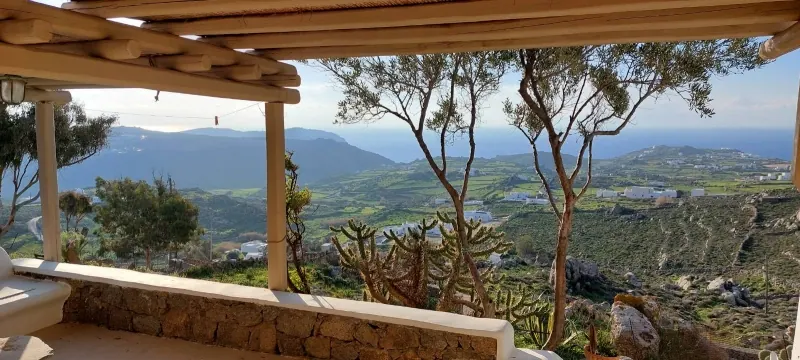
Listed with Greca House. More listings for sale
Sources25
- Wikipedia: Mykonos accessed 14 October 2026
- Βικιπαίδεια: Μύκονος accessed 14 October 2026
- Municipality of Mykonos: Information about the island accessed 14 October 2026
- Municipality of Mykonos: Historical overview accessed 14 October 2026
- Municipality of Mykonos: Ano Mera accessed 14 October 2026
- Δήμος Μυκόνου: Άνω Μερά accessed 14 October 2026
- Βικιπαίδεια: Άνω Μερά Μυκόνου accessed 14 October 2026
- Municipality of Mykonos: Transportation accessed 14 October 2026
- Greeka: Mykonos ports accessed 14 October 2026
- Municipality of Mykonos: How to get to Delos accessed 14 October 2026
- Municipality of Mykonos: Where to eat accessed 14 October 2026
- Δήμος Μυκόνου: Γεύσεις Μυκόνου accessed 14 October 2026
- Wikipedia: Mykonos windmills accessed 14 October 2026
- Visit Greece: Mykonos accessed 14 October 2026
- Wikipedia: Archaeological Museum of Mykonos accessed 14 October 2026
- Wikipedia: Mykonos vase accessed 14 October 2026
- Wikipedia: Delos accessed 14 October 2026
- Wikivoyage: Mykonos accessed 14 October 2026
- Wikipedia: Mykonos Airport accessed 14 October 2026
- To Vima: Fraport Greece airports see passenger traffic top 37 million in 2025 accessed 14 October 2026
- Wikipedia: Rafina accessed 14 October 2026
- Golden Star Ferries: Routes accessed 14 October 2026
- Wikipedia: Meltemi accessed 14 October 2026
- Wikipedia: Kopanisti accessed 14 October 2026
- Greca House listing GH-107564 accessed 14 October 2026