Exarcheia and Neapoli
Εξάρχεια και Νεάπολη
Athens: the centre
Exarcheia is the student and publishing quarter of central Athens, built up behind the Polytechnic and the National Archaeological Museum, and it is known as much for its bookshops, record shops, cafés and Saturday market as for its long record of protest. Neapoli climbs east of it, between Strefi hill and Lycabettus. A station of the new metro line is planned, and contested, on Exarcheia's square.
How the quarter came to be
Exarcheia takes its name from Exarchos, a merchant from Epirus whose general store, large for its day, stood where Themistokleous Street meets Solonos. The blocks around it were built up from the 1860s and 1870s, when the first residents were mostly builders and craftsmen from the Cyclades, and they lie within the Municipality of Athens (643 452 residents in 2021), roughly between Patision Street, Alexandras Avenue and Solonos.
The quarter grew up beside two institutions on Patision Street. The Polytechnic moved there in 1873 (its School of Architecture is still there, while the other schools are at Zografou), and next door the National Archaeological Museum went up between 1866 and 1889, to a plan by Ludwig Lange that Panagis Kalkos later reworked with Armodios Vlachos and Ernst Ziller.
From 14 November 1973 students occupied the Polytechnic against the dictatorship, until a tank broke through its gates early on 17 November (by the count of a 2004 study, at least 24 people were killed in the crackdown), and a march sets out from there every year in its memory. On 6 December 2008 a police special guard shot dead Alexandros Grigoropoulos, who was 15, on Messolongiou Street, and the protests that followed were possibly the largest Greece had seen since the dictatorship ended.
From the square to Lycabettus
On one corner of the square stands the Blue Building (1932 to 1933, by Kyriakos Panagiotakos), named for its original colour (it was painted white in the 2000s) and regarded as an important, and for its time pioneering, example of interwar modernism in Athens. Kallidromiou Street (roughly, the street of beauty) runs for no more than 750 metres below Strefi hill towards Lycabettus, past a few neoclassical houses and the Aiolos mansion of 1920.
Strefi hill (limestone, about 150 metres above sea level) was quarried by the Strefis family until the 1920s, then planted and opened to the public in 1938, and its terraces look out to the Acropolis and Lycabettus. In December 2023, after residents appealed, the Council of State suspended part of a regeneration of the hill, ordering as a provisional measure that the metal viewing platforms planned along its ridge should not be built until the case was decided.
Neapoli (literally, new town) begins across Kallidromiou, with Alexandras Avenue to the north. It has had a character of its own since the nineteenth century, as a neighbourhood of students and intellectuals and of a rising middle class, with courtyards and neoclassical houses, and its streets climb towards Lycabettus (277 metres, the highest point in central Athens).
Getting around, and Line 4
Three metro stations lie at the quarter's edges, Omonia (Lines 1 and 2), Panepistimio (Line 2) and Viktoria (Line 1), and buses have lanes of their own on Alexandras Avenue, whereas the square has had no rail since its tram (line 14) was withdrawn in 1937.
Exarcheia station, on the square, is one of fifteen on the first section of Line 4 (Alsos Veikou to Goudi), and work at the square began in August 2022 against strong local opposition. The Council of State refused residents' request to suspend the works in 2023 (the felling of the square's trees that autumn led to protests), and under a protocol of June 2025 a fifth of the site was to go back to the residents while the rest stayed reserved for the works.
In April 2026 Elliniko Metro, which runs the project, set the autumn of 2032 as its target for the line (the contract said 2029 and the contractor had asked for 2034). As of late September 2026, nevertheless, the square was still fenced off with no work under way, and the tunnel-boring machine had stood idle at Kypseli since May, after damage appeared in apartment buildings there, so that date may well move.
The museum, the books and the market
The National Archaeological Museum holds, among much else, the gold mask known, wrongly, as the Mask of Agamemnon, Schliemann's finds from Mycenae, the bronze god from Artemision and the main fragment of the Antikythera mechanism. In December 2025 the preliminary studies for an underground extension, by David Chipperfield Architects with Alexandros Tombazis, were approved.
Books have long been the quarter's trade (the city's official guide reckons there are as many bookshops and publishing houses as cafés), and the move of the Estia bookshop to Solonos Street in the early 1990s seems to have made it the area with the most bookshops in Athens. What is more, the guide counts dozens of record shops, new and used.
On Saturday mornings Kallidromiou becomes a street market (laiki) of olive oil, honey, fish, herbs, fruit and vegetables, and in December 2024 the Financial Times named it among the best food markets in the world. For a meal, the same guide points to meze places and all-day cafés.
Living and buying here
A law of 1929, which let separate owners hold the flats of one building, opened the way for the Athenian apartment block (polykatoikia), and in the 1930s Exarcheia, like Kolonaki and Kypseli, saw a boom of modern-style blocks. After the war antiparochi (a plot traded to a builder for some of the flats) became the usual way to build, and it swelled in the 1960s.
The quarter has long drawn students and intellectuals, artists and activists, and in the late 2010s a large community of migrants and refugees settled here as well. Its rough edges are real: in December 2024, on the anniversary of Grigoropoulos's death, riot police chased protesters through its streets, and in December 2025 they sealed the way in with tear gas and stun grenades. Critics, meanwhile, say the area is gentrifying, and residents' assemblies have campaigned against the metro works and voiced concern at the spread of holiday lets.
Buyers should know that Exarcheia and Neapoli lie in the first district of the Municipality of Athens, where new registrations of homes for short-term rental are suspended until 31 December 2026. The Line 4 tunnel is also planned to pass beneath them, so it may be worth asking where an older building stands relative to the route.
For sale in Exarcheia and Neapoli
On 15 October 2026 Greca House, a real-estate agency in Athens since 2008, had these homes in its listings for sale.
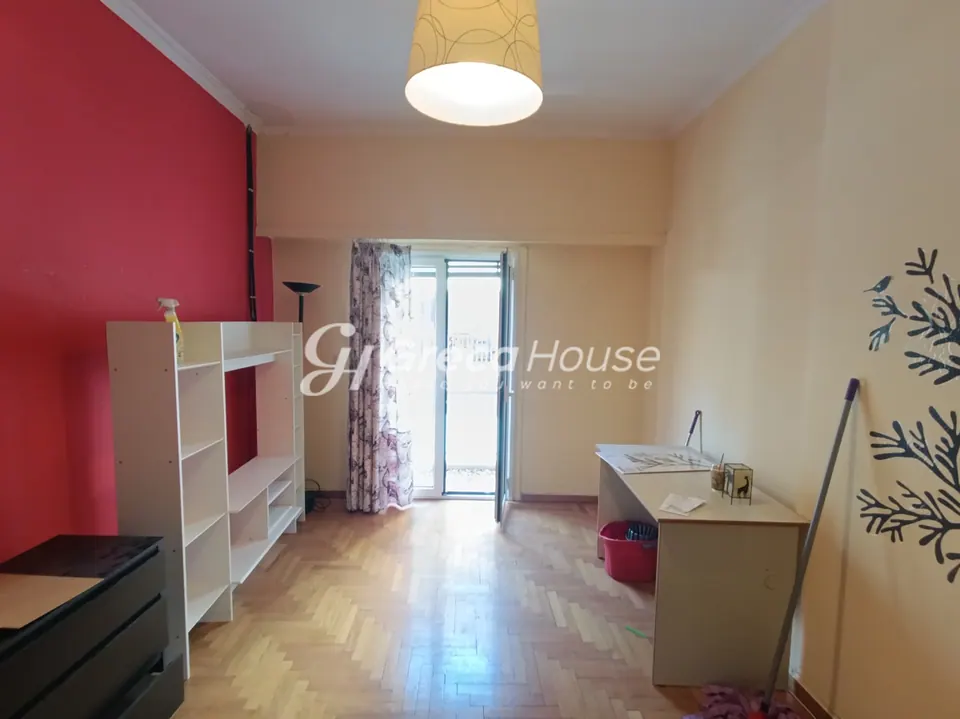 Apartment
Neapoli Exarcheion
60 m² 1 bedroom 1 bathroom
€150,000
Asking price on 15 October 2026
Apartment
Neapoli Exarcheion
60 m² 1 bedroom 1 bathroom
€150,000
Asking price on 15 October 2026
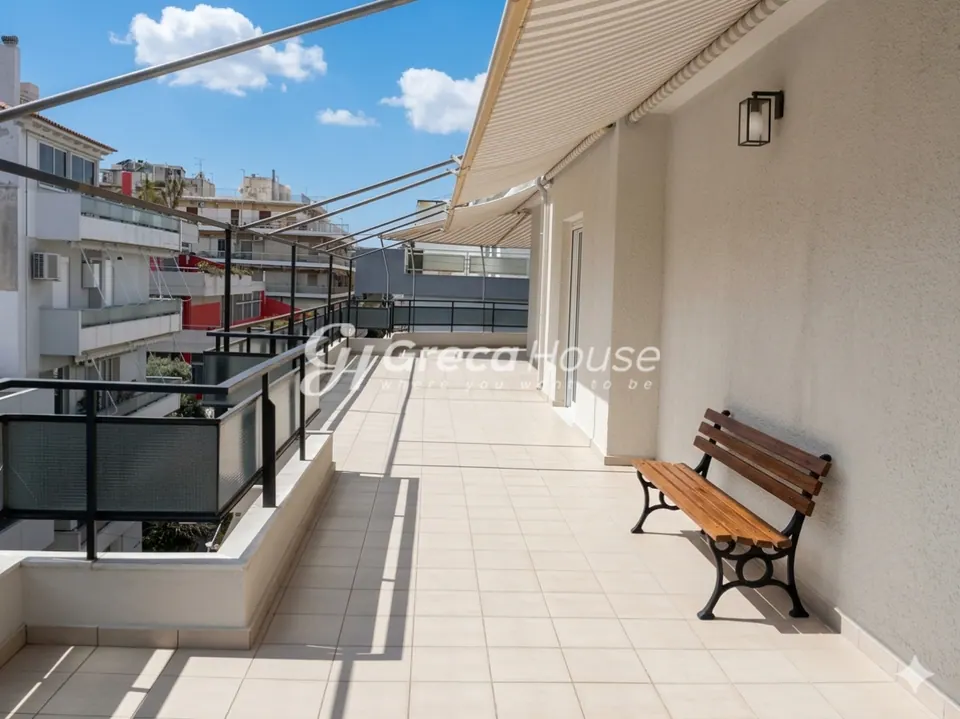 Maisonette
Neapoli Exarcheion
111 m² 2 bedrooms 2 bathrooms
€255,000
Asking price on 15 October 2026
Maisonette
Neapoli Exarcheion
111 m² 2 bedrooms 2 bathrooms
€255,000
Asking price on 15 October 2026
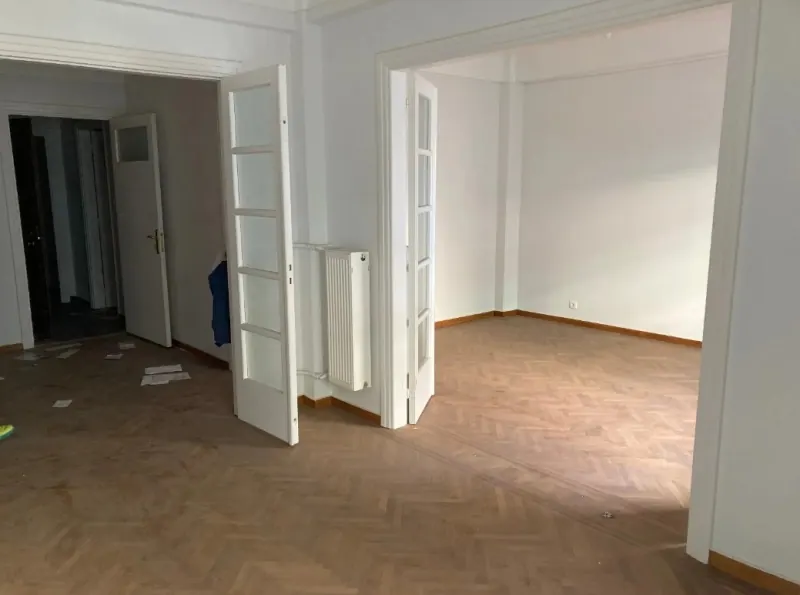 Apartment
Exarcheia
114 m² 3 bedrooms 1 bathroom
€270,000
Asking price on 15 October 2026
Apartment
Exarcheia
114 m² 3 bedrooms 1 bathroom
€270,000
Asking price on 15 October 2026
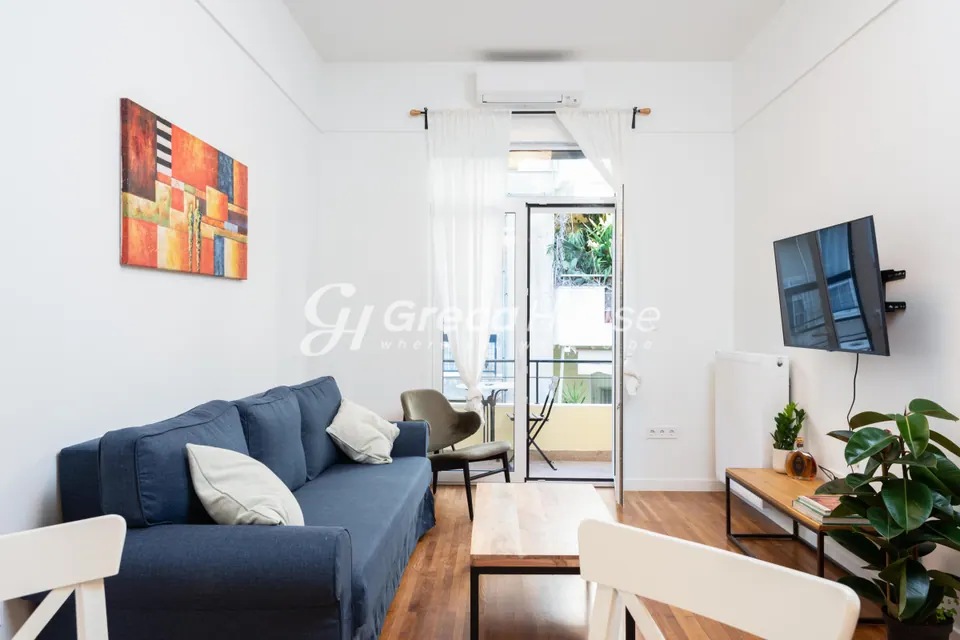 Apartment
Exarcheia
160 m² 3 bedrooms 2 bathrooms
€550,000
Asking price on 15 October 2026
Apartment
Exarcheia
160 m² 3 bedrooms 2 bathrooms
€550,000
Asking price on 15 October 2026
Listed with Greca House. More listings for sale
Exarchia - Neapoli: the median asking price on Greca House's own listings was €3,241 per m² on 1 October 2026, across 12 homes with a stated floor area. These are asking prices, not sale prices. Source: Greca House research.
Sources40
- Wikipedia: Exarcheia accessed 14 October 2026
- Βικιπαίδεια: Εξάρχεια accessed 14 October 2026
- Wikipedia: Athens accessed 14 October 2026
- in.gr: Στο Κολωνάκι επικράτησε ο Καμίνης (26 May 2014) accessed 14 October 2026
- Wikipedia: National Technical University of Athens accessed 14 October 2026
- Wikipedia: Athens Polytechnic uprising accessed 14 October 2026
- Wikipedia: National Archaeological Museum, Athens accessed 14 October 2026
- To Vima: National Archaeological Museum, unanimous approval for expansion and upgrade (16 December 2025) accessed 14 October 2026
- Βικιπαίδεια: Μπλε πολυκατοικία (Αθήνα) accessed 14 October 2026
- Wikipedia: The Blue Condominium of Exarcheia accessed 14 October 2026
- Wikipedia: Modern architecture in Athens (the polykatoikia section) accessed 14 October 2026
- Τα Νέα: η αθηναϊκή πολυκατοικία (27 July 2020) accessed 14 October 2026
- CNN Greece: Οδός Καλλιδρομίου, η ωραία των Εξαρχείων (updated 18 November 2023) accessed 14 October 2026
- Wikipedia: Strefi Hill accessed 14 October 2026
- Βικιπαίδεια: Λόφος του Στρέφη accessed 14 October 2026
- CNN Greece: Δούκας για λόφο Στρέφη (29 January 2024) accessed 14 October 2026
- CNN Greece: Απάντηση Μπακογιάννη στον Δούκα για τον λόφο του Στρέφη (29 January 2024) accessed 14 October 2026
- Wikipedia: Neapoli, Athens accessed 14 October 2026
- Athens Voice: Ξέρεις πού είναι η Νεάπολη (22 November 2017) accessed 14 October 2026
- Wikipedia: Lycabettus accessed 14 October 2026
- STASY: Line 1 accessed 14 October 2026
- STASY: Line 2 accessed 14 October 2026
- Wikipedia: Alexandras Avenue accessed 14 October 2026
- Wikipedia: Line 4 (Athens Metro) accessed 14 October 2026
- CNN Greece: ΣτΕ, απορρίφθηκε η αίτηση 50 κατοίκων των Εξαρχείων κατά του Μετρό (updated 8 November 2023) accessed 14 October 2026
- Proto Thema: Γραμμή 4 Μετρό, πρόοδος στα τούνελ, φρένα σε σταθμούς (20 June 2025) accessed 14 October 2026
- Powergame: Νέο χρονοδιάγραμμα για τη Γραμμή 4 του Μετρό (2 April 2026) accessed 14 October 2026
- To Vima: Metro works raise new building safety fears in Athens (23 September 2026) accessed 14 October 2026
- This is Athens: Exarchia locals guide accessed 14 October 2026
- in.gr: Έκλεισε το ιστορικό βιβλιοπωλείο της Εστίας (31 March 2013) accessed 14 October 2026
- To Vima: FT, Exarchia's farmers' market ranked among the world's best (8 December 2024) accessed 14 October 2026
- To Vima: Clashes in Athens after Grigoropoulos march (6 December 2024) accessed 14 October 2026
- Sigmalive: March for Grigoropoulos' 17th anniversary, clashes with police (8 December 2025) accessed 14 October 2026
- Greek City Times: Exarchia residents block metro site to reclaim public space (16 February 2026) accessed 14 October 2026
- in.gr: Επεκτείνεται το «μπλόκο» σε νέα Airbnb (8 January 2026) accessed 14 October 2026
- Greca House: Athens asking prices by neighbourhood, snapshot of 1 October 2026 accessed 14 October 2026
- Greca House listing GH-108359 accessed 14 October 2026
- Greca House listing GH-108341 accessed 14 October 2026
- Greca House listing GH-107244 accessed 14 October 2026
- Greca House listing GH-108310 accessed 14 October 2026