Plaka, Monastiraki and the historic centre
Πλάκα, Μοναστηράκι και το ιστορικό κέντρο
Athens: the centre
The historic centre of Athens, as the name is used here, is the old town around the northern and eastern slopes of the Acropolis, from Syntagma Square and the Parliament on one side to Monastiraki and its flea market on the other. Between them lie Plaka and Anafiotika, the Roman Agora and Hadrian's Library, with the bars of Psyrri next to Monastiraki and the Acropolis Museum on the south side of the rock.
The oldest quarter of Athens
Plaka lies on the north-east slope of the Acropolis and is usually counted as the oldest district of Athens, as it was built over residential areas of the ancient city and seems to have been lived in without a real break since the Neolithic. Abandoned for a time during the fighting of 1826, in the War of Independence, it was resettled in the first years of King Otto's reign by a mixed population of old Athenian families, craftsmen, professionals and soldiers, around the time Athens replaced Nafplio as the capital (1834).
Anafiotika, a cluster of small white houses on the north-east side of the rock, was built in the same reign by workers from the Cycladic island of Anafi who had come to work on the king's palace (about 45 houses remain). A fire in 1884 destroyed much of Plaka and made it possible to excavate the Roman Agora and Hadrian's Library. After a decline from the 1950s to the 1970s, a preservation plan in the 1980s brought the quarter back, and it is, notably, described as the only neighbourhood of Athens where all the utilities run underground, in tunnels built for the purpose.
Monastiraki, Psyrri and the markets
Monastiraki (the little monastery) takes its name from its square, where the church of the Pantanassa stands next to the Tzisdarakis Mosque of 1759, now an annex of the Museum of Modern Greek Culture. Adrianou Street is the main artery of the flea market, and Avissinias Square, with the second-hand bazaar of Yusurum, is its heart.
Ermou, possibly the best-known shopping street in the city, runs for about 1.5 km from Syntagma to Kerameikos, and its eastern stretch was closed to cars in 1997. Psyrri (the name probably comes from the island of Psara) had a poor reputation until the early 1990s and is known today for its bars and tavernas with live music, while some craftspeople have moved back in to make leather sandals and souvenirs. The Central Market, or Varvakeios, named after Ioannis Varvakis, the benefactor whose bequest paid for it, was inaugurated in 1884 and sells fish, meat, olives, spices and honey.
Syntagma and the ancient city
Syntagma (Constitution Square) takes its name from the constitution that King Otto was obliged to grant after the uprising of 3 September 1843. Across Amalias Avenue stands the old royal palace, designed by Friedrich von Gärtner and begun in 1836, which became the seat of the Greek Parliament in 1934. In front of it the Evzones of the Presidential Guard keep watch over the Tomb of the Unknown Soldier, and the National Garden lies around it.
North of the Acropolis, the Roman Agora was built between about 27 and 17 BC with money from Augustus. Beside its east gate stands the older Tower of the Winds (an octagonal marble tower that once held a water clock and carries reliefs of the eight winds). Hadrian's Library, on the same side of the rock, was built by the emperor in AD 132, and three churches were raised on its site in Byzantine times.
The Acropolis Museum, about 300 metres south-east of the Parthenon in Makrygianni, opened in June 2009 to a design by Bernard Tschumi with Michael Photiadis, and its glass floors let you look down into the excavation beneath it (houses and workshops of the classical and early Byzantine eras). Its entrance is on Dionysiou Areopagitou, the street along the south slope that Dimitris Pikionis redesigned in 1955 and that was closed to cars in 2003.
Getting around
Plaka's inner streets are pedestrianised, so it is reached from the edges, by the metro stations of Akropoli, Syntagma and Monastiraki. Syntagma is where Line 2 (Anthoupoli to Elliniko) meets Line 3, which runs out to the airport. Monastiraki, whose first station opened in 1895, links Line 3 with Line 1 (Piraeus to Kifissia), and Akropoli, on Line 2, is right next to the museum. The tram (line T6, to Pikrodafni on the coast) leaves from beside Syntagma and, after works, was back on its full route from 19 March 2026, while buses and trolleybuses start and end at the square for many parts of the city.
Living and buying here
Many houses in the quarter are listed, either as recent monuments by the Ministry of Culture (a status for buildings dating from after 1830) or as protected buildings by the environment ministry. Building work on a house the environment ministry has listed, inside or out, needs the approval of the competent Architecture Council before a permit is issued. In a memorandum to the parliamentary committee on the revision of the constitution, reported in July 2026, the association of owners of listed buildings said that the form of their compensation had not been set and that the decree on grants and incentives foreseen by the 2002 heritage law (Law 3028/2002) had not been issued.
Short-term letting has its own rule: since 1 January 2025 no home in the first three municipal districts of Athens (the first takes in the historic centre, Plaka, Psyrri and Monastiraki) may be entered in the short-term rental registry for the first time, a ban that has been extended to 31 December 2026 (the position in October 2026). A law of June 2026 (Law 5313/2026) lets the ministers extend it, and it also strikes from the registry any home in the zone that is sold or given away during the owner's lifetime. A registered flat bought here, in other words, cannot be let short-term while the restriction lasts. In September 2026 the government listed a continuation into 2027 among its new measures not yet put into law. Registered homes in the three districts, according to Athina 9.84 (October 2026), fell from about 14 000 to 12 500 in 21 months.
The quarter has its residents (the south side of Dionysiou Areopagitou is an upmarket residential area), though Plaka alone draws hundreds of thousands of tourists a year and the bars of Psyrri set their stools out on the narrow streets at night. It may thus suit someone who likes a city awake at most hours better than someone who wants quiet.
For sale in Plaka, Monastiraki and the historic centre
On 15 October 2026 Greca House, a real-estate agency in Athens since 2008, had these homes in its listings for sale.
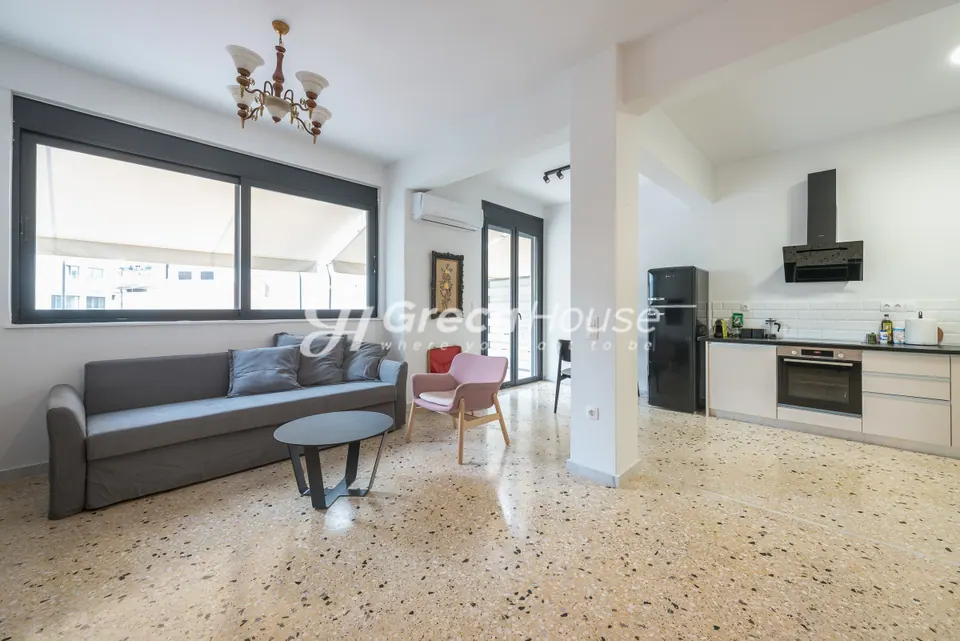 Apartment
Psyrri
50 m² 1 bedroom 1 bathroom
€150,000
Asking price on 15 October 2026
Apartment
Psyrri
50 m² 1 bedroom 1 bathroom
€150,000
Asking price on 15 October 2026
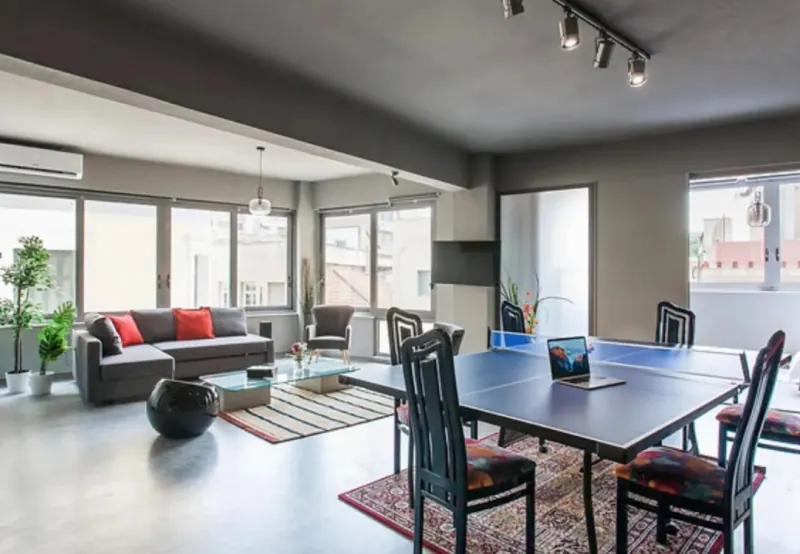 Apartment
Psyrri
128 m² 2 bedrooms 1 bathroom
€510,000
Asking price on 15 October 2026
Apartment
Psyrri
128 m² 2 bedrooms 1 bathroom
€510,000
Asking price on 15 October 2026
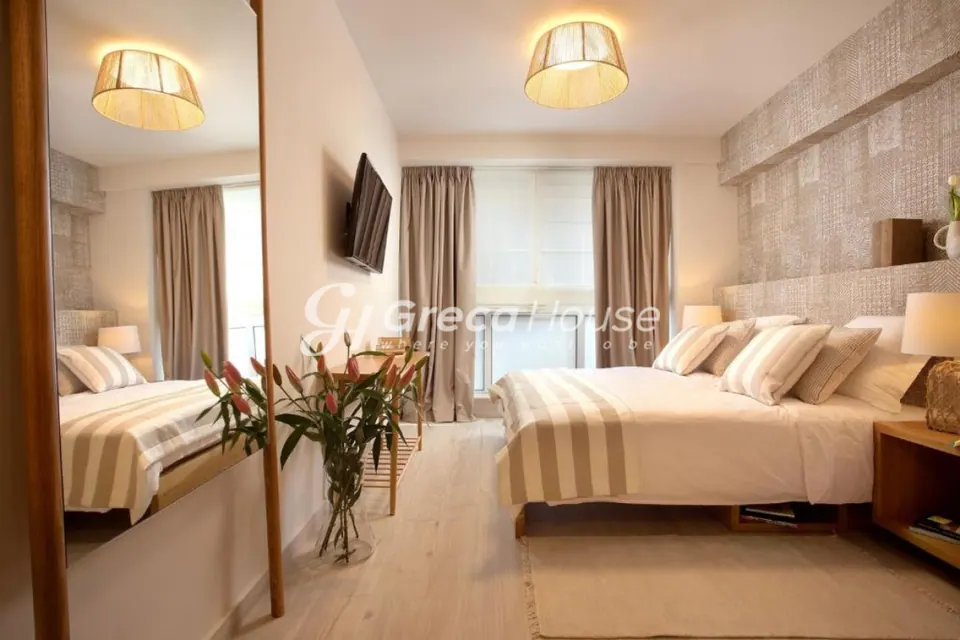 Apartment
Karytsi Square
108 m² 3 bedrooms 3 bathrooms
€648,000
Asking price on 15 October 2026
Apartment
Karytsi Square
108 m² 3 bedrooms 3 bathrooms
€648,000
Asking price on 15 October 2026
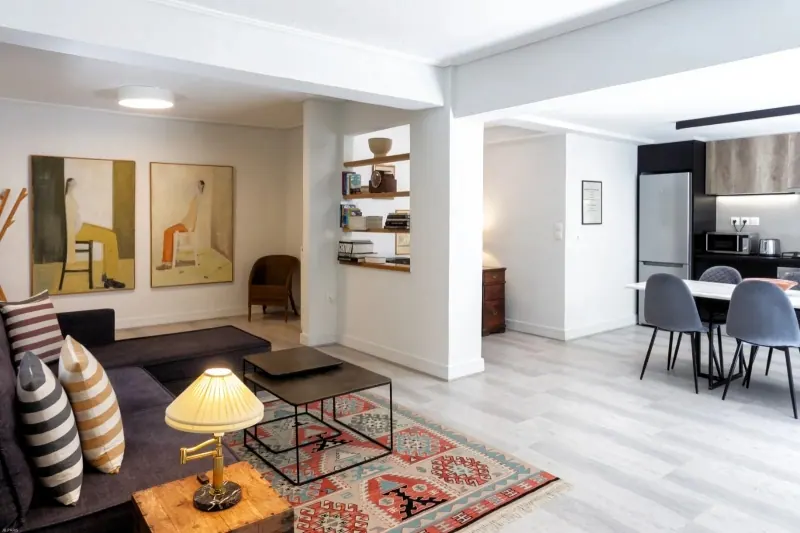 Apartment
Acropolis
214 m² 4 bedrooms 3 bathrooms
€2,200,000
Asking price on 15 October 2026
Apartment
Acropolis
214 m² 4 bedrooms 3 bathrooms
€2,200,000
Asking price on 15 October 2026
Listed with Greca House. More listings for sale
Athens centre, Greca House's group for listings filed under the centre with no named neighbourhood: the median asking price on Greca House's own listings was €5,926 per m² on 1 October 2026, across 7 homes with a stated floor area. These are asking prices, not sale prices. Source: Greca House research.
Sources40
- Wikipedia: Plaka accessed 14 October 2026
- Βικιπαίδεια: Πλάκα (Αθήνα) accessed 14 October 2026
- Wikipedia: Anafiotika accessed 14 October 2026
- Wikipedia: Athens accessed 14 October 2026
- in.gr: municipal election results by district, 26 May 2014 accessed 14 October 2026
- Wikipedia: Monastiraki accessed 14 October 2026
- Wikipedia: Tzistarakis Mosque accessed 14 October 2026
- Museum of Modern Greek Culture: home page accessed 15 October 2026
- This is Athens: Monastiraki and Psirri accessed 14 October 2026
- Wikipedia: Ermou Street accessed 14 October 2026
- Wikipedia: Psyri accessed 14 October 2026
- This is Athens: Athens Central Food Market accessed 14 October 2026
- Greek News Agenda: Varvakeios market, 6 June 2022 accessed 14 October 2026
- Wikipedia: Syntagma Square accessed 14 October 2026
- Wikipedia: Old Royal Palace accessed 14 October 2026
- Wikipedia: Roman Agora accessed 14 October 2026
- Wikipedia: Tower of the Winds accessed 14 October 2026
- Βικιπαίδεια: Ωρολόγιο του Κυρρήστου accessed 14 October 2026
- Wikipedia: Hadrian's Library accessed 14 October 2026
- Acropolis Museum: The museum building accessed 14 October 2026
- Wikipedia: Acropolis Museum accessed 14 October 2026
- Wikipedia: Dionysiou Areopagitou Street accessed 14 October 2026
- STASY: home page accessed 14 October 2026
- Wikipedia: Syntagma metro station accessed 14 October 2026
- Wikipedia: Monastiraki metro station accessed 14 October 2026
- Wikipedia: Athens Tram accessed 14 October 2026
- Aftodioikisi: tram stops back in service, 19 March 2026 accessed 14 October 2026
- WIPO Lex: Greece, Law 3028/2002 on the Protection of Antiquities and Cultural Heritage (English text) accessed 14 October 2026
- Michanikos: Οι διατάξεις για τα διατηρητέα κτίρια, 14 February 2026 accessed 14 October 2026
- Powergame: Ιδιοκτήτες Διατηρητέων Ακινήτων, 5 July 2026 accessed 14 October 2026
- Housing Policy Portal: Προσωρινοί περιορισμοί στις βραχυχρόνιες μισθώσεις accessed 14 October 2026
- AADE: consolidated article 111 of Law 4446/2016 accessed 13 October 2026
- AADE: extract of Law 5313/2026 (ΦΕΚ Α' 102, 25 June 2026) accessed 15 October 2026
- Government of Greece: Εξειδίκευση των οικονομικών μέτρων της 90ής ΔΕΘ, 7 September 2026 accessed 15 October 2026
- Athina 9.84: Airbnb listings in central Athens down by 1500, 7 October 2026 accessed 14 October 2026
- Greca House: Athens asking prices by neighbourhood, snapshot of 1 October 2026 accessed 14 October 2026
- Greca House listing GH-108311 accessed 14 October 2026
- Greca House listing GH-107498 accessed 14 October 2026
- Greca House listing GH-108375 accessed 14 October 2026
- Greca House listing GH-107353 accessed 14 October 2026