Alimos
Άλιμος
Athens: the south and the coast
Alimos lies on the Saronic Gulf some 8 km south of central Athens, between Palaio Faliro and Elliniko, and takes its name from Halimous, the ancient deme where Thucydides was born. Its seaside half, Kalamaki, was a retreat for well-off Athenians in the early twentieth century, and the town, with about 43 000 residents at the 2021 census, now has one of the largest marinas in Greece, beaches along the tram line and a station on line 2 of the metro. Next door, the old Ellinikon airport is being rebuilt as a park and a new district.
From Halimous to Kalamaki
In classical times this stretch of coast was shared by two demes of Attica, Halimous by the sea and Euonymon inland, and Halimous is remembered above all for Thucydides, who was born there, perhaps around 460 BC, and for the Thesmophoria (a festival of Demeter kept by women alone), which Aristophanes put on stage. The name likely comes from als, the sea or salt, or from alimos, a salt-loving shrub that grew along the shore, and in 1984 the municipality took the historian's likeness as its emblem.
After independence the thinly settled coast passed to new owners, General Makrygiannis of the 1821 revolution among them. Kalamaki, named, it seems, after the reeds by the sea, became a summer retreat for well-off Athenians early in the twentieth century: a German, Grohmann, built the first villa in 1912 (the oleanders of its garden, pikrodafnes, gave the Pikrodafni quarter its name), and the film-maker Finos later made a studio of one of the stone houses that the contractor Maltezos had put up in 1916.
Kalamaki became a community of its own on 9 November 1927, and in 1938 an airfield that first bore its name opened just to the south (the later Ellinikon airport). By the municipality's account the population then grew by 200 per cent in the 1950s, as settlements went up for civil servants, customs brokers and tax officers as well as for islanders from Kythira and Kefalonia and Greeks from Constantinople and Egypt. The Municipality of Alimos was formed in 1968, and on just under 6 km² it had 43 174 residents at the 2021 census.
The marina and the beaches
The marina was made in the 1960s, when the shore at Zefyros was filled in for the Greek National Tourism Organisation, and it remains one of the largest in Greece, with about a thousand berths (979 by the municipality's count, 1100 by the operator's). In 2026 it received the Blue Flag for the ninth year running, and the Kalamaki Nautical Club (founded in 1947) is based here. Change is on the way, nevertheless: in May 2026 Ellaktor, whose group runs the marina, expected a redevelopment (light works on the land side and a boutique hotel) to start within the year and take 24 to 30 months. In September, according to a press report of early October, the marina company said that the permits were complete and that the project was moving into its building phase.
The beaches follow the tram south of the marina. Plaz Alimou, in front of the Kalamaki stop, is free to enter and has showers, changing cabins and a café, and Akti tou Iliou is an organised beach of sand and fine pebble, with shady trees, palms, a large lawn and volleyball courts (the first, the municipality notes, that you reach from the centre of Athens). The second public beach, Loutra Alimou, lies in front of the tram stop of the same name. At the northern end, what is more, on the boundary with Palaio Faliro, is the Phaleron War Cemetery, where some two thousand Commonwealth servicemen of the Second World War are buried or commemorated.
Ano Kalamaki, Pani hill and the market streets
Inland, towards Vouliagmenis Avenue, Ano Kalamaki is the old village of Trachones (from trachon, rough, after its uneven ground) on the site of ancient Euonymon. The deme's theatre came to light in the 1970s, with an orchestra that is rectangular rather than round. Pani hill (named after the god Pan) holds the oldest traces of human presence found in Alimos and once carried a large gun battery that protected the airport.
Daily life gathers along two streets. Thoukydidou, close to the beach and the marina, has shops of every kind, a bank, a citizens' service centre (KEP), cafés and restaurants with Greek and international cooking, while Dodekanisou (the main street of Ano Kalamaki) runs from Vouliagmenis Avenue with bank branches, more shops and restaurants, and a post office.
Getting around
The coast and the inland quarters are served by different lines. The tram stops at Marina Alimou, Kalamaki, Zefyros and Loutra Alimou, while at Pikrodafni, near the boundary with Palaio Faliro, its two lines meet (one runs into Syntagma, the other along the coast between Voula and Piraeus). Line 2 of the metro, which crosses the centre by way of Syntagma and Omonia, stops at Alimos on Vouliagmenis Avenue, a station opened in 2013, and the next station north (Ilioupoli) also serves Ano Kalamaki.
Buses fill in the rest (the 141 passes along Thoukydidou, the 101 and 109 serve Ano Kalamaki), and two avenues frame the town, Poseidonos by the sea and Vouliagmenis inland. On the Ellinikon side part of Poseidonos is being put underground, which the developer expects to ease its traffic: the tunnel, about 1.15 km long, starts near the beach at Alimos and, on the schedule reported in the press in August 2026, should open to traffic in 2028, once the tram tracks are moved.
The Ellinikon next door, and living here
The old airport closed on 28 March 2001, and its grounds, which held venues of the 2004 Olympics, are being rebuilt by Lamda Development as a district of new homes, hotels, office buildings and shops around a park that the developer puts at two million square metres. A first part (the Experience Park) is open to everyone, works on the Trachones stream are meant to protect the area from floods, and a new neighbourhood, Little Athens, is to have 1100 homes, so Alimos will likely live beside building sites for some years. Some streets may still flood after heavy rain (Kanari Street has flooded many times, and its flood project, in preparation from 2012 onwards, had all but stopped by January 2026, a press report said).
Building took off between the 1940s and the 1970s, when more and more Athenians built summer houses by the beach, and an undated estimate on the municipality's history page puts the number who actually live here at more than 55 000, well above the census figure. The schools are mostly public (a music school among them), with some private ones as well.
For sale in Alimos
On 15 October 2026 Greca House, a real-estate agency in Athens since 2008, had these homes in its listings for sale.
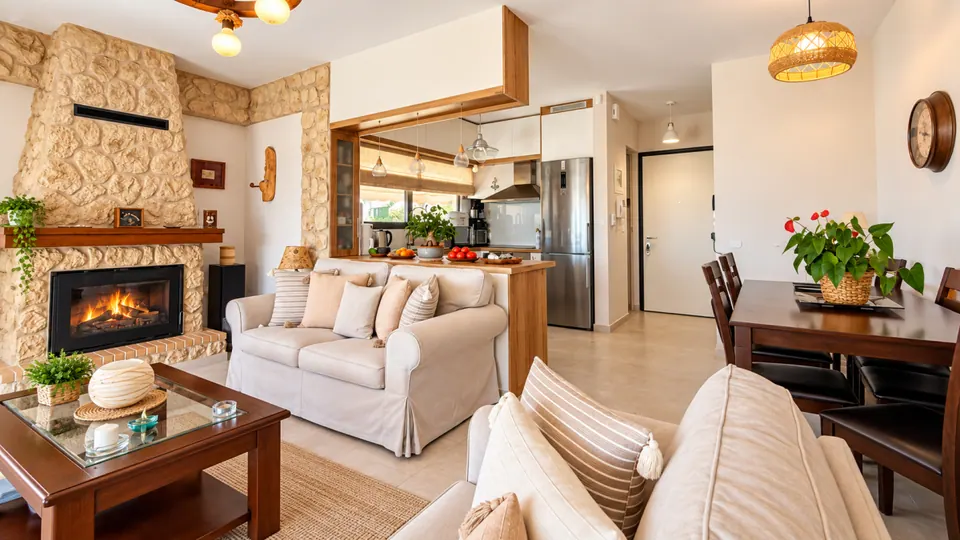 Maisonette
Pani
94 m² 2 bedrooms 1 bathroom
€490,000
Asking price on 15 October 2026
Maisonette
Pani
94 m² 2 bedrooms 1 bathroom
€490,000
Asking price on 15 October 2026
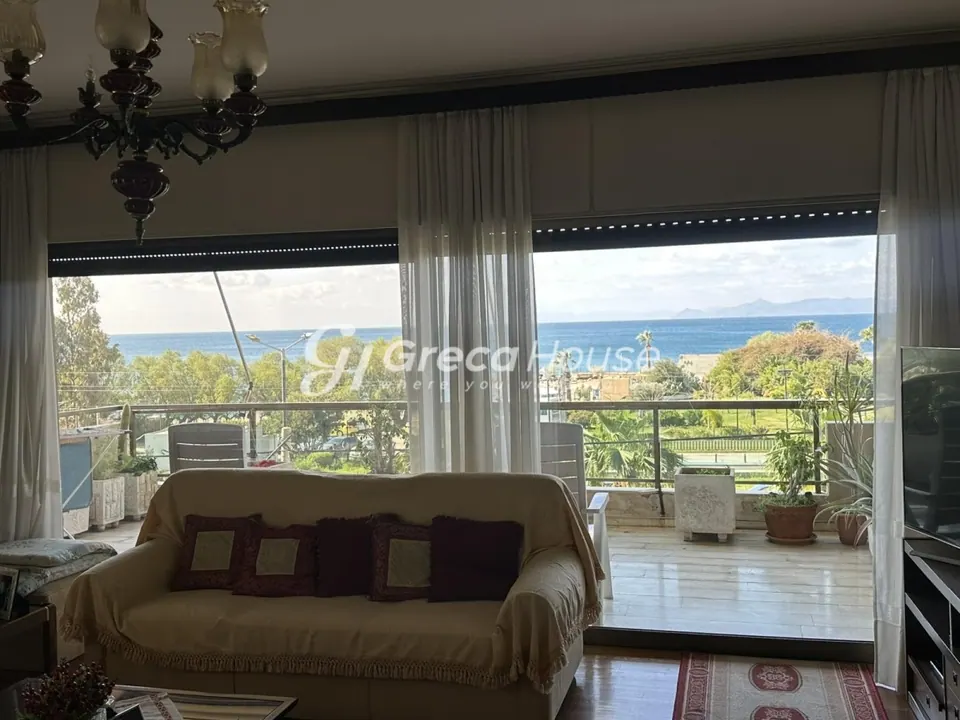 Apartment
Alimos
165 m² 3 bedrooms 2 bathrooms
€880,000
Asking price on 15 October 2026
Apartment
Alimos
165 m² 3 bedrooms 2 bathrooms
€880,000
Asking price on 15 October 2026
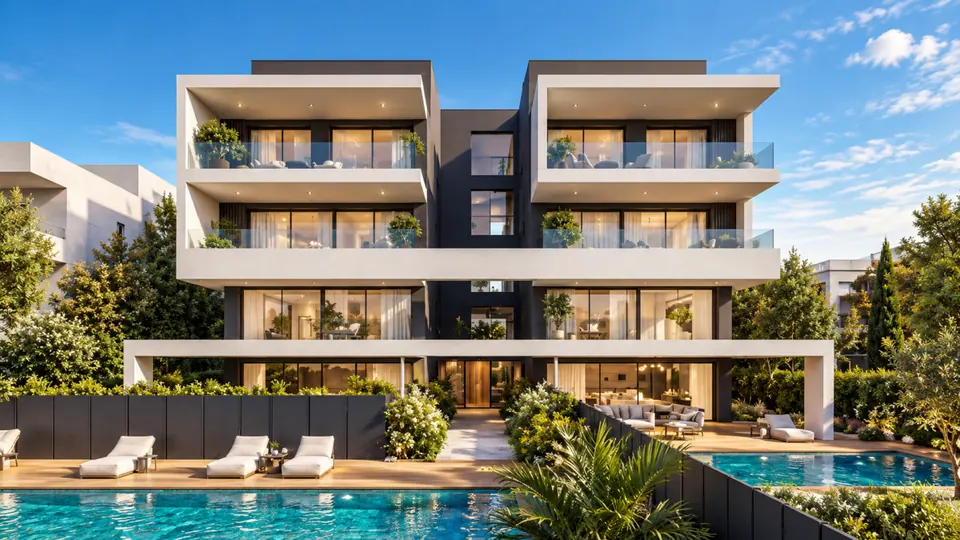 Maisonette
Alimos
213 m² 4 bedrooms 4 bathrooms
€1,700,000
Asking price on 15 October 2026
Maisonette
Alimos
213 m² 4 bedrooms 4 bathrooms
€1,700,000
Asking price on 15 October 2026
Listed with Greca House. More listings for sale
Athens South: the median asking price on Greca House's own listings was €5,351 per m² on 1 October 2026, across 28 homes with a stated floor area. These are asking prices, not sale prices. Source: Greca House research.
Sources26
- Municipality of Alimos: Ιστορία (history) accessed 14 October 2026
- Municipality of Alimos: Tourism accessed 14 October 2026
- Δήμος Αλίμου: Τουρισμός accessed 14 October 2026
- Βικιπαίδεια: Άλιμος accessed 14 October 2026
- Wikipedia: Alimos accessed 14 October 2026
- EETAA: administrative changes, Community of Kalamaki accessed 14 October 2026
- EETAA: administrative changes, Municipality of Alimos accessed 14 October 2026
- Alimos Marina: The marina accessed 14 October 2026
- Alimos Marina: Blue Flag for the 9th consecutive year (25 June 2026) accessed 14 October 2026
- Forbes Greece: Ellaktor to start the redevelopment of Alimos Marina within 2026 (30 May 2026) accessed 14 October 2026
- Powergame: where the investments in the Superfund marinas stall (4 October 2026) accessed 14 October 2026
- Anzacs of Greece: Phaleron War Cemetery accessed 14 October 2026
- STASY: home page accessed 14 October 2026
- STASY: Line 2 timetable accessed 14 October 2026
- STASY: Tram timetable accessed 14 October 2026
- Wikipedia: Athens Tram accessed 14 October 2026
- Wikipedia: Alimos metro station accessed 14 October 2026
- Wikipedia: Ellinikon International Airport accessed 14 October 2026
- The Ellinikon: projects in Alimos accessed 14 October 2026
- The Ellinikon: The Ellinikon Park accessed 14 October 2026
- Car and Motor: Poseidonos Avenue goes underground (15 August 2026) accessed 14 October 2026
- News247: Alimos floods again (23 January 2026) accessed 14 October 2026
- Greca House: research, regional asking prices, snapshot of 1 October 2026 accessed 14 October 2026
- Greca House listing GH-108451 accessed 14 October 2026
- Greca House listing GH-108160 accessed 14 October 2026
- Greca House listing GH-108481 accessed 14 October 2026