Glyfada
Γλυφάδα
Athens: the south and the coast
Glyfada runs from the Saronic Gulf to the foot of Hymettus, about 14 km south of the centre of Athens, and in the century since its first houses went up in 1920 it has grown from a summer resort into the largest of the southern suburbs, with 89 597 residents at the 2021 census. Athens's official visitor guide calls it the unofficial capital of the Athens Riviera, and next door, on the site of the old Ellinikon airport, a new district with a park is being built.
From Aixone to a seaside town
In antiquity this coast belonged to Aixone, a deme of Attica known, the municipality's history notes, for its farming and for the flavour of its red mullet (barbouni). Until 1830 two Ottoman estates (chiflik) covered what is now the town, and the modern name came early in the twentieth century from wells whose water was brackish (glyfo, in Greek).
The first houses went up in 1920 and the beach was soon given over to summer visitors, so Glyfada grew as a resort for Athenians. It became a community in its own right in 1926, and in 1943 a law merged it with Elliniko into the municipality of Evryali, renamed Glyfada two years later. Families from Asia Minor who settled here after 1922 gave their names to quarters such as Panionia and Smyrnis, and to Bosporos, which lay beside the airfield and was bombed in the war, then cleared around 1967 to enlarge the airport.
The base, the airport and the Ellinikon
Much of what sets Glyfada apart likely goes back to its neighbour. The airfield at Elliniko, opened in 1938, was used as an air base by the United States from the end of the Second World War until 1993, and many of the Americans seem to have lived in Glyfada, where, it is said, fast food and nightclubs first caught on in Greece, and Coca-Cola with them. The visitor guide still hears an American echo in the marble arcades of Metaxa Street and in the golf course.
The airport closed on 28 March 2001, and after years of shelved plans Lamda Development began rebuilding the site in July 2020 (a park, homes, hotels, a casino, a marina and offices), with the Riviera Tower set to become the tallest building in Greece. By the company's own account in July 2026 the tower had reached 200 m and its fiftieth floor, the first residents were expected in 2027 and a shopping centre on Vouliagmenis Avenue in 2029, so the town's north-western edge will evidently keep changing.
Metaxa, Kyprou and the coast
The centre lies below Vouliagmenis Avenue, around the church of Saints Constantine and Helen (consecrated in 1945). Metaxa Street, the main shopping strip, runs from the church with fashion chains, shoe shops, fast food and arcades along its marble pavements, whereas Kyprou Street, parallel to it and cut by Esperidon Square, has the dearer boutiques, outdoor cafés, trattorias, delis and concept stores.
The town may have quieter habits than its reputation suggests, nevertheless: the weekly street market (laiki) fills several blocks of Lazaraki Street and draws shoppers from across the south, and the central square (Platia Katraki) is the work of the sculptor Nella Golanda (2006).
The seafront along Poseidonos Avenue is a string of public beaches, some with free umbrellas, broken up by a marina of four basins and by Asteria, created in 1957 as the first step of the plan for the Athens Riviera. To the north-west, on about 125 acres beside the old airport, lies the Glyfada Golf Club, founded in 1966 on a course by Donald Harradine (the country's first 18-hole course, according to the visitor guide).
Ano Glyfada and Terpsithea
Vouliagmenis Avenue divides the municipality in two, and above it Ano Glyfada climbs towards Hymettus through Aixoni, Aigli, Evryali, Pyrnari and Terpsithea, the northernmost and most densely built part. Its history is shorter, since the first buyers settled in Terpsithea in 1933, when the newspaper Eleftheros Anthropos gave out plots for coupons and a small sum, yet with dirt roads, no water or electricity, no transport and no greenery the area grew in earnest only after 1960, according to the municipality. Higher up, in an old quarry at Aixoni, Golanda also built an open-air theatre (1984 to 1992), now a municipal venue.
Getting around
Tram line 7 (run by STASY) follows the coast between Piraeus and Voula, and its stops in Glyfada include Paralia Glyfadas, Paleo Dimarhio, Platia Katraki, Angelou Metaxa, Platia Esperidon and Kolymvitirio. For Syntagma you change to line 6 at Pikrodafni, its terminus since the lines were reorganised in December 2021.
The metro has not arrived: the nearest station is Elliniko, the southern end of line 2 (opened in 2013 on Vouliagmenis Avenue), which two free municipal bus routes link with Evryali, Terpsithea, Agia Triada, Aixoni and the centre. OASA's buses include the A3 to Akadimia in the centre, the B1 from Piraeus to Ano Glyfada, the 154 through Ano Glyfada to Argyroupoli station and the 790 night line to Peristeri, while by road two avenues lead to the centre, Vouliagmenis (21 km long) and Poseidonos along the coast.
Traffic seems to be the weak point, by the mayors' own account. In October 2026 the mayors of Glyfada and Alimos called it one of the south's biggest problems, warned that the Ellinikon would add to it and objected to the state paying to run a 1.2 km tunnel for Poseidonos Avenue. An extension of line 2 to Glyfada (4.4 km, with three stations) remained, in their words, on paper.
Living here
Glyfada has grown from 44 018 residents in 1981 to 89 597 in 2021, and the visitor guide finds millionaires and pop stars here alongside working families who have lived in the town for generations. Agios Nikolaos, together with the neighbouring Kolymvitirio and Golf areas, is often said to be among the most expensive districts of Athens.
What is more, the climate is warm and dry: the national weather service's station at the old airport records an average of 18.6 °C and 366.5 mm of rain a year (the edge of a semi-arid climate), and a station at the golf course has recorded summer highs above 45 °C. For anyone buying, the redevelopment next door is possibly the largest unknown, promising a park and a marina nearby but also years of building work and, if the mayors are right, more traffic.
For sale in Glyfada
On 15 October 2026 Greca House, a real-estate agency in Athens since 2008, had these homes in its listings for sale.
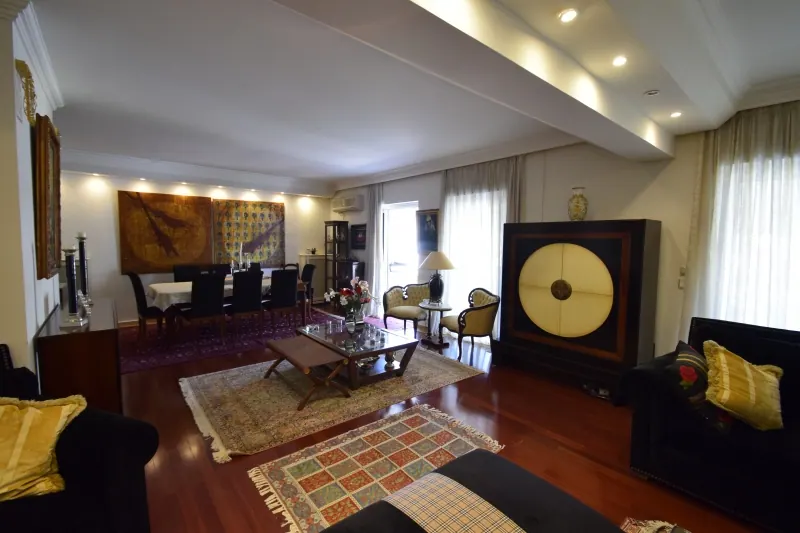 Apartment
Terpsithea
195 m² 3 bedrooms 3 bathrooms
€800,000
Asking price on 15 October 2026
Apartment
Terpsithea
195 m² 3 bedrooms 3 bathrooms
€800,000
Asking price on 15 October 2026
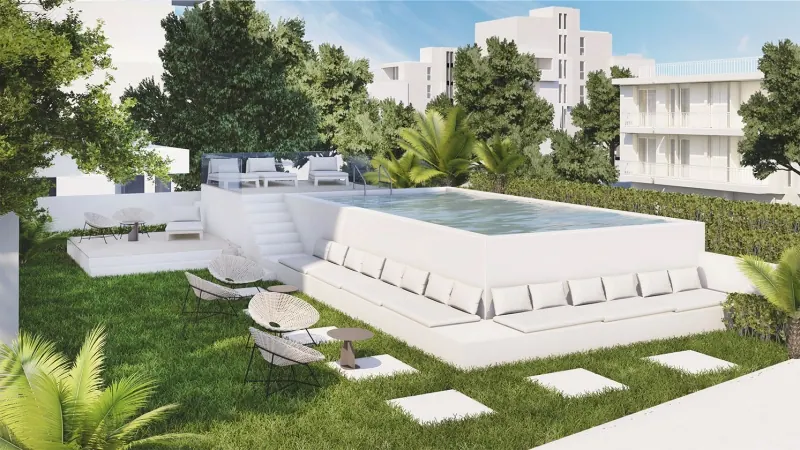 Apartment
Kato Glyfada
155 m² 3 bedrooms 2 bathrooms
€1,170,000
Asking price on 15 October 2026
Apartment
Kato Glyfada
155 m² 3 bedrooms 2 bathrooms
€1,170,000
Asking price on 15 October 2026
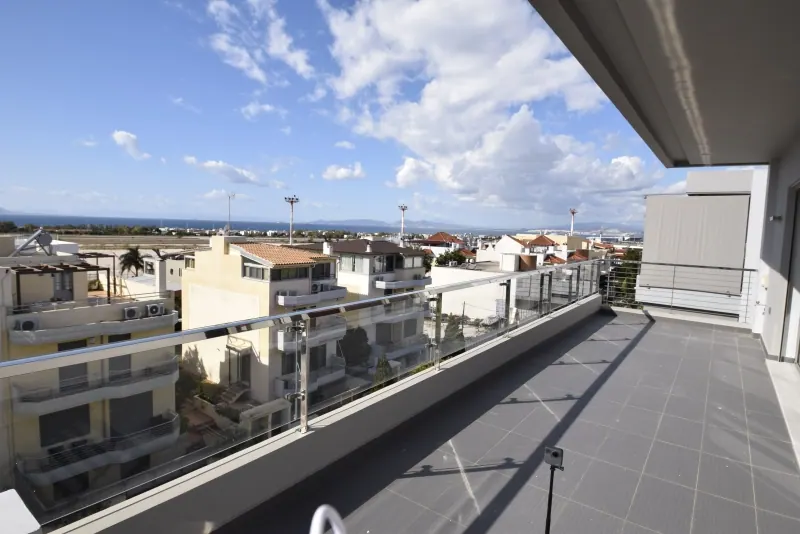 Maisonette
Glyfada Golf
190 m² 4 bedrooms 3 bathrooms
€2,100,000
Asking price on 15 October 2026
Maisonette
Glyfada Golf
190 m² 4 bedrooms 3 bathrooms
€2,100,000
Asking price on 15 October 2026
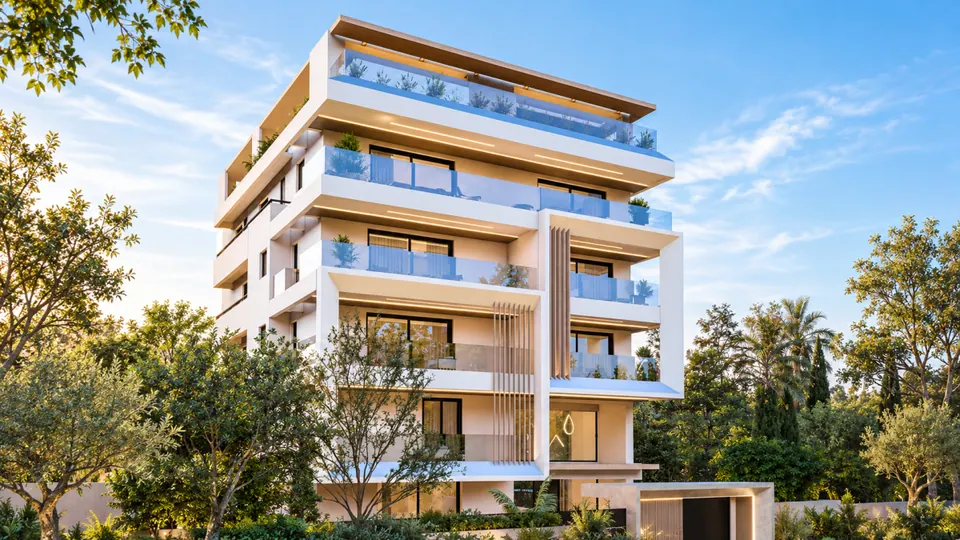 Maisonette
Aigli
219 m² 3 bedrooms 4 bathrooms
€2,900,000
Asking price on 15 October 2026
Maisonette
Aigli
219 m² 3 bedrooms 4 bathrooms
€2,900,000
Asking price on 15 October 2026
Listed with Greca House. More listings for sale
Athens South: the median asking price on Greca House's own listings was €5,351 per m² on 1 October 2026, across 28 homes with a stated floor area. These are asking prices, not sale prices. Source: Greca House research.
Sources30
- Municipality of Glyfada: Ιστορική αναφορά (historical account) accessed 14 October 2026
- Municipality of Glyfada: Πολιτισμός (culture) accessed 14 October 2026
- Municipality of Glyfada: Municipality of Glyfada (English home page) accessed 14 October 2026
- Municipality of Glyfada: Δημοτική συγκοινωνία (municipal transport) accessed 14 October 2026
- Municipality of Glyfada: joint statement of the mayors of Glyfada and Alimos on the Poseidonos tunnel (5 October 2026) accessed 14 October 2026
- Wikipedia: Glyfada accessed 14 October 2026
- Βικιπαίδεια: Γλυφάδα accessed 14 October 2026
- Wikipedia: Agios Nikolaos, Glyfada accessed 14 October 2026
- Wikipedia: Aexone accessed 14 October 2026
- Wikipedia: Ellinikon International Airport accessed 14 October 2026
- Wikipedia: Elliniko accessed 14 October 2026
- Wikipedia: Ellinikon Metropolitan Park accessed 14 October 2026
- OT: Ellinikon project sets timeline for homes and retail opening (10 July 2026) accessed 14 October 2026
- Powergame: Ellinikon, where it stands and the next steps (24 July 2026) accessed 14 October 2026
- Wikipedia: Athens Riviera accessed 14 October 2026
- This is Athens: Glyfada guide accessed 14 October 2026
- Top 100 Golf Courses: Glyfada accessed 14 October 2026
- Wikipedia: Nella Golanda accessed 14 October 2026
- STASY: tram lines and stops accessed 14 October 2026
- Wikipedia: Athens Tram accessed 14 October 2026
- Wikipedia: Elliniko metro station accessed 14 October 2026
- Wikipedia: Line 2 (Athens Metro) accessed 14 October 2026
- OASA: telematics (bus lines and stops) accessed 14 October 2026
- Wikipedia: Vouliagmenis Avenue accessed 14 October 2026
- Wikipedia: Poseidonos Avenue accessed 14 October 2026
- Greca House: research on asking prices by region, snapshot of 1 October 2026 accessed 14 October 2026
- Greca House listing GH-12645 accessed 14 October 2026
- Greca House listing GH-106897 accessed 14 October 2026
- Greca House listing GH-107357 accessed 14 October 2026
- Greca House listing GH-108466 accessed 14 October 2026