Chalandri
Χαλάνδρι
Athens: the northern suburbs
Chalandri (Χαλάνδρι) is a suburb of some 77 000 people in the north of Athens, at the foot of Mount Penteli. Its pedestrian centre is given over to cafés, bars, beer halls and small shops, while the Rematia, a protected stream with its own open-air theatre, runs through the town and four stations of metro line 3, in the town or on its edges, link it to Syntagma.
An old deme on a stream
Chalandri (also written Halandri) is a municipality of the North Athens regional unit, spread over about 10.8 square kilometres at the foot of Penteli. At the 2021 census it had 77 102 permanent residents, up from 74 192 in 2011. Its built-up area now runs without a break into its neighbours, Marousi, Vrilissia, Agia Paraskevi and Cholargos among them.
The town stands on the ancient deme of Phlya (a local district of ancient Attica), and Euripides and Themistocles are said to have come from it. Its Roman past survives, perhaps most visibly, in Panagia Marmariotissa, a small church that began as a mausoleum of costly marble, probably for a wealthy resident, and was later given an apse and wall paintings, of which fragments remain (Anastasios Orlandos read the year 1717 in an inscription on them).
Chalandri left the municipality of Athens in 1925 to become its own community, and refugees from Asia Minor settled here after 1922 (a monument to their uprooting stands in Synoikismos, the small settlement built for them). It became a municipality in the 1940s, and in the 1970s, as Athenians left the centre, it grew quickly into much of what it is today.
The centre and the square
The commercial centre is largely pedestrianised (its pedestrian streets include Irakleiou and Thoukydidou) around the central square, which a 2021 travel guide describes as several squares in one. There is a playground on one side, older children gather around the bleachers and the fountain, teenagers skate and, on the far side, stands the church of Agios Nikolaos, on whose steps, by the same account, the young meet before a night out. Cafés, cocktail bars, beer halls, chain stores and smaller, more unusual shops fill the surrounding streets, and Pentelis Avenue has its own restaurants.
Eating out seems to be an old habit here, since in the years of the dictatorship (1967 to 1974) Dourou Square was known for its tavernas and their roast lamb, suckling pig and game. The centre's success has its price, nevertheless, and in 2015 a press report counted 373 restaurants, cafés, bars and beer halls in 50 central blocks, with some 10 000 visitors on Fridays and Saturdays as well as on holidays. The same report described heavy traffic even in the side streets and noise above the legal limits at 30 measuring points (a National Technical University of Athens study). We could not find out whether the nights are any quieter today.
The Rematia and the aqueduct
The Rematia (the Greek word means a ravine with a stream running through it) is the Chalandri stretch of the Penteli-Chalandri stream, also called the Polydroso stream, which runs for 6.6 km from the foot of Penteli through Melissia, Vrilissia and Marousi as well as Chalandri and is covered over between Chalandri and Kifisias Avenue. A presidential decree of 1995 made it a protected area in two zones, an inner one where the landscape may not be altered and an outer one with limits on building, and pines, plane trees, reeds and mastic grow along it, with a colony of green parakeets settled among them.
The open-air theatre in Polydroso carries the name of Euripides (the Euripideio Theatre). It became a venue in 1981 and, after a fire on 18 May 2015, was back in use with new stands by 3 June. Each summer the municipal festival fills it with concerts, plays, events for children and the odd stand-up comedian (in 2025 the festival ran from 2 July to 21 September, and 34 of its 42 events were free). An Athens guide, Bonflaneur, lists the problems the stream has faced notwithstanding the decree: incomplete fire protection, poor water management, encroachment and unlicensed building, and diseased trees.
Under the town runs Hadrian's aqueduct, built around 140 AD to carry water from the foot of Mount Parnitha to Dexameni Square in Kolonaki and long since an inactive part of the city's water system. In recent years Chalandri has made it the centre of a project funded by the European Union, Cultural H.ID.RA.N.T., which set out to bring its water (not drinkable by modern standards) back into use for gardens and green spaces, through pipes in part of the town and tank trucks and reservoirs elsewhere. In August 2024 the programme's own site described the project as coming to its end.
Getting around
Metro line 3, run by STASY, is possibly the simplest way in and out of the town, and four of its stations are in Chalandri or on its boundary: Chalandri itself (opened in July 2004), Doukissis Plakentias near Patima (named after the Duchess of Plaisance, a philhellene who owned much of the land there), Nomismatokopio on Mesogeion Avenue (2009) and Agia Paraskevi (December 2010), on the boundary with the municipality of that name. Towards the city the line runs underground through Syntagma to Piraeus, while in the other direction some trains run on over the suburban railway to the airport.
Doukissis Plakentias is, what is more, a station of the suburban railway, whose platforms sit in the central strip of the Attiki Odos motorway along Chalandri's boundary with Vrilissia, and a hub for buses to the north-eastern suburbs and East Attica. By road, Kifisias and Mesogeion avenues skirt the town while Pentelis and Apostolopoulou avenues lead into it, and for short trips there were, by the 2021 guide's count, more than 5 km of cycle lanes.
Living here
The 2021 travel guide describes Chalandri as a northern suburb, close to Athens, a middle-class area and a village all at once. Around the commercial centre lie Agia Varvara to the west, Polydroso to the north, Ano Chalandri to the north-east, Patima to the east and Kato Chalandri to the south, with smaller districts such as Sidera and Rizareios. The same guide notes neighbourhoods with more green and sparser building, where a few detached houses from an earlier time still stand.
The American Community Schools of Athens (ACS Athens), founded in 1945, have their campus here, with some 1200 pupils of 56 nationalities in October 2025. For a buyer the balance is likely the one above: a lively centre, the metro and a protected stream close at hand, though weighed against traffic and night-time noise in the centre, in a town where few detached houses are left.
For sale in Chalandri
On 15 October 2026 Greca House, a real-estate agency in Athens since 2008, had these homes in its listings for sale.
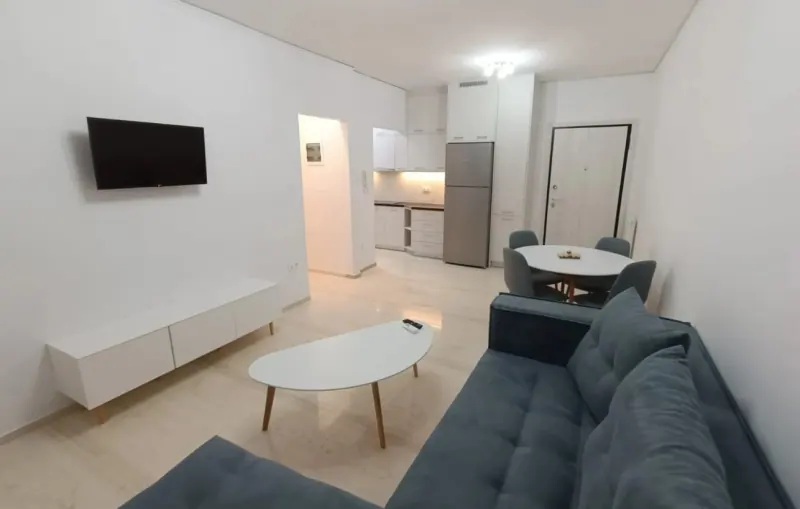 Apartment
Ano Chalandri
48 m² 1 bedroom 1 bathroom
€249,000
Asking price on 15 October 2026
Apartment
Ano Chalandri
48 m² 1 bedroom 1 bathroom
€249,000
Asking price on 15 October 2026
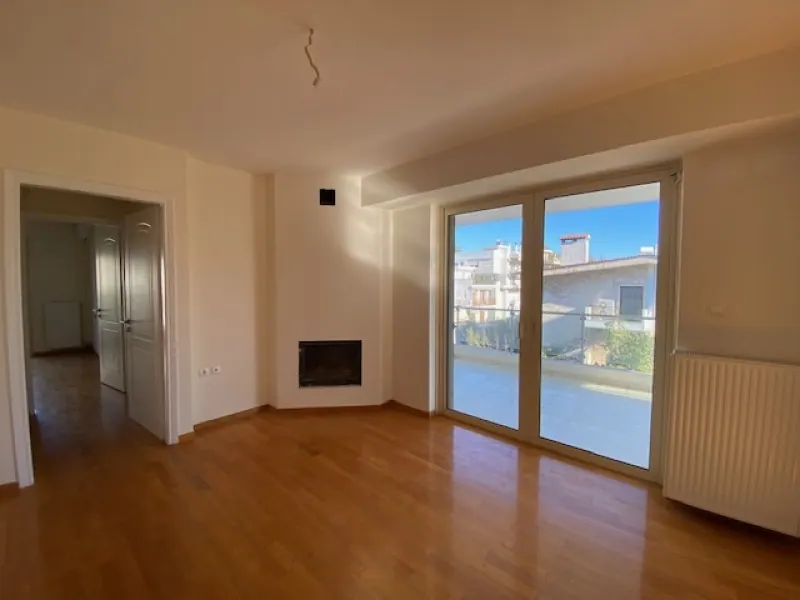 Apartment
Rizareios
88 m² 2 bedrooms 1 bathroom
€350,000
Asking price on 15 October 2026
Apartment
Rizareios
88 m² 2 bedrooms 1 bathroom
€350,000
Asking price on 15 October 2026
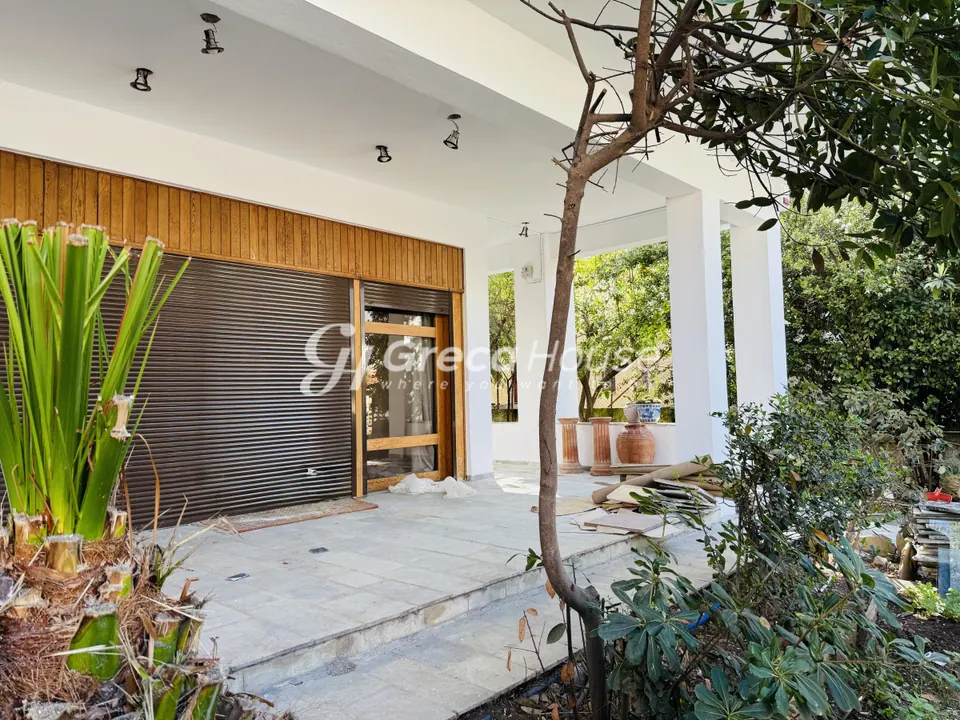 Maisonette
Rizareios
272 m² 3 bedrooms 2 bathrooms
€560,000
Asking price on 15 October 2026
Maisonette
Rizareios
272 m² 3 bedrooms 2 bathrooms
€560,000
Asking price on 15 October 2026
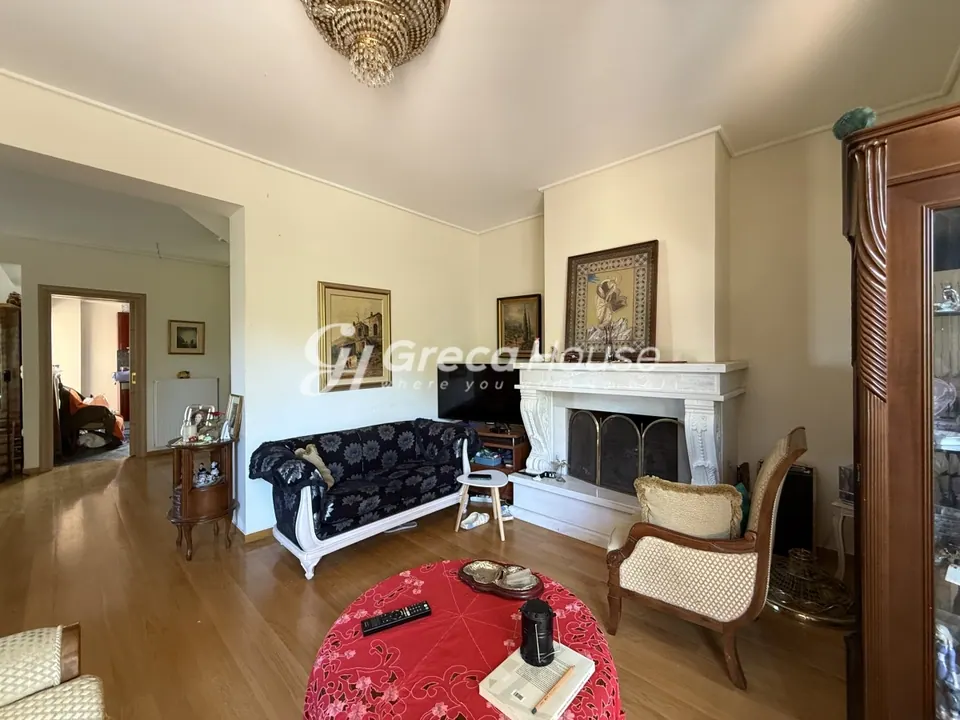 House
Patima
250 m² Plot 250 m² 5 bedrooms 3 bathrooms
€850,000
Asking price on 15 October 2026
House
Patima
250 m² Plot 250 m² 5 bedrooms 3 bathrooms
€850,000
Asking price on 15 October 2026
Listed with Greca House. More listings for sale
Athens North: the median asking price on Greca House's own listings was €3,130 per m² on 1 October 2026, across 113 homes with a stated floor area. These are asking prices, not sale prices. Source: Greca House research.
Sources32
- Wikipedia: Chalandri accessed 15 October 2026
- Βικιπαίδεια: Χαλάνδρι accessed 15 October 2026
- Wikipedia: Panagia Marmariotissa, Chalandri accessed 15 October 2026
- The Byzantine Legacy: Panagia Marmariotissa accessed 15 October 2026
- Wikipedia: Greek junta accessed 15 October 2026
- in.gr: Καταστράφηκε από πυρκαγιά το θέατρο της Ρεματιάς (18 Μαΐου 2015) accessed 15 October 2026
- Εφ.Συν.: «Μαφιόζικες τακτικές» στο Θέατρο της Ρεματιάς (19 Μαΐου 2015) accessed 15 October 2026
- Alfavita: Σήμερα στο Χαλάνδρι, ο πολιτισμός δεν καίγεται (3 Ιουνίου 2015) accessed 15 October 2026
- Ναυτεμπορική: Φεστιβάλ Ρεματιάς, Νύχτες αλληλεγγύης και συντροφικότητας (30 Ιουνίου 2025) accessed 15 October 2026
- CNN Greece: Φεστιβάλ Ρεματιάς, Ευριπίδειο Θέατρο Χαλανδρίου (12 Σεπτεμβρίου 2022) accessed 15 October 2026
- Bonflaneur: Chalandri Gully accessed 15 October 2026
- Εφ.Συν.: Ανάσα για το Χαλάνδρι (23 Απριλίου 2021) accessed 15 October 2026
- travel.gr: Χαλάνδρι, μια συνοικία που τα έχει όλα (11 Δεκεμβρίου 2021) accessed 15 October 2026
- Athens Voice: Η πλατεία στο Χαλάνδρι (19 Νοεμβρίου 2017) accessed 15 October 2026
- LiFO: Είναι το Χαλάνδρι η καλύτερη συνοικία για να ζεις; (27 Δεκεμβρίου 2012) accessed 15 October 2026
- iefimerida: Σοβαρά προβλήματα στο Χαλάνδρι από τα μπαρ, καφέ και εστιατόρια (3 Νοεμβρίου 2015) accessed 15 October 2026
- Athens Attica (Region of Attica): Hadrian's Aqueduct accessed 15 October 2026
- iefimerida: Χαλάνδρι, στοίχημα η επανένταξη του Αδριάνειου Υδραγωγείου στη ζωή της πόλης (7 Σεπτεμβρίου 2021) accessed 15 October 2026
- European Urban Initiative: Cultural H.ID.RA.N.T. accessed 15 October 2026
- Urban Innovative Actions: Halandri, Cultural H.ID.RA.N.T. accessed 15 October 2026
- Wikipedia: Line 3 (Athens Metro) accessed 15 October 2026
- Wikipedia: Chalandri metro station accessed 15 October 2026
- Wikipedia: Agia Paraskevi metro station accessed 15 October 2026
- Wikipedia: Nomismatokopio metro station accessed 15 October 2026
- Elliniko Metro: FAQ accessed 15 October 2026
- Wikipedia: Doukissis Plakentias station accessed 15 October 2026
- ACS Athens: At a glance accessed 15 October 2026
- Greca House: research on asking prices by region, snapshot of 1 October 2026 accessed 14 October 2026
- Greca House listing GH-107275 accessed 14 October 2026
- Greca House listing GH-107502 accessed 14 October 2026
- Greca House listing GH-108321 accessed 14 October 2026
- Greca House listing GH-108173 accessed 14 October 2026