Filothei and Psychiko
Φιλοθέη και Ψυχικό
Athens: the northern suburbs
Psychiko and Filothei are two garden suburbs laid out in the 1920s and 1930s, some 5 to 7 km north-east of the centre of Athens, with detached houses in gardens, a good number of embassies and several well-known private schools (Athens College and the Arsakeio among them). Neo Psychiko, across Kifisias Avenue, was settled mainly by refugees from Asia Minor after 1923 and is a good deal denser, and in 2011 the three were joined in one municipality, which counted 27 636 residents at the 2021 census.
How the suburbs came about
Psychiko means an act of charity (ψυχικό, a good deed done for the sake of a soul), and the name is usually put down to a well opened here for passers-by, which Saint Filothei is said to have dug in the sixteenth century. The suburb itself is the work of Kekrops (Κέκροψ), a company founded in June 1923, which commissioned the architect Alexandros Nikoloudis to draw what it calls the first private town plan in Greece, on the pattern of the English garden city. The company brought in its own water, electricity and transport, and the one condition of sale, by its own account, was that every house should have a garden.
Filothei followed at the end of the decade, when employees of the National Bank of Greece formed a building cooperative (in January 1929) to buy the land. Their plan, drawn on English garden-city models and approved in the early 1930s, set aside about two thirds of the area for common spaces. The settlement was called Nea Alexandreia until 1936, when it took the name Filothei, two years after a crypt of the saint had been found by chance while red stone was being quarried for the new houses.
Neo Psychiko, across Kifisias Avenue, has a different history, as refugees from Asia Minor (families from Vourla and Meli among them) settled here after 1923 around the church of Agios Georgios, which they built, and the church of Agia Sofia (a small one at the time). The place, part of Chalandri until then, became a community in 1946 and a municipality in 1982.
The rules of the garden city
What has most likely kept Psychiko close to its plan is a set of strict building rules, under which houses must be detached, most may have no more than three floors and the building coefficient is 0.6 (at most 0.6 m² of floor for each square metre of plot). Shops and offices are confined to two small zones, Nea Agora and Palaia Agora. Filothei was declared a purely residential area by a decree of 1935, and 75 buildings in Psychiko are listed for protection.
The arrangement has its frictions, nevertheless. The Palaia Agora (the Old Market), the centre of Psychiko from 1930, fell out of use in the 1990s amid legal disputes with Kekrops, and in June 2023 the company still listed the building as held up by the municipal authorities' delays. Kekrops also lost 242.25 stremmata (about 24 hectares) outside the town plan, around its old quarry on the Tourkovounia hills, to the Greek State in a Supreme Court ruling of 2022. Its application to the European Court of Human Rights, lodged that October, was still awaiting examination in June 2025, by the company's account.
What to see and where to eat
Much of what there is to see is out of doors. On Zongolopoulos Square, six large works by the sculptor George Zongolopoulos (1903 to 2004), one of Psychiko's first residents, make up an open-air gallery that the municipality describes as the only municipal one in Greece devoted to a single artist, and his Umbrellas stand at the entrance to Psychiko on Kifisias Avenue.
Filothei keeps the crypt of its saint and a children's playground that Dimitris Pikionis built between 1961 and 1964 (with an old boat, a Sarakatsani hut, a bridge over a pond and sculptures by Christos Kapralos and others), which the Ministry of Culture lists as a monument. On the Tourkovounia along the municipality's western edge, what is more, a walk up Filothei hill ends at the Throne of Zeus Ombrios, a sanctuary excavated in 1978, with a view across the basin to Aegina on a clear day.
Neo Psychiko is likely still where most of the local haunts and the main shopping area are (Athens Voice found them there in 2014). On its round of Psychiko in 2017 the same magazine found places to eat in Neo and Palaio Psychiko, at Faros and on Kifisias Avenue.
Getting around
Kifisias Avenue runs through the municipality, so that a driver heading north from the centre has Palaio Psychiko and then Filothei on the left and Neo Psychiko on the right (with Mesogeion Avenue along its south-eastern side). Congestion on the avenue is a daily matter, though at its worst further north, around Marousi.
The metro keeps to the edges, since the stations usually given for Psychiko are Panormou, near Ambelokipi and a short way from Kifisias Avenue, and Katehaki, at the junction of Katechaki and Mesogeion Avenues. Both are on line 3 (run by STASY), which goes west through Syntagma and Monastiraki to Piraeus and east to Doukissis Plakentias, with some trains running on to the airport. The tram does not come this far north, and OASA buses serve the suburbs themselves.
Living here
Psychiko has historically been a suburb of the well-to-do (aristocrats, members of the royal family and old money), and Queen Frederica lived here until the coup of 1967. Filothei, for its part, has long been home to politicians, businessmen and many of the city's foreign residents, diplomats above all. Numerous embassies and consulates have settled in the two suburbs, among them those of China, Russia, Poland, Kuwait and the Holy See.
Families will likely look first at the schools, and above all at Athens College, founded in 1925 by a committee that included Emmanuel Benakis and Stephanos Delta, which moved to Psychiko by the end of the 1920s. Its campus of about 150 stremmata (some 15 hectares) is shared with a sister school, Psychico College, which teaches the International Baccalaureate. The Arsakeio put up its main building here in 1933, and the Moraitis School is in Psychiko too.
Living here can thus mean one of three rather different things, since Psychiko (9595 residents in 2021, on about 2.8 km²) and Filothei (7370 on 2.3 km²) are mostly detached houses in gardens, whereas Neo Psychiko fits 10 671 people onto roughly 1 km², mostly in apartment blocks of no more than four floors.
For sale in Filothei and Psychiko
On 15 October 2026 Greca House, a real-estate agency in Athens since 2008, had these homes in its listings for sale.
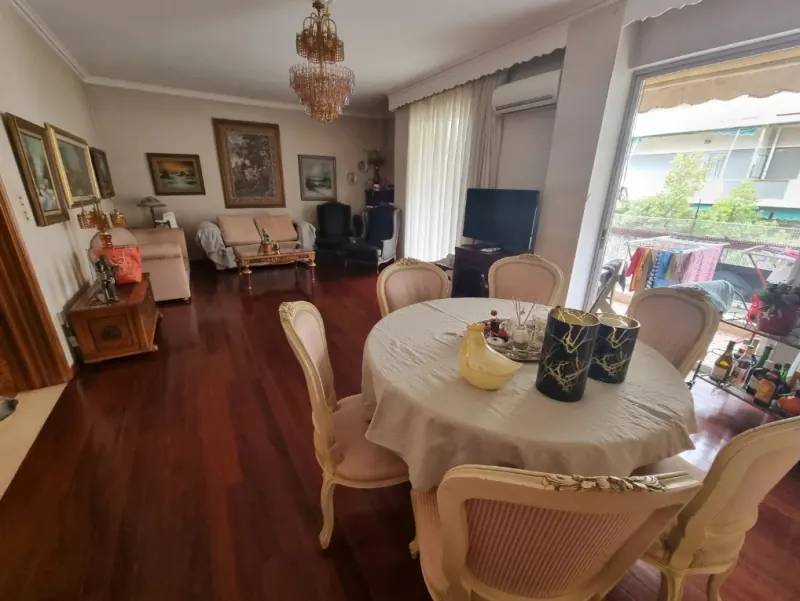 Apartment
Neo Psychiko
136 m² 3 bedrooms 1 bathroom
€300,000
Asking price on 15 October 2026
Apartment
Neo Psychiko
136 m² 3 bedrooms 1 bathroom
€300,000
Asking price on 15 October 2026
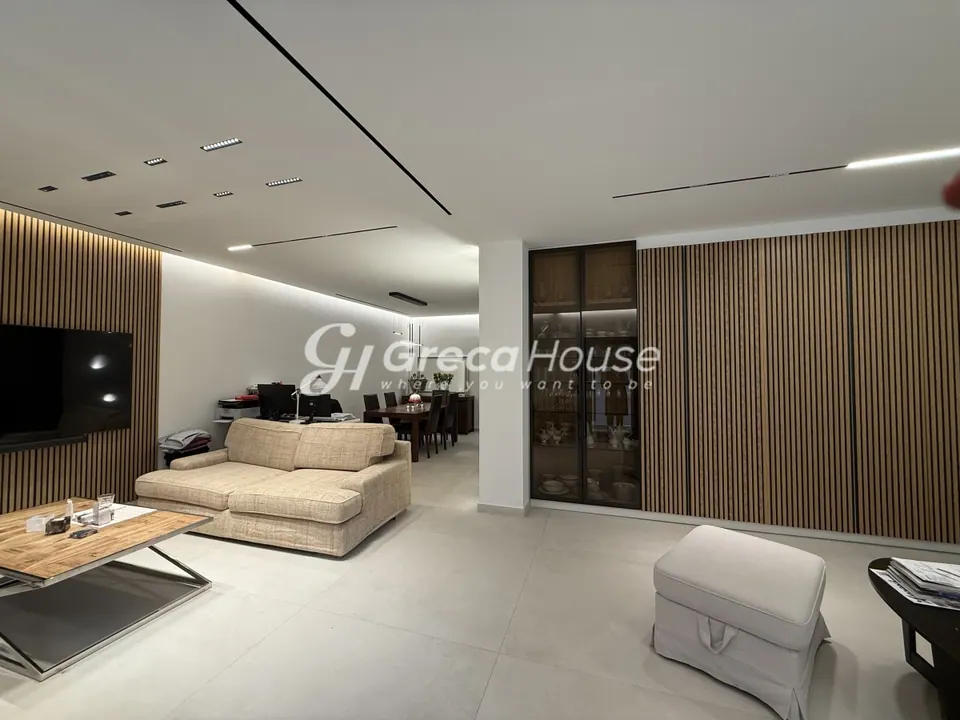 Apartment
Palaio Psychiko
130 m² 2 bedrooms 1 bathroom
€600,000
Asking price on 15 October 2026
Apartment
Palaio Psychiko
130 m² 2 bedrooms 1 bathroom
€600,000
Asking price on 15 October 2026
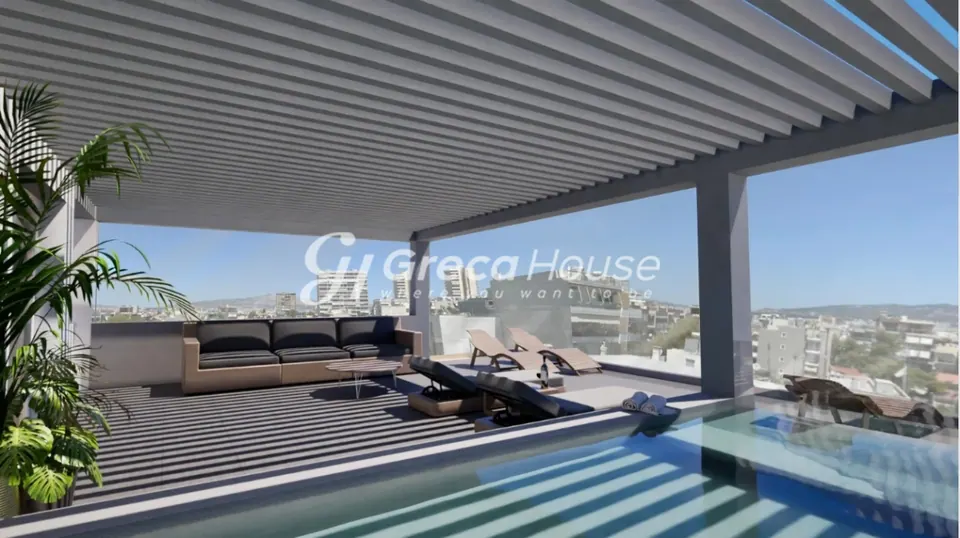 Maisonette
Neo Psychiko
200 m² 3 bedrooms 3 bathrooms
€900,000
Asking price on 15 October 2026
Maisonette
Neo Psychiko
200 m² 3 bedrooms 3 bathrooms
€900,000
Asking price on 15 October 2026
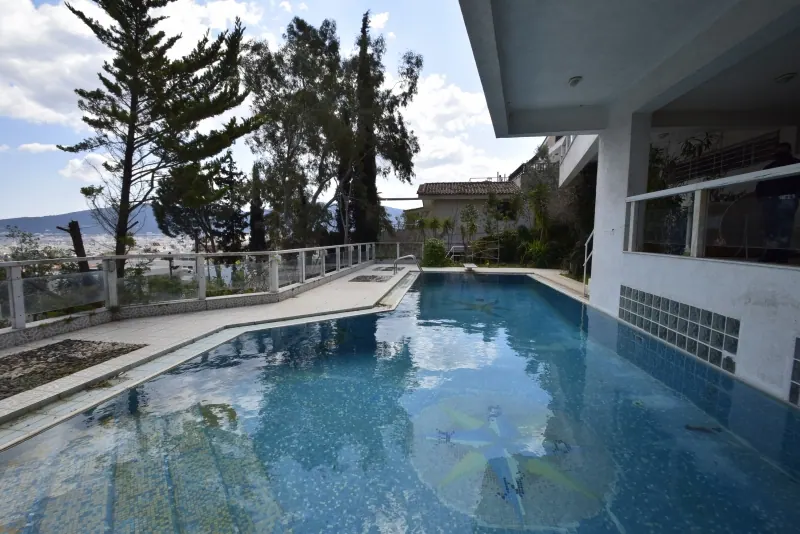 Villa
Palaio Psychiko
1,380 m² Plot 1,104 m² 11 bedrooms 9 bathrooms
€3,200,000
Asking price on 15 October 2026
Villa
Palaio Psychiko
1,380 m² Plot 1,104 m² 11 bedrooms 9 bathrooms
€3,200,000
Asking price on 15 October 2026
Listed with Greca House. More listings for sale
Athens North: the median asking price on Greca House's own listings was €3,130 per m² on 1 October 2026, across 113 homes with a stated floor area. These are asking prices, not sale prices. Source: Greca House research.
Sources31
- Wikipedia: Filothei-Psychiko accessed 14 October 2026
- Wikipedia: Psychiko accessed 14 October 2026
- Βικιπαίδεια: Ψυχικό accessed 14 October 2026
- Wikipedia: Filothei accessed 14 October 2026
- Βικιπαίδεια: Φιλοθέη Αττικής accessed 14 October 2026
- Wikipedia: Neo Psychiko accessed 14 October 2026
- Βικιπαίδεια: Νέο Ψυχικό accessed 14 October 2026
- Δήμος Φιλοθέης-Ψυχικού: η ιστορία των τριών κοινοτήτων accessed 14 October 2026
- Δήμος Φιλοθέης-Ψυχικού: αξιοθέατα accessed 14 October 2026
- Wikipedia: Outdoor Sculpture Gallery of Psychiko accessed 14 October 2026
- Naftemporiki: Kekrops at a hundred (10 June 2023) accessed 14 October 2026
- newmoney: Kekrops in Palaio Psychiko (10 June 2023) accessed 14 October 2026
- Powergame: Kekrops on the 242.25 stremmata in Psychiko (28 June 2022) accessed 14 October 2026
- newmoney: Kekrops, its properties and the case in Strasbourg (6 June 2025) accessed 15 October 2026
- Athens Voice: Filothei and Psychiko (27 March 2014) accessed 14 October 2026
- Athens Voice: Neo Psychiko (25 March 2015) accessed 14 October 2026
- Athens Voice: Psychiko, closer than you think (14 March 2017) accessed 14 October 2026
- Wikipedia: Athens College accessed 14 October 2026
- Wikipedia: Arsakeio accessed 14 October 2026
- Wikipedia: Kifisias Avenue accessed 14 October 2026
- Wikipedia: Panormou metro station accessed 14 October 2026
- Wikipedia: Katehaki metro station accessed 14 October 2026
- STASY: Line 3 timetable accessed 14 October 2026
- Wikipedia: Line 3 (Athens Metro) accessed 14 October 2026
- Wikipedia: Athens Tram accessed 14 October 2026
- Wikipedia: Athens Mass Transit System accessed 15 October 2026
- Greca House: research on asking prices by region, snapshot of 1 October 2026 accessed 14 October 2026
- Greca House listing GH-107705 accessed 14 October 2026
- Greca House listing GH-107830 accessed 14 October 2026
- Greca House listing GH-108291 accessed 14 October 2026
- Greca House listing GH-106846 accessed 14 October 2026