Kifisia
Κηφισιά
Athens: the northern suburbs
Kifisia lies at the northern edge of the Athens basin (between Penteli and Parnitha, at about 290 m), and since the railway reached it in 1885 it has been the place where well-off Athenians went to escape the summer heat and where, in time, many of them came to live all year. The municipality also takes in Nea Erythraia, founded by refugees from Asia Minor in the 1920s, and Ekali, a garden suburb laid out in 1922, and line 1 of the metro ends here.
From ancient deme to summer resort
Kifisia is a good deal older than its villas, since it was a deme of ancient Attica (known for its water and its fertile land) and the home, it is said, of the playwright Menander. In Roman times Herodes Atticus kept a large estate in the town, where the writer Aulus Gellius was among his guests, and in 1667 the Ottoman traveller Evliya Çelebi found some three hundred houses here, and white cherries that were already famous.
The modern resort, however, began with the railway. Brigands roamed the countryside of Attica in the middle of the nineteenth century, and it was only in 1885, when a steam train known as the Beast (Θηρίο) reached Kifisia, that the town began to grow as a place to escape the summer heat. Wealthy families then built country houses in what was evidently a keen social competition, so the villas came in ever more exotic styles, and for those without a house of their own, hotels such as the Pentelikon had opened by the 1920s.
The Kefalari hotels later served as the headquarters of the Royal Air Force, until ELAS attacked and took them in December 1944. Much of the town was nevertheless built up only after the Second World War (parts of Politeia as late as the 1980s and 1990s), and the municipality, which in 2011 also took in Nea Erythraia and Ekali, had 72 878 residents at the 2021 census, 48 700 of them in Kifisia itself.
Kefalari, the shopping streets and the museum
Opposite the station lies the grove (Alsos Kifisias), where each spring the municipality holds a flower show whose roots go back to 1896. Kolokotroni Street, often said to be the most expensive shopping street of the northern suburbs, leads up to the small park and cafés of Kefalari square. Kassaveti Street has more shops and cafés, at weekends horse-drawn carriages may be waiting at the corner of Levidou and Kolokotroni, and Varsos, a pastry shop open since 1892, is something of a local institution.
The Goulandris Natural History Museum, founded in 1964 by Angelos and Niki Goulandris, began with botany and in 1977 took in zoology, palaeontology and geology, adding the Gaia environmental centre in 2000. A law of 2024 made it the National Museum of Natural History, and it was inaugurated under that name in November 2025, with a new exhibition on biodiversity.
Beyond the centre
Nea Erythraia (18 604 residents in 2021) was founded by refugees from the Erythraia peninsula of Asia Minor, from villages such as Lythri and Alatsata, who came to Kifisia after the catastrophe of 1922 and built their first houses in 1925. Its built-up area now runs straight into Kifisia's, it has lately been filling in at Kastri and Mortero, and the Athens to Lamia national road passes through its western part.
Ekali (5574 residents in 2021) is a different kind of place. A building company laid it out in 1922 on the model of an English garden city, it became a community in 1928, and it is still purely residential (no shops or offices are allowed among the houses), at the western end of the wooded Penteli range.
Kifisia itself is a patchwork of neighbourhoods (Adames, Ano and Kato Kifisia, Alonia, Kefalari, Nea Kifisia and Politeia), of which Politeia is the highest (up to 330 m). So much greenery has its risks, nevertheless: on 3 August 2021, during a fire that broke out at Varympompi and Thrakomakedones, Adames (one of Kifisia's neighbourhoods) was evacuated and houses there burned.
Getting around
Line 1 of the metro (the old Piraeus to Kifisia electric railway, run today by STASY) ends at Kifisia, a station opened in 1957, and stops one station earlier at KAT, named after the hospital beside it. The line has 24 stations in all and reaches Piraeus by way of Marousi, Omonia, Monastiraki and Faliro. The tram does not come this far north (its two lines serve the centre and the southern suburbs as far as Voula and Piraeus), whereas OASA's bus 550 runs from Kifisia to Palaio Faliro.
Kifisias Avenue (about 20 km long, and the main road to the centre) ends at the boundary of Nea Erythraia and continues as Thiseos Avenue towards Ekali. The Attiki Odos, the toll motorway between Elefsina and the airport, can be joined at its interchange with Kifisias Avenue in Marousi.
Traffic is the obvious weakness. Severe congestion is a daily matter on Kifisias Avenue (worst around Marousi), and in July 2026 the mayor, Vasilis Xypolytas, said that the northern suburbs could not stay trapped between Kifisias Avenue and the Kifisos. Relief by rail seems some way off, since an extension of line 1 north to Nea Erythraia, proposed since at least 2020, still had no specific and binding timetable, as a member of parliament put it in a question to the minister that month.
Living here
The climate made the resort and likely still counts for something. Kifisia has a lower mean annual temperature than downtown Athens and the coastal suburbs (its height and its trees are the usual explanation), although the mean maximum in summer still reaches about 32 °C. Its rainfall is among the highest in the Athens plain, what is more, and snow comes more often than in the centre, with 80 cm in January 2002.
Homes follow the town's history, from the villas and gardens of the oldest quarters (Kato Kifisia, Kefalari and Alonia) to the post-war streets that make up most of the rest. Families will likely weigh the schools, and among the private ones here are the International School of Athens (formerly TASIS), an International Baccalaureate school that takes pupils up to the age of 18, and the Ekali campus of the Arsakeia-Tositseia schools, which opened in 1972.
For sale in Kifisia
On 15 October 2026 Greca House, a real-estate agency in Athens since 2008, had these homes in its listings for sale.
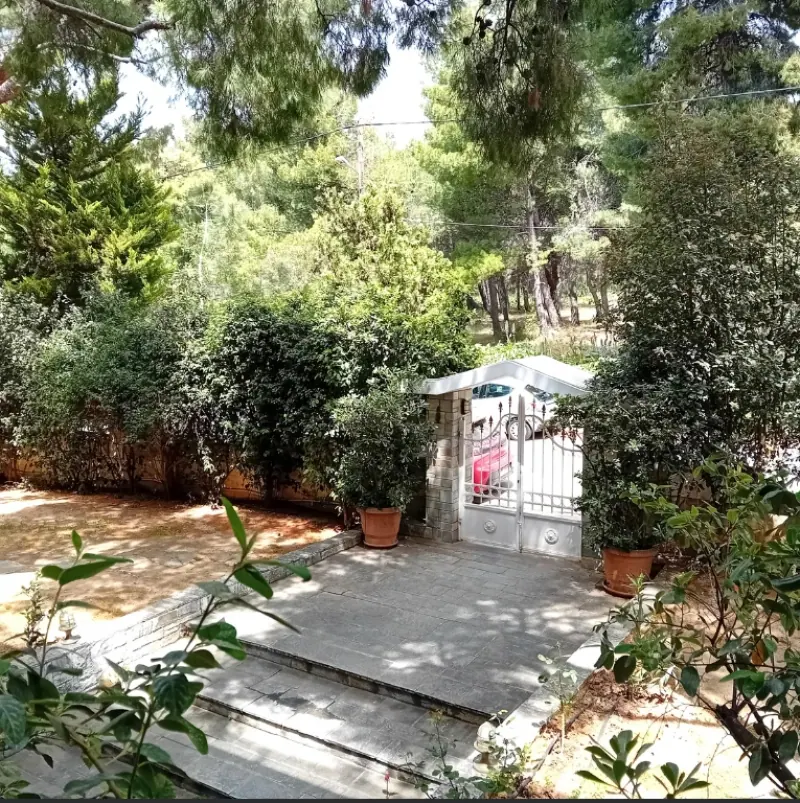 Apartment
Politeia
133 m² 3 bedrooms 1 bathroom
€325,000
Asking price on 15 October 2026
Apartment
Politeia
133 m² 3 bedrooms 1 bathroom
€325,000
Asking price on 15 October 2026
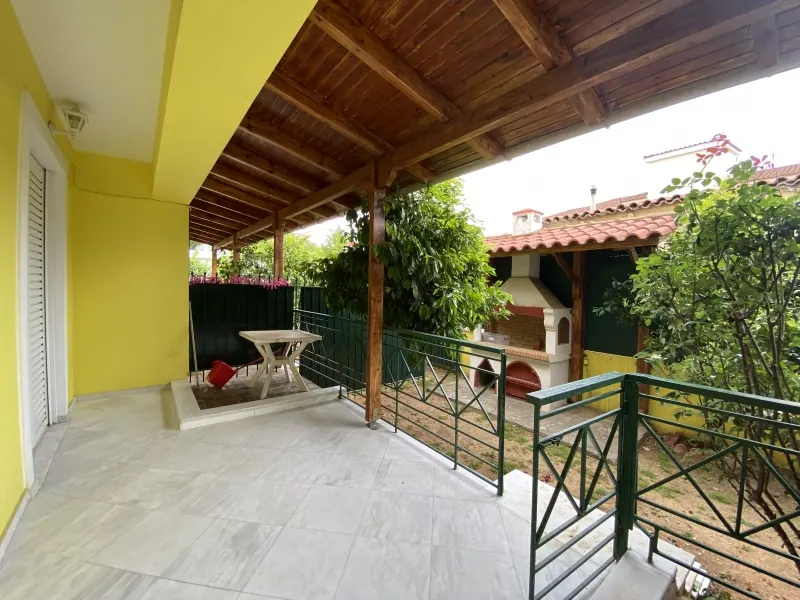 Maisonette
Nea Erythraia
250 m² Plot 300 m² 3 bedrooms 3 bathrooms
€600,000
Asking price on 15 October 2026
Maisonette
Nea Erythraia
250 m² Plot 300 m² 3 bedrooms 3 bathrooms
€600,000
Asking price on 15 October 2026
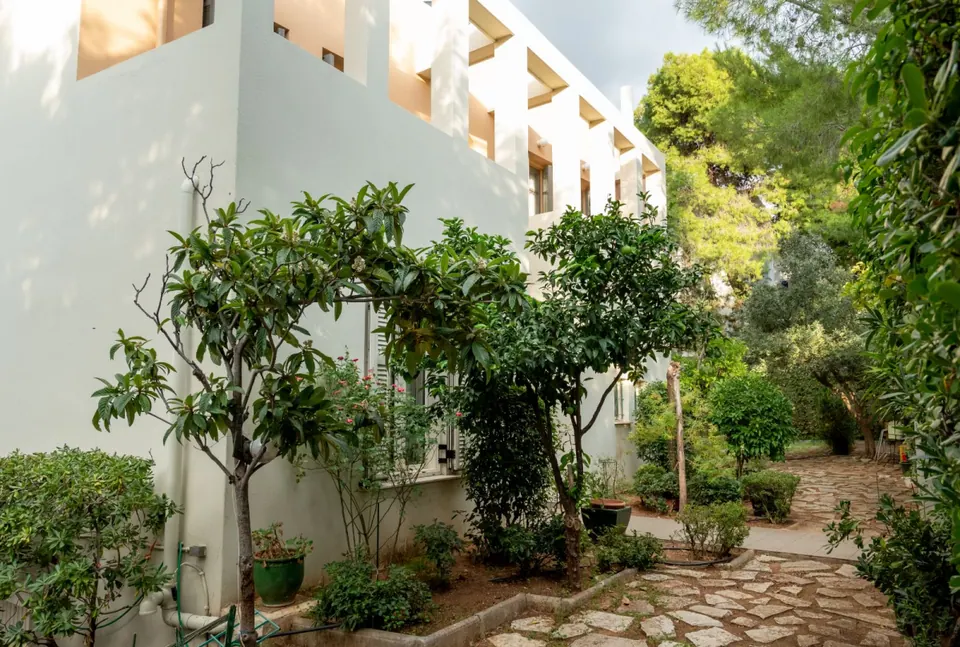 House
Kefalari
330 m² Plot 883 m² 3 bedrooms 2 bathrooms
€1,750,000
Asking price on 15 October 2026
House
Kefalari
330 m² Plot 883 m² 3 bedrooms 2 bathrooms
€1,750,000
Asking price on 15 October 2026
Listed with Greca House. More listings for sale
Kifisia: the median asking price on Greca House's own listings was €3,416 per m² on 1 October 2026, across 7 homes with a stated floor area. These are asking prices, not sale prices. Source: Greca House research.
Sources31
- Wikipedia: Kifisia accessed 14 October 2026
- Βικιπαίδεια: Κηφισιά accessed 14 October 2026
- Βικιπαίδεια: Κεφαλάρι Κηφισιάς accessed 14 October 2026
- This is Athens: A day out in Kifissia accessed 14 October 2026
- iefimerida: the 72nd Kifisia Flower Show (15 April 2026) accessed 14 October 2026
- CNN Greece: opening of the 71st Kifisia Flower Show (6 May 2025) accessed 14 October 2026
- National Museum of Natural History Goulandris: Founders & History accessed 14 October 2026
- Naftemporiki: inauguration of the Goulandris National Museum of Natural History (14 November 2025) accessed 14 October 2026
- Wikipedia: Goulandris Natural History Museum accessed 14 October 2026
- Wikipedia: Nea Erythraia accessed 14 October 2026
- Βικιπαίδεια: Νέα Ερυθραία accessed 14 October 2026
- Wikipedia: Ekali accessed 14 October 2026
- Βικιπαίδεια: Εκάλη accessed 14 October 2026
- Wikipedia: Arsakeio accessed 14 October 2026
- Wikipedia: International School of Athens accessed 14 October 2026
- Protothema: fire at Varympompi and Adames (3 August 2021) accessed 14 October 2026
- Wikipedia: Line 1 (Athens Metro) accessed 14 October 2026
- Wikipedia: KAT metro station accessed 14 October 2026
- STASY: home page accessed 14 October 2026
- STASY: Line 1 timetable accessed 14 October 2026
- Wikipedia: Athens Tram accessed 14 October 2026
- To Vima: the 550 bus (15 July 2024) accessed 14 October 2026
- OASA telematics accessed 14 October 2026
- Wikipedia: Kifisias Avenue accessed 14 October 2026
- Wikipedia: Attiki Odos accessed 14 October 2026
- in.gr: the mayor of Kifisia on traffic in the northern suburbs (10 July 2026) accessed 14 October 2026
- Hellenic Parliament: question 6933 of 13 July 2026 accessed 14 October 2026
- Greca House: Athens asking prices by neighbourhood, snapshot of 1 October 2026 accessed 14 October 2026
- Greca House listing GH-107656 accessed 14 October 2026
- Greca House listing GH-107630 accessed 14 October 2026
- Greca House listing GH-108432 accessed 14 October 2026