Marousi
Μαρούσι
Athens: the northern suburbs
Marousi is a municipality of a little under 72 000 people, some 11 to 13 km north-east of central Athens, on either side of Kifisias Avenue. It holds the main Olympic complex of the 2004 Games, The Mall Athens and the Golden Hall, a good many company offices and several large hospitals, and Line 1 of the metro and the suburban railway link it with central Athens, Piraeus and the airport.
From Athmonon to Amarousion
Marousi stands where Athmonon, one of the demes (the local districts) of ancient Attica, once stood, and its modern name comes from Artemis Amarysia, whose worship seems to have come from Amarynthos on Euboea and in whose honour the games at Athmonon were called the Amarysia. The later village was Arvanitika-speaking and evidently known for its pottery, since potters from Sifnos settled here and taught the craft (the municipality's own history remembers their jugs).
The first municipality with its seat here, the Dimos Amarysion, was set up in 1836, and the church of the Dormition followed in 1874. In 1885 the steam railway to Kifisia reached the village (locals called the train the Thirio, the beast). Amarousion left the municipality of Athens for good in 1925 as a community of its own and, with some 10 000 residents, was made a municipality in 1943. Its best-known son is possibly Spyros Louis, a water carrier born in Marousi, who won the marathon at the first modern Olympic Games on 10 April 1896.
Stadium, malls and offices
The Olympic Athletic Centre of Athens (OAKA, named after Spyros Louis) lies in the south-west of the municipality, and its main stadium opened on 8 September 1982. It was the main venue of the 1997 World Championships in Athletics and, after a refit to a design by Santiago Calatrava that gave it its arched roof, of the opening and closing ceremonies, the athletics and the men's football final of the 2004 Games.
That roof, nevertheless, has caused trouble in recent years. In the autumn of 2023 a study found that it, and the roof of the velodrome next door, fell short of the required structural standard, and the stadium was closed until the spring of 2024, when the polycarbonate panels had come off. According to Growthfund, which ran the tender for OAKA, a contract for the structural repair of both roofs was signed on 27 May 2025 and the works were expected to take fourteen months, so it may be worth checking on them before you plan around an event there.
Part of the former International Broadcasting Centre of the 2004 Games, next to the complex, became the Golden Hall shopping centre in 2007 and 2008, and The Mall Athens, near Neratziotissa station, opened on 25 November 2005 and has about 200 shops and other outlets. Kifisias Avenue (some 19 km from Ampelokipoi to Nea Erythraia) is lined with the headquarters of Greek and foreign companies, and the Ministry of Education moved here in 2007.
Getting around
Line 1 of the metro (the old electric railway from Piraeus to Kifisia, run by STASY) has three stations in Marousi. Eirini, beside the Olympic complex, opened in 1982 and Neratziotissa, named after a Byzantine church that took its name from the bitter-orange trees of the area, in August 2004, while the present Marousi station dates from 1957 (it was raised on a bridge so that the trains would not hold up the traffic in the old centre). KAT, the next stop north, is just over the boundary in Kifisia and takes its name from the trauma hospital near it.
Neratziotissa sits in the median strip of the Attiki Odos and is also a station of the suburban railway (the Proastiakos), as is Kifisias, at the motorway's junction with the avenue, and from both the trains run to Athens airport one way and to Piraeus or Ano Liosia the other (on the timetable in force since November 2025). The Attiki Odos, a toll motorway from Elefsina to the airport, opened in stages between 2001 and 2004 and meets Kifisias Avenue at a large circular interchange at Paradeisos. Kifisias Avenue, one of the longest and busiest in Athens, cuts the town in two.
The older town and the districts
The pedestrian street of Ermou had been rebuilt by 2015 as a bioclimatic walkway (with photovoltaic panels over much of it). In 2013 Athens Voice reported that cafés, bars, bistros and other venues were taking the place of shops that had lost trade to The Mall Athens and the economic crisis. Two of the municipal museums stand out: the Spathareio Museum of Shadow Theatre, open since June 1995, tells the story of Karagiozis (the hero of Greek shadow theatre) from 1860 to the present, and the Historical and Folklore Museum, founded in 1992, keeps more than 1500 objects, most of them from 1850 to 1940.
The districts differ more than the town's size might suggest. Agios Thomas, an area that shares its name with its church, lies to the west of Paradeisos, and Paradeisos, where the motorway junction is, grew into a business district which, by the Greek Wikipedia's account, was never really built up for living and is nearly empty outside working hours. Soros has the offices of multinational companies and the Athens Medical Centre in its western part, and many empty plots and green spaces in the east.
The Syngrou estate, on the boundary with Kifisia, covers about 950 stremmata (the Greek unit of 1000 m²), most of it forest and the rest farmland and buildings, among them the mansion of Andreas Syngros and the Gothic-style church of Saint Andrew. Iphigenia Syngrou, the benefactor's wife, left it in her will to the Agricultural Society of Athens, with the wish that it serve to train good farmers and gardeners.
Living here
Marousi had 71 830 residents at the 2021 census, a few hundred fewer than in 2011, on just under 13 km², and it is counted among the largest centres of employment in the Attica basin. The German School of Athens is here, as are several large hospitals: Ygeia, founded in 1970 by a group of Greek doctors as the first large private hospital in Greece, Mitera and the Athens Medical Centre, begun in 1984. Agia Filothei, Polydroso (which straddles the boundary with Chalandri), Anavryta and Nea Lesvos are among the more affluent districts.
For sale in Marousi
On 15 October 2026 Greca House, a real-estate agency in Athens since 2008, had these homes in its listings for sale.
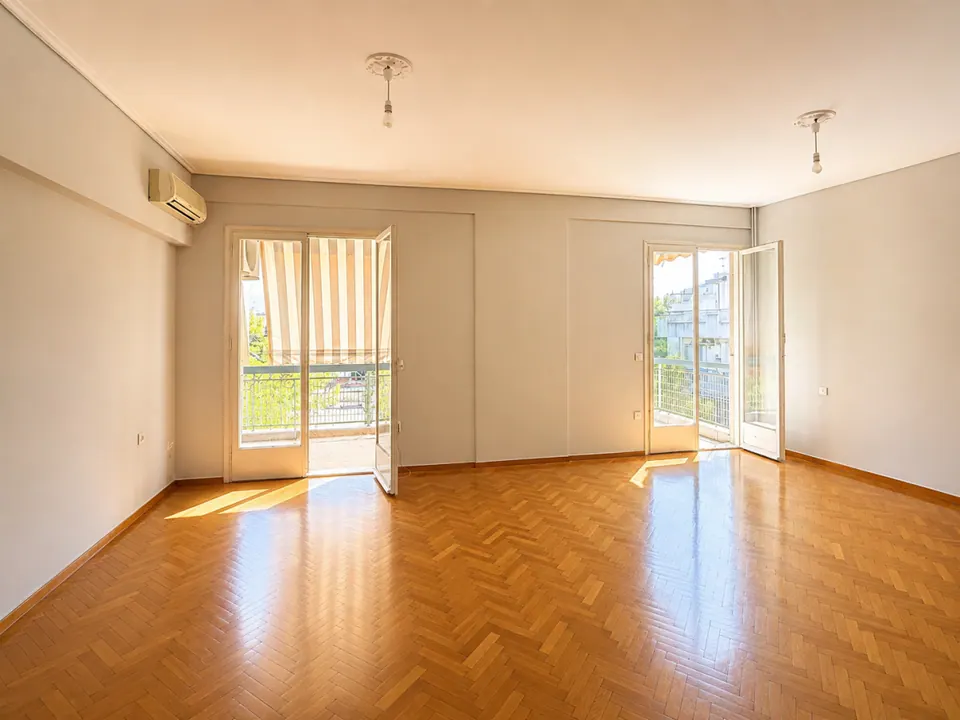 Apartment
Amalieio
94 m² 2 bedrooms 1 bathroom
€250,000
Asking price on 15 October 2026
Apartment
Amalieio
94 m² 2 bedrooms 1 bathroom
€250,000
Asking price on 15 October 2026
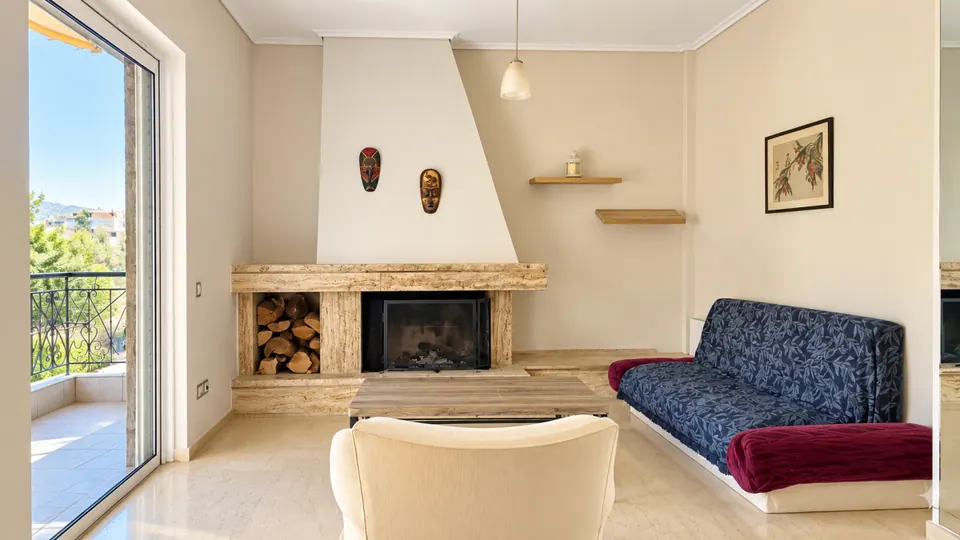 Maisonette
Anavryta
111 m² Plot 320 m² 3 bedrooms 1 bathroom
€280,000
Asking price on 15 October 2026
Maisonette
Anavryta
111 m² Plot 320 m² 3 bedrooms 1 bathroom
€280,000
Asking price on 15 October 2026
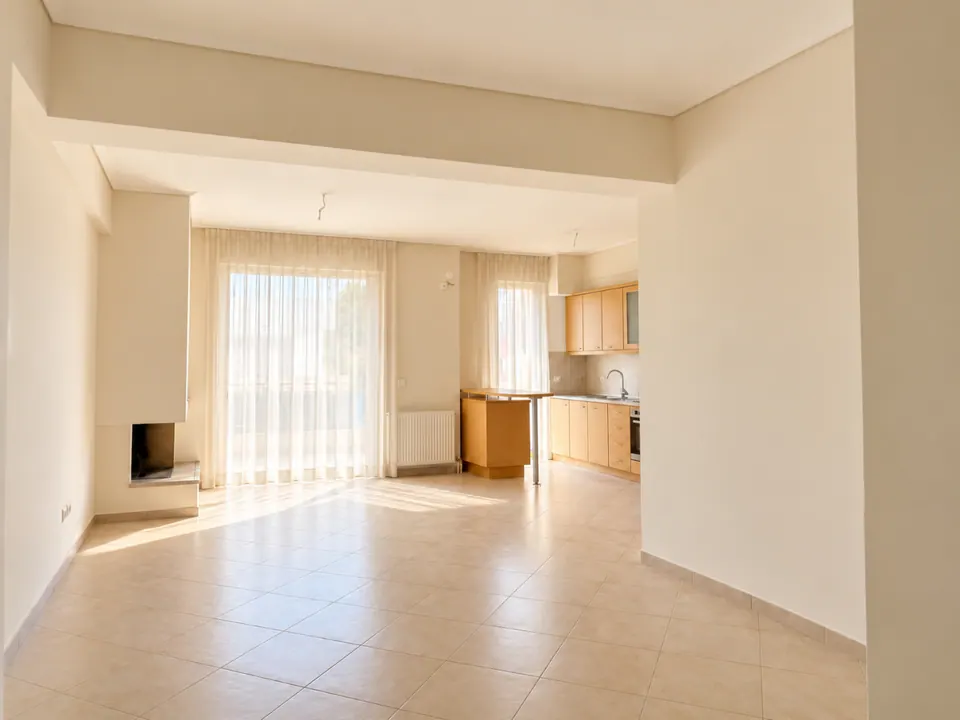 Apartment
Nea Filothei
101 m² 3 bedrooms 1 bathroom
€420,000
Asking price on 15 October 2026
Apartment
Nea Filothei
101 m² 3 bedrooms 1 bathroom
€420,000
Asking price on 15 October 2026
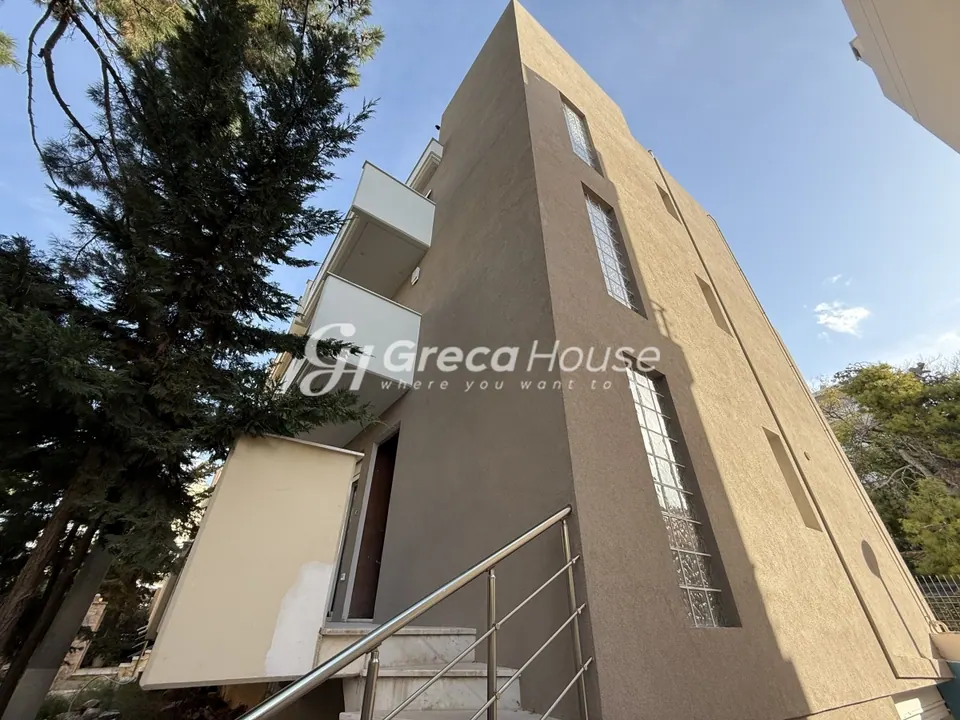 Maisonette
Paradeisos
215 m² 4 bedrooms 3 bathrooms
€640,000
Asking price on 15 October 2026
Maisonette
Paradeisos
215 m² 4 bedrooms 3 bathrooms
€640,000
Asking price on 15 October 2026
Listed with Greca House. More listings for sale
Marousi: the median asking price on Greca House's own listings was €3,163 per m² on 1 October 2026, across 31 homes with a stated floor area. These are asking prices, not sale prices. Source: Greca House research.
Sources34
- Wikipedia: Marousi accessed 14 October 2026
- Βικιπαίδεια: Μαρούσι accessed 14 October 2026
- Δήμος Αμαρουσίου: Ιστορία της πόλης accessed 14 October 2026
- Δήμος Αμαρουσίου: Σπαθάρειο Μουσείο Θεάτρου Σκιών accessed 14 October 2026
- Δήμος Αμαρουσίου: Ιστορικό και Λαογραφικό Μουσείο accessed 14 October 2026
- City Population: Dímos Amarousíou accessed 14 October 2026
- Wikipedia: Spyridon Louis accessed 14 October 2026
- Wikipedia: Athens Olympic Sports Complex accessed 14 October 2026
- Wikipedia: Olympic Stadium (Athens) accessed 14 October 2026
- Cyprus Mail (Reuters): Greece shuts landmark Olympic stadium over roof safety concerns, 2 October 2023 accessed 14 October 2026
- CNN Greece: Έτοιμο να ανοίξει ξανά το ΟΑΚΑ από τα τέλη Απριλίου, 23 February 2024 accessed 14 October 2026
- newmoney: Υπερταμείο, υπεγράφη η σύμβαση για τα στέγαστρα στο ΟΑΚΑ, 27 May 2025 accessed 14 October 2026
- Growthfund (HRADF): International Broadcasting Center accessed 14 October 2026
- Wikipedia: The Mall Athens accessed 14 October 2026
- Wikipedia: Kifisias Avenue accessed 14 October 2026
- STASY: Athens metro operator accessed 14 October 2026
- Wikipedia: Athens Metro Line 1 accessed 14 October 2026
- Wikipedia: Eirini station accessed 14 October 2026
- Wikipedia: Neratziotissa station accessed 14 October 2026
- Wikipedia: KAT station accessed 14 October 2026
- Wikipedia: Kifisias railway station accessed 14 October 2026
- Wikipedia: Attiki Odos accessed 14 October 2026
- Βικιπαίδεια: Παράδεισος Αμαρουσίου accessed 14 October 2026
- Βικιπαίδεια: Σωρός Αμαρουσίου accessed 14 October 2026
- Βικιπαίδεια: Πολύδροσο accessed 14 October 2026
- Βικιπαίδεια: Κτήμα Συγγρού accessed 14 October 2026
- Wikipedia: Ygeia Hospital accessed 14 October 2026
- Athens Voice: Μαρούσι, 6 November 2013 accessed 14 October 2026
- Athens Voice: Μαρούσι, 4 February 2015 accessed 14 October 2026
- Greca House: Athens asking prices by neighbourhood, snapshot of 1 October 2026 accessed 14 October 2026
- Greca House listing GH-108424 accessed 14 October 2026
- Greca House listing GH-108461 accessed 14 October 2026
- Greca House listing GH-108453 accessed 14 October 2026
- Greca House listing GH-108253 accessed 14 October 2026
Related reading
-
Research
Asking prices by Athens neighbourhood, and how to read them
Greca House publishes the median asking price per square metre on its own Athens listings, neighbourhood by neighbourhood, with a method page and a CSV file. The snapshot of 1 October 2026 repays a careful reading, provided one knows what such a figure measures and what it leaves out. -
Buying in Greece
Buying a home in Greece: the steps and the costs
A purchase in Greece passes through a tax number, a bank account, a lawyer, an engineer and a notary, roughly in that order. We follow those steps, work through the costs of one example with the Greca House calculator and note what the agency does at each stage. -
Greca House
Greca House: an Athens agency since 2008
Greca House, an agency in Athens, carries on the brokerage that Iryna Rondyak set up in 2008. It sells homes, land, hotels and commercial property across Greece, publishes in six languages, and measures its own asking prices in research whose method and data anyone can read.